Choosing the right car battery trickle charger can protect a vehicle that sits for days, weeks, or an entire season. A parked sedan may lose charge quietly, especially in cold garages or hot driveways. The best charger should maintain battery health without constant supervision, excessive heat, or confusing controls.
This guide reviews seven practical options for global buyers. It considers charging performance, compatibility, safety protections, cable length, weather resistance, and long-term value. Battery chemistry matters. A charger designed for flooded lead-acid batteries may not suit AGM, gel, or lithium models. Voltage standards also differ between regions, so buyers should check input ratings before ordering. A small display, sealed connector, or mounting hook can make daily use much easier.
No charger wins in every situation. A compact 12-volt model may suit a weekend motorcycle, while a stronger unit may better support a stored SUV. Real garage experience also reveals small weaknesses, such as stiff cables or unclear indicator lights. These details can matter more than impressive packaging. I also recognize that product availability, warranty support, and certification requirements vary across countries. That makes a universal recommendation difficult.
The selections below focus on dependable maintenance rather than dramatic jump-start claims. Each car battery trickle charger deserves careful comparison against the vehicle’s battery type, storage conditions, and charging routine. Read the manual. Check polarity. Keep connections dry. A thoughtful choice can reduce battery replacement costs and provide confidence when the engine finally needs to start.
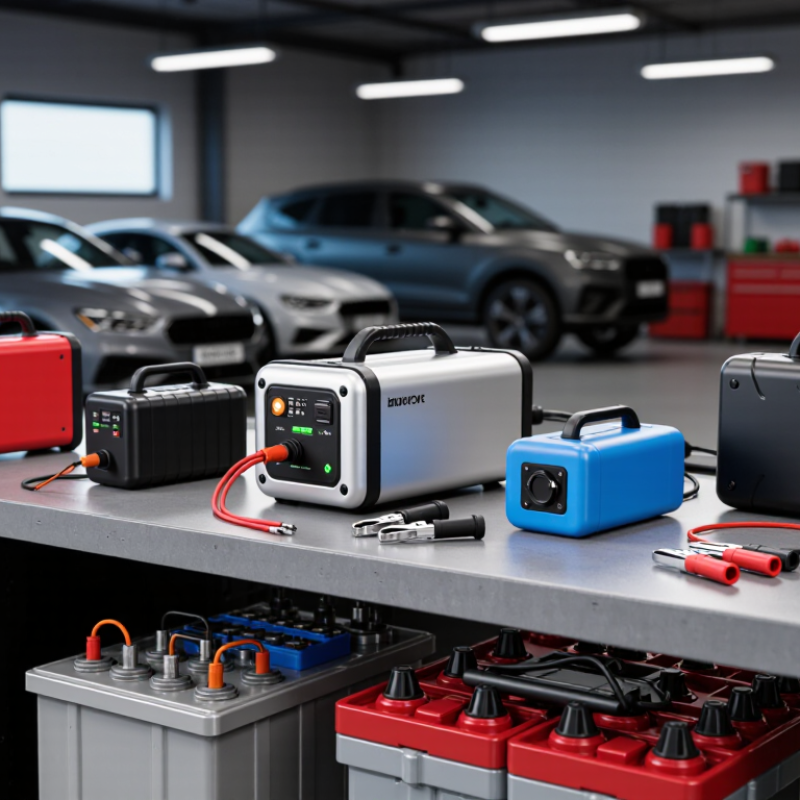
A car battery trickle charger is a low-current device that maintains battery charge during long periods of parking. Unlike a standard charger, it delivers energy slowly and reduces the risk of rapid overheating. Many modern units monitor voltage and adjust current automatically. When the battery reaches a safe level, they may enter float mode.
That process is simple but not careless. The charger connects to the battery terminals, checks its condition, and supplies a controlled current. If voltage drops, it adds energy again. A 12-volt car battery usually needs a compatible 12-volt charger, but battery chemistry still matters. Flooded lead-acid, AGM, and lithium batteries can require different charging profiles.
Read the manual.
In practical use, I would inspect the case, terminals, and cable insulation before connecting anything. Clean, secure terminals improve charging accuracy. Match positive to positive and negative to negative. Many chargers include reverse-polarity and short-circuit protection, but protection is not permission to ignore setup. Place the battery in a ventilated area, especially when charging a conventional lead-acid type.
A maintenance charger is useful for vehicles stored in garages, seasonal cars, and emergency vehicles that sit unused. It cannot repair a cracked case, severe sulfation, or a battery that loses voltage immediately. That limitation is easy to overlook. Some products called trickle chargers provide constant current, while smarter maintainers regulate output. Buyers should check charging stages, supported battery types, input voltage, plug compatibility, and safety certifications for their country. A cheap match is not always a safe match.
| Rank | Charger Type | Typical Output | Compatible Battery Systems | How It Works | Recommended Use | Key Advantages | Important Limitations |
|---|---|---|---|---|---|---|---|
| 1 | Automatic Multi-Stage Trickle Charger | 12 V; approximately 0.8–1.5 A | Most 12 V lead-acid batteries, including flooded, AGM, and gel types when the correct mode is selected | Uses bulk charging, absorption, and float or maintenance stages to reduce overcharging risk. | Cars, motorcycles, seasonal vehicles, and vehicles parked for several weeks | Good balance of safety, battery care, and ease of use | Usually too slow for heavily discharged or large-capacity batteries |
| 2 | Dual-Voltage Automatic Charger | 6 V or 12 V; approximately 0.75–2 A | 6 V and 12 V rechargeable lead-acid batteries, depending on the selected setting | Automatically regulates charging voltage and switches to a maintenance stage after the battery is charged. | Households with classic vehicles, small equipment, motorcycles, and standard cars | Flexible for different battery voltages | The voltage setting must be checked before connection; it is not suitable for every lithium battery |
| 3 | AGM and Gel Battery Maintainer | 12 V; approximately 1–4 A | 12 V AGM and gel lead-acid batteries, subject to the charger’s specifications | Applies a controlled charging profile designed for valve-regulated lead-acid batteries and maintains the battery at a safe float level. | Modern cars with start-stop systems, recreational vehicles, and backup batteries | Better charging control for sealed lead-acid designs | Incorrect voltage or charging mode can damage the battery; gel batteries generally require lower charging voltage than some AGM batteries |
| 4 | Lithium-Compatible Maintenance Charger | 12 V; approximately 1–5 A | 12 V lithium iron phosphate batteries only when the charger explicitly supports LiFePO₄ chemistry | Uses a lithium-specific charging profile and normally stops or enters a controlled maintenance state rather than using a conventional lead-acid float profile. | Vehicles fitted with approved 12 V LiFePO₄ starter or auxiliary batteries | Designed for lithium battery voltage and protection requirements | Never use a lead-acid-only charger unless the lithium battery manufacturer permits it; charging below freezing may be restricted |
| 5 | Solar Battery Maintainer | 12 V; approximately 1.5–10 W solar input, depending on panel size | 12 V lead-acid batteries and selected lithium batteries with a compatible solar controller | Converts sunlight into a low charging current and uses a regulator or charge controller to limit charging voltage. | Outdoor storage, boats, trailers, classic cars, and remote parking areas | Can maintain a battery without a mains power outlet | Output varies with sunlight, shade, weather, panel orientation, and the quality of the controller |
| 6 | Weather-Resistant Outdoor Maintainer | 12 V; approximately 1–4 A | 12 V lead-acid batteries; chemistry compatibility depends on the selected charging mode | Provides regulated multi-stage charging inside a sealed or weather-resistant housing, often with reverse-polarity and short-circuit protection. | Vehicles stored outdoors or in damp garages, provided the unit is rated for the environment | More suitable for outdoor storage than a basic indoor charger | Weather resistance is not the same as complete waterproofing; the mains plug and connections must remain protected |
| 7 | Low-Current USB or 12 V Accessory Maintainer | Typically 12 V; approximately 0.5–1 A | Small 12 V lead-acid batteries and selected low-capacity battery systems | Supplies a limited regulated current through a USB adapter or vehicle accessory connection to offset normal standby discharge. | Motorcycles, compact cars, emergency equipment, and short-term storage | Compact, portable, and convenient for low-power maintenance | May not work when the vehicle accessory socket is switched off; unsuitable for fast charging or deeply discharged batteries |