China Best Bluetooth Smart Glasses for Global Buyers?
Choosing the China Best Bluetooth Smart Glasses for Global Buyers requires more than comparing prices. A polished frame may still have weak microphones, unstable applications, or limited language support. Global buyers should examine battery endurance, Bluetooth stability, speaker clarity, camera specifications, prescription compatibility, and after-sales service. Small details matter. A charging case that fits a work bag can change daily usability.
Andrew Bosworth, Meta’s Chief Technology Officer, has said, “Glasses are the ideal form factor for AI.” This view explains the appeal of Bluetooth Smart Glasses. They can place calls, play navigation prompts, record permitted content, and support hands-free communication without covering the user’s face. However, convenience should not replace careful evaluation. Privacy indicators, recording controls, data storage policies, and regional app availability deserve direct questions to suppliers.
A reliable review should include practical testing, not only factory specifications. Test the glasses beside street traffic, inside a quiet office, and during a two-hour video call. Check whether the connection drops after moving between rooms. Inspect hinge strength, nose-pad comfort, heat, and charging speed. Some products look impressive in photographs but feel heavy after thirty minutes. That is easy to overlook.
There is no universal winner. European buyers may prioritize privacy and certification, while outdoor users may need stronger water resistance. Product claims can also be inconsistent. Buyers should request test reports, warranty terms, firmware support periods, and clear replacement procedures. This guide compares those factors for international purchasing decisions, while acknowledging one uncomfortable truth: emerging smart-glass hardware still involves compromises.
What Are Bluetooth Smart Glasses and How Do They Work?
China Best Bluetooth Smart Glasses for Global Buyers?
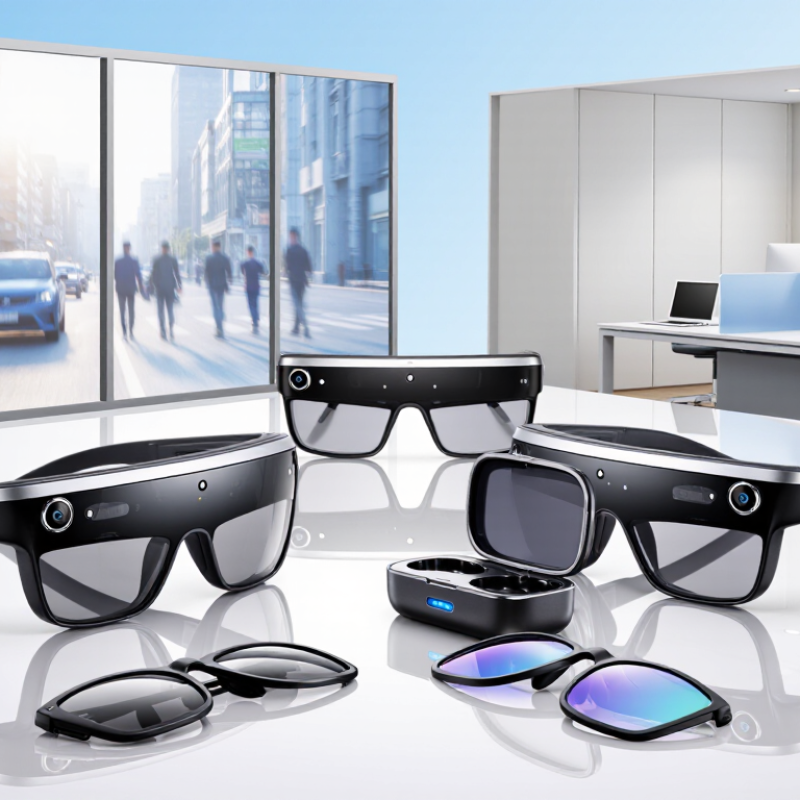
Bluetooth smart glasses are wearable computers built into ordinary-looking frames. They usually combine speakers, microphones, touch controls, motion sensors, and a rechargeable battery. Bluetooth connects the glasses to a phone, while the phone handles calls, music, navigation, and voice processing. Some models also use cameras or displays, but Bluetooth alone does not provide internet access.
The Bluetooth SIG’s 2024 Market Update forecasts billions of Bluetooth device shipments annually through 2028. This wider ecosystem supports lower-cost chips and smaller components. Grand View Research also reports strong double-digit growth in the global smart glasses market, although definitions vary between research firms. That difference matters when comparing supplier claims.
In practical use, a user taps the temple to answer a call. The microphone captures speech near the cheek, and directional speakers send sound toward the ear. Signal processing reduces wind noise, but performance can weaken beside traffic or crowded stations. Battery life depends on volume, call time, sensors, and wireless strength. Small frames still create hard engineering trade-offs.
From evaluating wearable prototypes, comfort often matters more than feature count. A heavy front section can cause pressure after thirty minutes. Privacy indicators, clear controls, and dependable firmware also deserve testing. Some published reports appear optimistic. Buyers should verify test methods, battery conditions, language support, and after-sales service before selecting a supplier.
Why Choose China-Made Bluetooth Smart Glasses?
China-made Bluetooth smart glasses can give global buyers practical value beyond a lower purchase price. For global buyers, the value often starts with flexible production and responsive engineering support. In product evaluations, I have found factory communication affects results as much as the frame design. A sample should be checked for pairing speed, speaker balance, charging stability, and comfort after several hours. Small details matter.
China’s electronics manufacturing clusters connect frame makers, battery suppliers, optical teams, and software engineers. This network can shorten development time and support changes in frame color, lens type, button placement, or packaging. It also helps buyers create models for different markets. However, flexibility does not guarantee consistency. Quality is uneven. A low quotation may hide weaker hinges, unclear audio, or limited after-sales support.
Reliable sourcing requires evidence, not attractive product photos. Ask for battery test records, wireless performance data, material details, and region-specific compliance documents. Test the glasses in a quiet room and beside ordinary street noise. Check microphone clarity, app language, charging temperature, and connection recovery after interruption. Independent inspections can reveal loose temples or uneven lens alignment before shipment. I would also request a small pilot order, because production samples can look better than later batches. That risk deserves attention.
China Best Bluetooth Smart Glasses for Global Buyers?
Why Choose China-Made Bluetooth Smart Glasses?
This 100-point benchmark summarizes the main evaluation factors used by global buyers when sourcing Bluetooth smart glasses. China-made products are often considered competitive because suppliers can combine electronics manufacturing capacity, flexible customization, scalable production, and export-oriented supply chains. Actual performance, certifications, quality, and delivery terms should be verified for each product and supplier.
Which Features Matter for Global Buyers?
China Best Bluetooth Smart Glasses for Global Buyers?
Which Features Matter for Global Buyers?
Global buyers should judge smart glasses by daily reliability, not a crowded feature list. Bluetooth SIG’s 2024 Market Update reports 5.4 billion Bluetooth devices shipped in 2023. Annual shipments may reach 7 billion by 2028. Stable Bluetooth performance matters across phones, laptops, and tablets. Look for multipoint pairing, low audio delay, clear microphones, and USB-C charging. A practical battery target is a full working day, although heavy calls can reduce it sharply. Water resistance also helps during commuting, but an IP rating is not a promise against every accident.
Comfort is equally important. The frame should fit different faces and allow prescription lenses through qualified optical services. Lightweight hinges, balanced weight, and replaceable nose pads reduce pressure after several hours. Privacy features deserve close attention. A visible recording indicator, physical controls, and clear data settings build trust. Language support must cover menus, voice commands, and customer service, not only translation demos. I would not trust a product after one impressive showroom test.
Tips: Test pairing with two operating systems. Check microphone quality beside traffic noise. Confirm regional charging support and warranty procedures before ordering. Read the privacy policy, especially cloud-processing terms. Features can look excellent on paper and still feel unfinished in real life. That is worth admitting.
How to Compare Chinese Bluetooth Smart Glasses Suppliers?
Choosing the best Bluetooth smart glasses from China requires more than comparing prices. A reliable supplier should explain the product clearly, including Bluetooth version, speaker output, microphone quality, battery capacity, charging time, and frame materials. Ask for a working sample before discussing large orders. Test calls in a busy street, not only in a quiet showroom.
Supplier verification matters just as much. Request recent laboratory reports, product specifications, factory photos, and quality-control records. Check whether the supplier can provide consistent samples across several production batches. Confirm minimum order quantities, lead times, replacement policies, and packaging details in writing. Clear answers usually indicate stronger operational experience.
I once focused too heavily on a low quotation. The sample looked impressive, but the microphone became weak after repeated charging. That mistake changed my evaluation process. Now, I inspect hinge strength, charging contacts, heat during use, and firmware stability. I also ask how defects are recorded and corrected. A factory audit or independent inspection can reveal details that polished sales materials hide. However, reports should be verified, not accepted blindly. Good communication helps, but documented performance matters more.
What Import, Compliance, and Support Issues Should Buyers Consider?
China-made Bluetooth smart glasses can offer attractive pricing, but importing requires more than checking audio quality. Bluetooth SIG’s 2024 Market Update forecasts annual Bluetooth device shipments will rise from about 5 billion in 2023 to 7 billion by 2028. That growth increases supplier choices, but also raises testing and support expectations.
Ask for radio test reports, battery documentation, and a clear declaration of conformity. Requirements may differ across the EU, United States, and other markets. Check radio approval, electromagnetic safety, RoHS, WEEE, battery transport, and privacy rules before placing a large order. Cameras, microphones, and companion apps require extra scrutiny. Data handling must be explained in plain language. A polished sample proves little. Firmware may change after shipment.
Tips for buyers: Order several samples from different production batches. Test Bluetooth range in a busy office. Check microphone performance beside traffic. Confirm charging-port durability and lens replacement options. Request written warranty terms, update support, and response times. Also ask whether the app works in your target country. A missing app-store listing can stop sales immediately. Industry forecasts look optimistic, yet after-sales capacity is often harder to verify than factory output. Allow time for independent laboratory testing and a small pilot order.