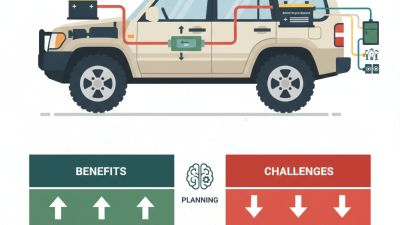
A dual battery system can turn a remote trip from comfortable to stressful within hours. It powers fridges, lights, radios, compressors, and communication devices without draining the starting battery. That separation matters when a 4WD is parked beside a dusty track or far from a workshop.
The International Energy Agency reported that global battery storage additions exceeded 40 GW in 2023, more than doubling from the previous year. The 2024 Global Off-Grid Solar Market Report also highlights rising demand for dependable stored energy in remote applications. These figures do not measure 4WD systems directly. However, they show a wider shift toward portable, resilient power.
Battery technology authority Isidor Buchmann, founder of Cadex Electronics, wrote, “The battery is a silent partner that often gets little attention until it fails.” That warning fits touring vehicles perfectly. A poorly matched charger, undersized cable, or neglected battery can create expensive trouble.
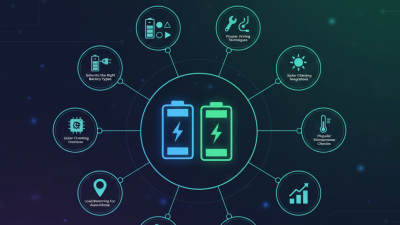
This guide examines seven leading dual battery system options for 4WD and off-grid use. It considers lithium and AGM compatibility, charging speed, solar integration, monitoring, installation complexity, and real-world durability. Some systems look excellent on paper. Field conditions can disagree.
Expect trade-offs, not a perfect winner. A compact setup may suit weekend camping, while a larger system better supports medical equipment or extended remote work. I have also included practical weaknesses, because ignoring them would make this guide less reliable.
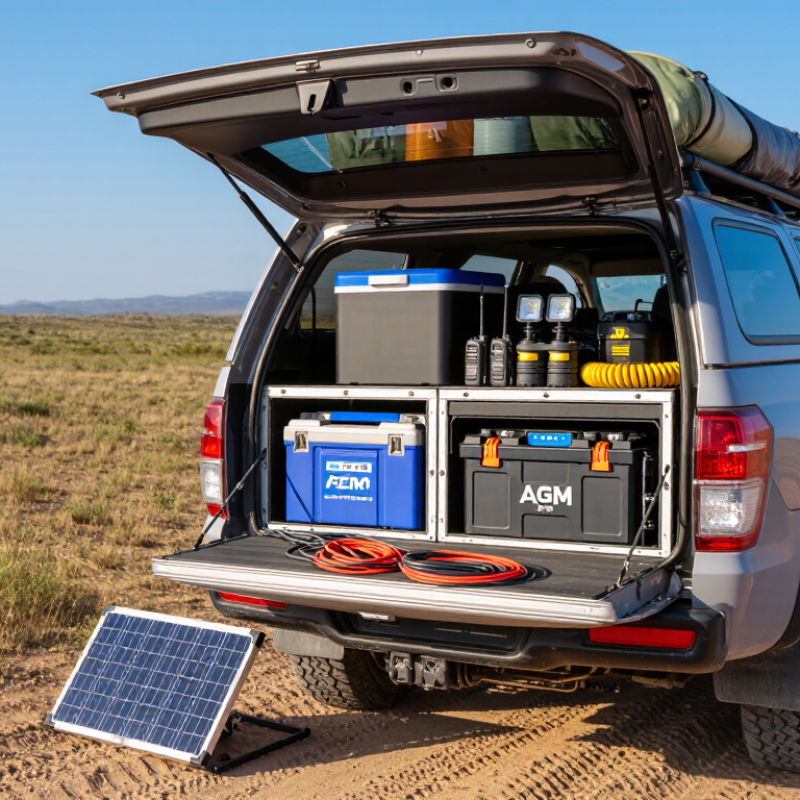
A dual battery system separates starting power from camping loads. The starter battery protects engine reliability. The auxiliary battery runs refrigerators, lights, radios, and inverters.
The International Energy Agency reported that global battery demand exceeded 750 GWh in 2023. This growth reflects wider use of storage, not just electric vehicles. In a 4WD, the same principle applies on a smaller scale. A voltage-sensitive relay is simple and affordable. A DC-to-DC charger usually offers steadier charging, especially with modern variable-output alternators. It can also support different battery chemistries. Professional installation still matters.
Sizing begins with real consumption. A 60-watt refrigerator running for ten hours uses about 600 watt-hours before losses. At 12 volts, that equals roughly 50 amp-hours. Add lighting, charging devices, and inverter losses. Leave reserve capacity. I once underestimated cold-weather demand and returned to a nearly flat auxiliary battery. Not ideal. A battery monitor would have exposed the problem earlier.
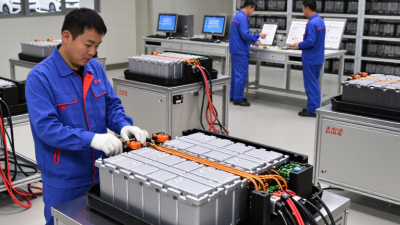
Lead-acid batteries remain practical for cost-sensitive builds. Battery Council International reports that lead batteries achieve recycling rates above 99% in the United States. Lithium batteries generally reduce weight and provide more usable capacity, but they require compatible charging controls and temperature protection. Cable size, fusing, ventilation, and earth connections deserve equal attention. A polished installation can still fail through one loose terminal. Check voltage drop under load, not only at rest.
| System | Best Use | Auxiliary Battery | Charging Method | Typical Capacity | Recommended Output | Key Advantages | Main Considerations | Overall Suitability |
|---|---|---|---|---|---|---|---|---|
| 1. Basic AGM Isolator System | Budget-conscious 4WD touring with a conventional alternator | 12 V AGM deep-cycle battery | Voltage-sensitive relay or automatic charging relay | 90–120 Ah | Suitable for refrigerators, lighting and small electronic devices | Simple wiring, low installation complexity and reliable separation of starter and auxiliary batteries | Requires compatible alternator voltage; heavier than lithium and usually offers less usable energy per rated amp-hour | ★★★★☆ |
| 2. DC-to-DC AGM System | Modern vehicles with variable-voltage or smart alternators | 12 V AGM deep-cycle battery | 20–40 A DC-to-DC charger | 100–120 Ah | Supports a portable refrigerator, lighting, communications equipment and moderate USB loads | Provides controlled charging voltage and works more consistently than a simple isolator with many modern vehicles | Charging is slower than a high-output alternator connection; installation requires correctly sized cables and fusing | ★★★★☆ |
| 3. Lithium DC-to-DC System | Frequent touring where low weight and high usable capacity are important | 12.8 V LiFePO4 battery with an integrated battery-management system | 30–50 A DC-to-DC charger | 100–200 Ah | Suitable for refrigeration, lighting, laptops, camera equipment and inverter loads | High usable capacity, low weight, good cycle life and faster charging than most lead-acid batteries | Needs a lithium-compatible charger; charging below 0°C may require low-temperature protection; higher purchase cost | ★★★★★ |
| 4. Lithium System with Solar Charging | Extended off-grid stays and campsites with regular sunlight | 12.8 V LiFePO4 battery with battery-management system | DC-to-DC charger plus MPPT solar charge controller | 100–200 Ah with approximately 200–400 W of solar input | Can operate refrigeration, lighting, communications, small appliances and moderate inverter loads | Reduces dependence on driving, improves energy independence and makes efficient use of solar power | Solar production varies with weather, shading, panel orientation and seasonal daylight; correct controller settings are essential | ★★★★★ |
| 5. High-Capacity AGM Off-Grid System | Fixed or semi-permanent camps where battery weight is acceptable | One or two matched 12 V AGM batteries connected in parallel | 40–60 A DC-to-DC charger with optional solar charging | 200–240 Ah total | Suitable for longer refrigerator runtimes, lighting, communications and low-to-moderate inverter use | Proven lead-acid technology, broad temperature tolerance and no lithium-specific charging requirements | Only part of the rated capacity should normally be used to preserve service life; ventilation, weight and charging time must be considered | ★★★★☆ |
| 6. Compact Portable Dual-Battery System | Short trips, rental vehicles and removable camping setups | Portable 12 V LiFePO4 or AGM battery pack | Portable DC-to-DC charger, solar input or mains charger | 50–100 Ah | Suitable for a small refrigerator, lighting, phones, tablets and other low-power loads | Quick to install, easy to move between vehicles and useful when permanent vehicle modifications are undesirable | Limited capacity for large inverters or high-demand appliances; the battery must be securely restrained while driving | ★★★★☆ |
| 7. High-Output Inverter Dual-Battery System | Work vehicles and off-grid users running higher-power equipment | 200 Ah or larger LiFePO4 bank, or a correctly matched multi-battery bank | 50–60 A DC-to-DC charger with solar support and a correctly sized inverter | 200–400 Ah | Supports larger refrigeration systems, power tools, induction cooking and other intermittent AC loads | Large energy reserve and strong inverter capability for demanding off-grid applications | Requires careful cable sizing, high-current fuses, ventilation where applicable, secure battery mounting and professional system design | ★★★★★ |
Technical values are typical planning ranges rather than universal specifications. Actual performance depends on battery temperature, cable length, charging profile, alternator output, solar conditions, inverter efficiency and the selected depth of discharge.