How to Choose the Best Smart LED Light for Global Sourcing?

Choosing the best Smart LED Light for global sourcing requires more than comparing prices and wattage. It demands evidence, testing, and a clear understanding of local applications. The International Energy Agency’s Energy Efficiency 2023 report identifies lighting as responsible for roughly 15% of global electricity consumption. This makes efficiency a commercial concern, not merely an environmental preference. A product that saves energy in a showroom may perform differently in a humid warehouse or a cold outdoor site.

Real sourcing decisions should examine luminous efficacy, driver quality, thermal management, dimming performance, lifespan claims, and replacement access. The U.S. Department of Energy’s solid-state lighting research reports continue to highlight efficiency, reliability, controls, and manufacturing quality as key development priorities. Interoperability also matters. A Smart LED Light using Matter, Zigbee, Bluetooth Mesh, or DALI may suit different buildings and control systems. Check the full ecosystem.

Dr. Mariana Figueiro, a leading lighting researcher, has said, “Light is not just for vision; it is also a powerful biological stimulus.” That insight changes how buyers assess color temperature, scheduling, and human comfort. The cheapest unit is rarely the cheapest decision. Yet no checklist is perfect. Supplier audits can miss inconsistent batches, and laboratory claims may not reflect installation conditions. A reliable global sourcing process therefore combines sample testing, factory verification, certification review, and honest post-installation feedback. Small details matter, such as a loose connector, a buzzing driver, or an application that fails after midnight. This guide explores how to evaluate those risks before committing to volume orders.
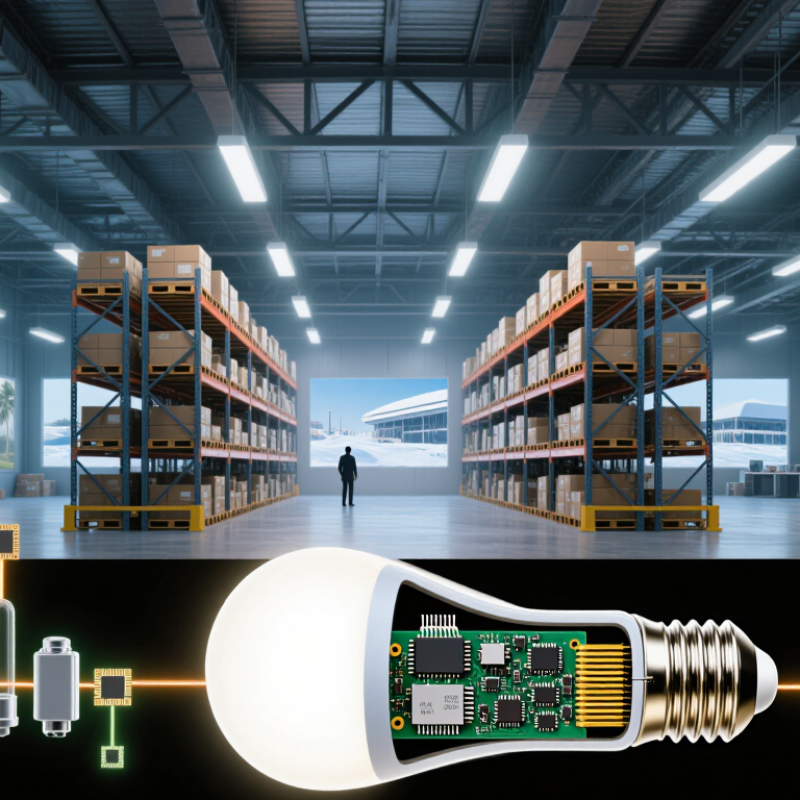
How to Choose the Best Smart LED Light for Global Sourcing?

Define Your Smart LED Lighting Requirements and Use Cases

Choosing the best smart LED light for global sourcing begins with a clear use case. A reading lamp needs comfortable brightness, low flicker, and accurate color. A warehouse needs stronger output, wider coverage, and dependable controls. Define the room size, mounting height, operating hours, and expected dimming range before comparing suppliers.

Write down measurable requirements, such as lumens, color temperature, CRI, beam angle, voltage, and ingress protection. Consider whether users need app control, voice commands, schedules, sensors, or local operation during internet outages. For global projects, request test reports, material details, warranty terms, packaging specifications, and regional electrical compliance documents. Do not rely on attractive samples alone.

A practical sourcing process includes testing several samples in a realistic space. Check startup speed, dimming smoothness, heat management, connection stability, and light quality through a phone camera and direct observation. I have seen products perform well on a desk but struggle in a larger room. That mistake is easy to repeat. Ask the supplier how firmware updates, replacement parts, and quality inspections are handled. A lower unit price may become expensive when failures, returns, or incompatible plugs appear. Your final choice should match the real environment, not just a specification sheet.

Evaluate Brightness, Color, Connectivity, and Control Features

Choosing a smart LED light for global sourcing requires more than comparing wattage. Brightness should match the room, mounting height, and diffuser. A 1,000-lumen lamp may work above a desk but feel weak in a large kitchen. The U.S. Department of Energy reports that LEDs use at least 75% less energy than incandescent lighting and can last up to 25 times longer. However, claimed lifetime depends on heat control, driver quality, and testing conditions. I have seen impressive samples fail early because the housing trapped heat.

Color performance affects comfort and product reviews. Check correlated color temperature, such as 2,700K for warm bedrooms or 4,000K for work areas. Color rendering matters too. General lighting criteria from ENERGY STAR commonly require a color rendering index of 80 or higher. Ask suppliers for test reports, not only catalog images. Dimming should remain stable at low levels. Flicker is easy to miss in a showroom, yet it can appear on a phone camera. Connectivity also deserves practical testing. IoT Analytics reported 14.4 billion connected IoT devices worldwide in 2023, showing strong demand for reliable networked products. Still, Wi-Fi, Bluetooth, and low-power mesh options differ in range, setup, and offline behavior.

Tips: Test brightness at the actual installation distance. Request lumen maintenance data, CRI results, standby power, and flicker measurements. Pair samples across two networks. Smart control is not always smarter when setup fails. I would also question app-only control; it may disappoint buyers during router outages. Supplier documentation can be incomplete, and that should trigger deeper verification, not quick approval.

Check Product Quality, Safety Standards, and Global Certifications

How to Choose the Best Smart LED Light for Global Sourcing?

Product quality should be checked before price negotiations begin. Request samples from the exact production model, not a similar unit. Test brightness, color consistency, heat control, and power consumption during extended use. A reliable light should maintain stable output after several hours. Check the housing for loose parts, sharp edges, weak joints, or poor wiring. Small defects often become expensive returns.

Safety evidence must match the destination market. Ask for current test reports covering electrical safety, electromagnetic compatibility, and restricted substances. Confirm the report lists the correct model number, factory, and product specifications. Certifications may include CE, UKCA, FCC, or other market-specific approvals. Use reports from competent laboratories, preferably accredited to ISO/IEC 17025. Do not treat a printed certificate as final proof. I have seen paperwork look complete while key test details were missing. That is an uncomfortable lesson, but it matters.

Tips: Compare the sample with the mass-production unit. Scan QR codes carefully. Verify certificate numbers through official databases when available. Test the light with local voltage, plugs, and wireless conditions. Review firmware update procedures and basic data protection practices. Keep photos, test results, and signed specifications in one file. No process is perfect. Independent inspection still deserves a place before shipment.

How to Choose the Best Smart LED Light for Global Sourcing?

Product quality, safety standards, and global certification checkpoints by target market

The chart shows the number of core evidence categories buyers should verify before sourcing smart LED products for each market: electrical safety, electromagnetic compatibility, radio requirements, hazardous-substance restrictions, and energy or product documentation. Typical references include IEC 60598, IEC 61347, CISPR 15, IEC 61547, IEC 62471, FCC Part 15, CE-related requirements, UKCA requirements, RoHS, and applicable energy regulations. Requirements vary by product design, voltage, wireless technology, and destination country, so final compliance should be confirmed with an accredited laboratory or qualified compliance specialist.

Compare Suppliers, Pricing, Customization, and Minimum Order Quantities

Choosing the best smart LED light for global sourcing requires more than comparing catalog prices. A reliable supplier should provide clear product specifications, testing records, factory details, and stable communication. Request a working sample before discussing large orders. Check brightness, color consistency, app response, heat control, and packaging strength. Small details matter.

Pricing should include the full landed cost, not only the unit quotation. Ask about tooling, samples, packaging, shipping terms, inspection fees, and replacement policies. A low price can hide weak components or inconsistent assembly. Request a tiered quotation for different quantities. Then compare realistic order scenarios. Mistakes happen when buyers compare different specifications as if they were identical.

Customization affects both price and minimum order quantity. Changing the housing color may require fewer units than redesigning the circuit or mobile application. Confirm logo methods, carton artwork, firmware settings, and lead times in writing. Many suppliers offer a low MOQ for standard products but require a higher MOQ for custom packaging. Negotiate a pilot order with measurable acceptance standards. It may cost slightly more. That cost can reveal problems early. I would also leave room for improvement, because the first sample rarely reflects every production condition. Test a second batch when consistency matters.

How to Choose the Best Smart LED Light for Global Sourcing? - Compare Suppliers, Pricing, Customization, and Minimum Order Quantities
Supplier Type Typical Sourcing Region Product Examples Typical FOB Price Range
per Unit (USD)
Typical MOQ Customization Capability Common Certifications and Compliance Typical Lead Time Best Suited For
Large OEM/ODM Manufacturer East and Southeast Asia Wi-Fi bulbs, tunable-white downlights, smart panel lights $2.20–$8.50 1,000–5,000 units Private label Firmware branding Custom housing Packaging CE, RoHS, EMC, LVD; regional wireless approval may be required 35–60 days after sample approval Retail programs, property developers, and established distributors
Mid-Sized Specialized Factory China, Vietnam, Malaysia, and Thailand Bluetooth mesh lamps, smart ceiling lights, motion-sensor fixtures $4.50–$18.00 300–1,500 units Color temperature Dimming profile App integration Logo printing CE, RoHS, FCC or equivalent local requirements; IP rating where applicable 25–45 days after final specifications Specialty lighting brands and commercial projects
Low-MOQ Trading and Assembly Supplier China and regional export hubs Standard smart bulbs, RGB strips, plug-in night lights $1.80–$6.50 100–500 units Stock housing Basic logo Standard packaging Available documentation varies; verify test reports and certificate ownership 15–30 days for stocked models Market testing, online sellers, and smaller importers
Commercial Lighting Integrator Europe, North America, and the Middle East Connected office panels, retail track lights, building-control fixtures $18.00–$75.00 50–300 units DALI/KNX integration Project configuration Emergency options UL/ETL, CE, UKCA, DALI, IP, and photobiological safety documentation as applicable 6–12 weeks for project orders Hotels, offices, retail stores, and smart-building projects
Regional Contract Manufacturer North America, Europe, Mexico, and Eastern Europe Assembled smart fixtures, retrofit kits, commercial luminaires $12.00–$60.00 100–1,000 units Local assembly Component selection Compliance support Market-specific electrical, radio, energy-efficiency, and safety requirements 4–10 weeks, excluding tooling Buyers needing shorter logistics routes and local compliance support
Comparison note: The prices shown are indicative FOB benchmark ranges for commonly sourced smart LED products. Actual quotations vary according to wattage, lumen output, LED efficiency, wireless protocol, driver quality, battery or sensor options, packaging, certification scope, tooling, payment terms, and order volume. Always request a current quotation, a production sample, test reports, and a written warranty before placing a purchase order.

Test Samples and Confirm Logistics Before Placing a Global Order

Choosing the best smart LED light for global sourcing requires more than comparing online prices. Request working samples before discussing a large order. Test brightness, color temperature, dimming, connection stability, and heat after several hours. A light may appear excellent in photographs but perform poorly in a real room.

I also measure power consumption and check whether the product’s control system works with the target market’s devices. Ask the supplier for test reports, packaging details, warranty terms, and production tolerances. Reliable suppliers should explain their process clearly and provide consistent sample results. My early checklist was too short. I once focused on brightness and missed unstable app connections.

Tips: Test at least two samples from different production batches. Record startup time, flicker, surface temperature, and wireless range. Photograph the sample beside its final packaging. Confirm carton dimensions, gross weight, pallet limits, and shipping marks before approving production. Request a shipping quotation using the exact destination, delivery term, and order quantity. Small carton changes can affect freight costs significantly.

Before placing a global order, clarify lead time, inspection timing, spare-part availability, and the process for damaged units. Confirm whether the supplier can repeat the approved specifications. Keep a signed sample record with photos and measured values. It is not perfect protection, but it reduces avoidable surprises. Logistics should be tested too. A successful product can still become an expensive mistake when packaging is weak or delivery assumptions are vague.

Stay in touch with the latest National Luna Products and News!