Top 10 Best Trickle Chargers for Every Vehicle
Choosing a reliable trickle charger can protect your vehicle’s battery during long periods of storage. A motorcycle in a cold garage, a classic car under a cover, or a boat waiting for summer may slowly lose charge. The right charger helps maintain battery health without constant manual attention.
This guide examines the top 10 best trickle chargers for every vehicle type. It considers charging speed, battery compatibility, safety protections, weather resistance, cable length, and everyday usability. These details matter when an outlet sits several feet from the battery. They also matter when temperatures fall overnight.
Real-world use reveals important differences. Some models are simple and dependable, while others offer smart monitoring and automatic shutoff. A charger designed for a car battery may not suit a small powersports battery. Always check voltage, chemistry, and manufacturer guidance before connecting anything.
No charger is perfect.
Our comparisons focus on practical ownership, not impressive packaging alone. We consider how securely the clamps attach, whether the display remains readable, and how easily the unit stores after use. We also recognize that performance can change with battery age, temperature, and charging conditions. That makes every recommendation useful, but not universal.
Expect clear guidance for cars, motorcycles, trucks, RVs, boats, and seasonal equipment. Whether you need basic maintenance or more advanced monitoring, this selection can narrow the search. A carefully chosen trickle charger may prevent an inconvenient dead battery and extend the useful life of your vehicle’s electrical system.
What Is a Trickle Charger and How Does It Work?
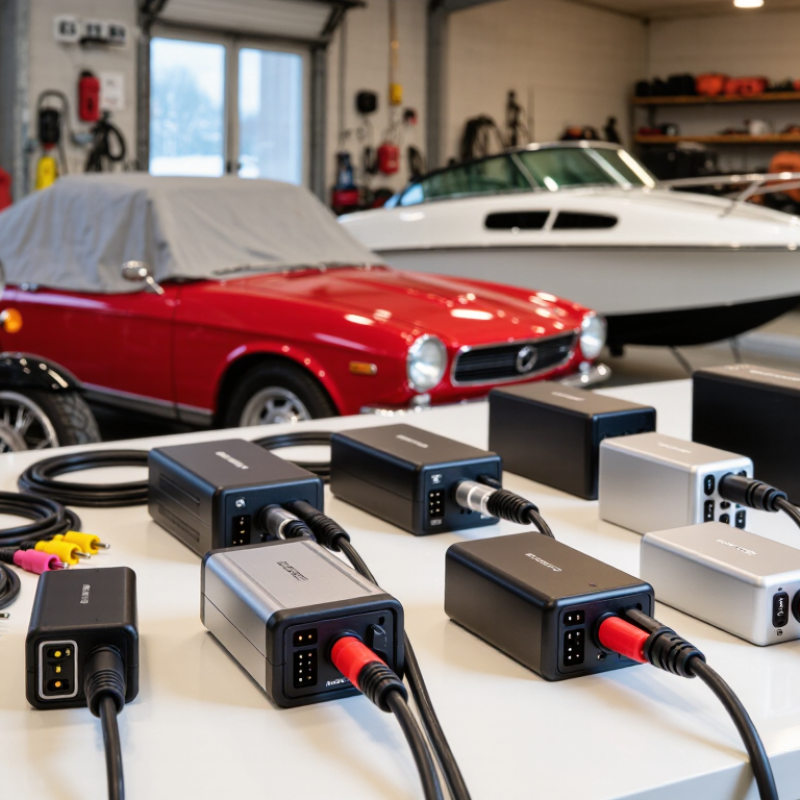
A trickle charger is a low-current device that replenishes a vehicle battery slowly. It is designed for cars, motorcycles, boats, and other vehicles that may sit unused. The charger converts household AC power into controlled DC power. It then supplies a small current through the battery terminals. This current offsets normal self-discharge and some standby electrical loads.
The process is simple, but not completely harmless. Many modern chargers monitor voltage and reduce output when the battery approaches full charge. Some use absorption and maintenance stages. A traditional trickle charger may continue delivering current, which can cause water loss, heat, or overcharging. Battery Council International reports that lead-acid batteries remain above 99% recyclable in the United States. Their durability still depends on correct charging and regular inspection.
Voltage matters. A fully rested 12-volt lead-acid battery often measures near 12.6 volts, while readings near 12.0 volts suggest serious discharge. These figures are practical indicators, not perfect diagnoses. Temperature also changes charging behavior. SAE International battery standards emphasize controlled testing because capacity varies with temperature, load, and battery design. Use a charger with the correct voltage setting, clean terminals, and ventilation. Never connect it blindly. A weak battery may need replacement, not endless charging. That distinction is easy to miss.
Key Features to Compare in Trickle Chargers
When comparing trickle chargers, voltage compatibility should come before convenience. A 12-volt charger suits most passenger vehicles, while motorcycles, boats, and specialty equipment may require different settings. Check the battery label and vehicle manual carefully. Guessing can damage a battery.
Charging current also matters. Lower output supports gentle maintenance, but larger batteries may need more capacity. Look for automatic shutoff, float mode, and reverse-polarity protection. These features reduce overheating and connection mistakes. Compatibility with lead-acid, AGM, or lithium batteries is equally important. One charger rarely handles every chemistry safely.
Tips: Choose weather-resistant housing for outdoor storage. Measure the cable before buying; a short lead becomes frustrating beside a garage wall. Inspect clamps for firm contact, and clean corrosion before connecting. Temperature compensation is helpful during cold winters, though it does not replace checking the battery. I used to focus mainly on amperage. That was too narrow. Display accuracy, fuse protection, and simple indicators often matter more during overnight maintenance. Never leave unfamiliar equipment unattended until its behavior is understood.
How to Choose a Charger for Different Vehicle Types
Top 10 Best Trickle Chargers for Every Vehicle
Choosing a charger depends on the vehicle, battery chemistry, and storage conditions. A small motorcycle battery needs lower output than a diesel truck’s dual-battery system. Lead-acid, AGM, gel, and lithium batteries also require different charging profiles. Using the wrong setting can cause heat, swelling, or shortened battery life. For electric vehicles, a trickle charger only supports the 12-volt auxiliary battery. It does not charge the high-voltage traction battery.
S&P Global Mobility reported that the average U.S. vehicle age reached 12.6 years in 2024. Older vehicles often have greater standby drain from alarms, sensors, and aftermarket electronics. AAA testing found that cold weather can reduce electric vehicle range by up to 41% at 20°F. That same cold also slows battery recovery. I once assumed that a higher amperage rating was always better. It is not. A slow, regulated output may protect a stored classic car better than a powerful charger.
Tips:
Check the battery label before buying. Match voltage, chemistry, and capacity. For motorcycles, choose a low-current maintainer with weather protection. For RVs, select a charger suited to deep-cycle use. Diesel trucks may need stronger output or dual-bank support. Electric vehicle owners should confirm compatibility with the auxiliary battery. Inspect cables monthly. Small corrosion can create large charging losses.
Top 10 Trickle Chargers: Uses, Strengths, and Limitations
Top 10 Best Trickle Chargers for Every Vehicle
A trickle charger maintains battery voltage during storage, but it is not a universal cure. The best choice depends on battery chemistry, vehicle size, and parking conditions. Automatic maintenance chargers suit cars, motorcycles, boats, and lawn equipment. Their strength is simple: they reduce discharge without constant supervision. Their limitation is slower recovery after a deeply drained battery.
Smart chargers add diagnostic checks and switch between charging stages. They work well for seasonal vehicles and modern cars with sensitive electronics. Low-amp models are gentler, while higher-output units restore power faster. That speed can create problems if the charger lacks automatic regulation. Always match voltage and chemistry. Lithium batteries need compatible charging controls.
Cold weather exposes weak batteries quickly. The U.S. Department of Energy notes that low temperatures reduce battery performance and increase starting demands. Battery Council International reports that lead-acid batteries remain widely used because they are reliable, recyclable, and cost-effective. Still, maintenance charging cannot repair sulfation, damaged plates, or a failing battery. It may only delay replacement.
Look for reverse-polarity protection, spark control, weather resistance, and clear status lights. A fused connection is useful near a metal engine bay. I once treated a slow charger as a complete battery solution. That was optimistic. Check terminal corrosion, resting voltage, and cable warmth during use. A charger should support maintenance, not replace inspection.
Top 10 Best Trickle Chargers for Every Vehicle
Typical Output Profiles, Uses, Strengths, and Limitations
The chart compares ten commonly available charging-current profiles. The estimated battery-size range is calculated at approximately 0.1C, a conservative reference for slow charging: a 2A charger corresponds to roughly a 20Ah battery, while a 10A charger corresponds to roughly a 100Ah battery. Lower-current units are well suited to motorcycles, powersports vehicles, and long-term maintenance; higher-current units are more practical for cars, vans, and larger 12V or 24V batteries. Actual suitability depends on battery chemistry, battery condition, voltage, and the charger's charging modes.
Limitation: these are representative output ratings rather than brand-specific test results. Always follow the battery and charger manufacturer's instructions, especially for lithium batteries.
Safe Installation, Charging, and Maintenance Practices
Top 10 Best Trickle Chargers for Every Vehicle: Safe Installation, Charging, and Maintenance Practices
A trickle charger should match the battery type, voltage, and vehicle manual. Disconnect the ignition, park in a dry, ventilated area, and inspect the battery for cracks or leaks. Clean corrosion carefully before connecting the clamps. Connect positive first, then negative to the recommended grounding point. Never let the clamps touch. Small details matter.
ADAC’s 2024 breakdown statistics reported that starter-battery problems caused 44.9% of roadside failures in its analyzed cases. That figure supports regular voltage checks, especially before winter storage. Use an automatic charger with overcharge protection, and confirm its charging mode before leaving it connected. AGM, gel, and lithium batteries may require different settings. Guessing is risky.
Keep cables away from belts, fans, hot exhaust parts, and sharp edges. Check the charger after the first hour for unusual heat, odor, or swelling. Stop immediately if anything seems abnormal. I once treated a slow crank as a charging problem, but the battery was already damaged. That mistake cost time. A charger cannot repair internal failure. Monthly inspection helps: tighten loose terminals, record resting voltage, and remove the charger before driving. The National Fire Protection Association recorded an average of about 41,900 vehicle fires annually in the United States from 2018 to 2022, so safe placement and supervision deserve more attention than convenience.