What Is the Best Type of Electric Block Machine in 2026?
In 2026, choosing the best Electric Block Machine is less about buying the largest press and more about matching production to real demand. The GlobalABC Global Status Report 2024 reports that buildings and construction generated 37% of global energy- and process-related carbon emissions in 2022. That figure does not measure block-machine performance. It does, however, underline why manufacturers are examining energy use, material efficiency, and durable construction products more closely.
Machine categories suit different production goals. A stationary, fully automatic line may fit a plant serving steady, high-volume orders. A smaller or semi-automatic machine can make more sense when space, staffing, or investment is limited. Hydraulic pressure, vibration design, mold-change time, curing arrangements, and after-sales support all affect the result. So does the block itself. Hollow blocks, solid blocks, and paving units may require different molds and production settings. There is no universal winner.
Industry reports provide context, not a purchasing verdict. Buyers should compare verified output under specified block sizes, operating hours, and local material conditions. Ask suppliers for energy-use figures, rejection rates, maintenance schedules, and references from comparable plants. Then check whether those figures come from independent testing or sales estimates. A polished brochure is not proof. Small details matter: a slow mold change can interrupt a shift, while inconsistent aggregates can reduce output quality. The best type is the one that meets your product, budget, and service needs reliably. That sounds obvious. In practice, it is easy to overlook.
What an Electric Block Machine Does and How It Works
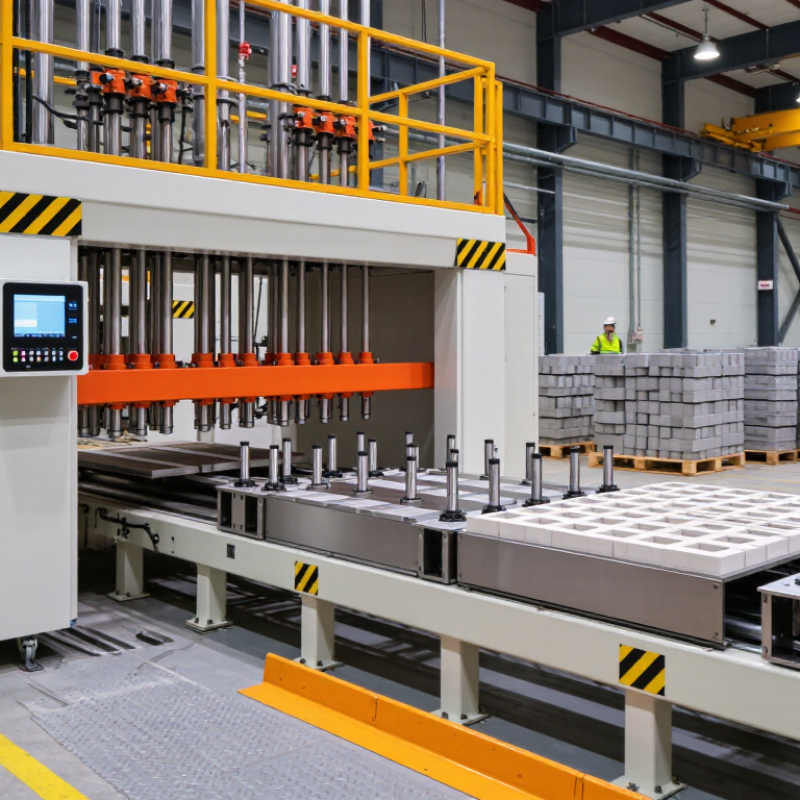
An electric block machine turns measured cement, aggregate, water, and sometimes pigments into compacted masonry units. Its electric motors power components such as the mixer, conveyor, hydraulic system, or vibration mechanism. Operators load a batch, blend it to a consistent moisture level, and feed the mix into a steel mold. The machine then presses and vibrates the material so it fills the mold’s corners and holds its shape after release. Small details matter: overly wet mix can slump, while dry mix may leave weak edges.
The USGS Mineral Commodity Summaries 2025 estimates global cement production at about 4.2 billion metric tons in 2024. That figure shows the scale of cement use, but it does not tell buyers how many blocks a particular machine will produce. Real output depends on mold size, cycle time, mix design, staffing, and downtime. Check production claims against a full shift using your own materials. The brochure number may look impressive.
Fresh blocks move to a curing area, where controlled moisture and temperature support strength development. Curing is separate from molding, yet it affects the finished product. Electric drive can give operators precise control and reduce direct machine exhaust at the worksite, but electricity use and grid emissions still count. A practical evaluation should include power demand, changeover time, spare parts, and the consistency of test results—not just blocks per hour.
What Is the Best Type of Electric Block Machine in 2026?
Electric block machines use motor-driven vibration and pressure to compact concrete in a mold. The right machine depends on the block size and production needs.
How to read this chart: These are common actual dimensions for modular concrete masonry units. Their nominal sizes are typically 400 × 200 mm in length and height; the smaller actual dimensions allow for mortar joints. Sizes and standards vary by market, so choose a machine and mold that match local requirements.
Main Types of Electric Block Machines in 2026
Main Types of Electric Block Machines in 2026
Electric block machines vary by how they compact material and how much work they automate. Vibration-based machines use an electric motor to shake a mould, helping concrete settle around its aggregates. They suit common hollow and solid blocks, especially where operators need flexible mould changes. Listen for uneven vibration; it can affect block density.
Hydraulic machines use an electrically powered pump to apply pressure during moulding. They can produce consistent shapes when mix moisture, pressure, and curing are controlled. Semi-automatic models still need workers to load materials or move fresh blocks, while automatic lines coordinate feeding, pressing, and pallet handling. That distinction matters. A small yard may not benefit from a conveyor system it cannot keep busy.
Mobile machines combine moulding equipment with a compact, movable setup. They can reduce the need to transport fresh blocks across a large site, but the ground must be level and the workflow planned. Compare daily output under realistic shift conditions, not just a supplier’s peak figure. Ask how quickly moulds change and how parts are serviced. I would check those details before choosing; production estimates can look neat on paper and still miss the mess of real work.
What Is the Best Type of Electric Block Machine in 2026? — Main Types of Electric Block Machines in 2026
| Machine Type | Typical Configuration | Key Advantages | Considerations | Best Suited For |
| Manual or Basic Electric Vibrating Machine | An electric motor drives vibration; material feeding, mold handling, or product removal may require manual work. | Simple operation, relatively straightforward setup, and lower automation requirements. | More operator involvement and less consistent production flow than automated systems. | Small workshops, pilot production, and businesses with modest output needs. |
| Semi-Automatic Stationary Machine | A fixed machine commonly combines electric vibration with hydraulic compaction; some production steps are automated while others are operator-controlled. | A practical balance between production control and automation; can support different molds and product formats. | Requires operators to coordinate selected stages, and production flow depends on the handling and curing setup. | Small to medium-sized producers upgrading from basic equipment. |
| Fully Automatic Stationary Machine | A fixed production line can integrate batching, material feeding, molding, pallet handling, stacking, and control systems. | Supports a more continuous workflow and reduces routine manual handling when paired with compatible line equipment. | Needs a suitable plant layout, trained operators, maintenance planning, and greater initial investment. | Established producers with consistent demand and space for a production line. |
| Mobile or Egg-Laying Machine | The machine forms products on a prepared concrete floor and moves forward to make the next set, generally without production pallets. | Can reduce reliance on pallets and is suited to on-site or floor-based production arrangements. | Needs a level, prepared production surface; moving and curing workflows must be planned carefully. | Projects or facilities that favor flexible production locations and have suitable floor space. |
Selection note: There is no single best machine for every operation. Compare the required product types, production volume, available floor space, labor, budget, and automation needs. Actual output depends on the machine configuration, mold, block dimensions, mix, and operating conditions.
How Machine Types Compare in Capacity and Automation
Choosing an electric block machine means matching daily demand with the whole production line, not just the press. Manual-feed machines suit small runs, but operators handle more pallet loading and product movement. Semi-automatic systems reduce some handling and offer a practical middle ground. Fully automatic lines coordinate feeding, pressing, stacking, and pallet transfer; they need more floor space and steadier maintenance. As rough planning ranges, an eight-hour shift might yield 500–1,500 standard blocks manually, 2,000–5,000 semi-automatically, or 5,000–12,000 on a well-balanced automated line. These are estimates, not guaranteed ratings. Mold changes, curing logistics, downtime, and block geometry can sharply reduce saleable output.
Automation is expanding across manufacturing, but that trend alone does not prove a plant will gain the same productivity. The International Federation of Robotics’ World Robotics 2024 report recorded 541,302 industrial robot installations worldwide in 2023, a 10 percent annual increase. That is useful context, not a block-machine performance benchmark. Compare suppliers’ rated cycles with an observed full-shift trial, counting rejected units and stoppages. Watch the palletizer, too. A fast press can still wait for pallets or curing space.
It’s easy to overestimate. A smaller semi-automatic setup may outperform a larger line when staffing, power supply, or maintenance skills are limited. I would verify output with the intended mix and molds before committing; theoretical capacity can look cleaner than a real production floor.
Key Factors for Choosing an Electric Block Machine
The best electric block machine is the one that reliably makes your required products at a measured operating cost. Compare output per hour, block dimensions, mold-change time, and the number of saleable blocks per shift. Ask suppliers for energy readings taken under a comparable mix, cycle, and load—not just motor ratings. The IEA’s Energy Efficiency 2023 report estimates that electric motor systems use about 53% of global electricity. That makes power consumption worth checking carefully. Measure that. Track kilowatt-hours per finished block during a production trial, including idle periods and rejected units.
Fit matters on the factory floor. Check whether the machine matches your available power supply, floor space, material-handling setup, and planned shift length. Inspect the vibration system and controls in person; stable compaction can reduce weak edges and rework. The IEA notes that cement production contributes roughly 7% of global CO₂ emissions, so reducing avoidable rejects can support more responsible material use. Ask about routine maintenance, spare-part lead times, operator training, and safety guarding. Small details matter. A high-capacity machine may still be a poor choice if frequent mold changes interrupt production. I would also verify promised output with your own mix: brochures rarely capture every factory’s dust, humidity, or workflow.
Which Machine Type Fits Each Production Need?
The best electric block machine depends on daily demand, available labor, and the space for curing finished blocks. A manual or small electric model can suit a startup producing a few hundred blocks per shift. Operators load materials and handle more steps themselves, so output depends heavily on consistent routines. It may be affordable, but busy days can expose its limits.
A semi-automatic machine fits small and medium producers who need steadier output without a large automated line. It often reduces manual handling while leaving some tasks, such as moving pallets, to workers. For larger orders, a fully automatic system can coordinate feeding, pressing, and stacking. It needs reliable power, trained operators, and enough floor space. More automation is not always better.
Machine layout matters, too. A stationary unit works well when production stays in one prepared area with space for molds and curing racks. A mobile machine can help crews making blocks near construction sites, though transport and uneven ground may slow work. Check the block sizes, mold-change time, and actual output per shift before choosing. Ask for a production demonstration using your intended mix. Numbers on paper can look convincing; real material sometimes behaves differently. It’s worth checking twice.