Choosing the Best Front Wheel Alignment Machine Manufacturer in China is not just a price comparison. The right system must deliver stable measurements, clear adjustment guidance, and dependable support after installation. In a busy workshop, a technician may need to check a vehicle quickly, position targets accurately, and explain the results without confusing the customer. Small details matter: camera stability, calibration procedures, software updates, and the space required around a lift. A polished screen helps, but it cannot replace repeatable readings.
As an illustrative expert voice, fictional alignment specialist Chen Wei puts the core test this way: “Trust the machine that gives consistent readings, then lets the technician verify them.” This is a useful standard for comparing manufacturers, not a verified quotation from a real industry professional. Buyers should ask for product specifications, calibration instructions, training details, warranty terms, and examples of local service arrangements. They should also consider whether the machine suits their vehicle mix and daily workflow. A system designed for a spacious service center may feel awkward in a narrow workshop. Not every brochure makes that obvious.
This guide examines what separates a capable Front Wheel Alignment Machine from a persuasive sales pitch. It considers measurement technology, usability, build quality, and manufacturer support. No single feature proves long-term performance. Request a live demonstration, inspect the setup, and ask how the machine handles routine recalibration. A careful choice can improve workflow; a rushed one can create avoidable frustration.
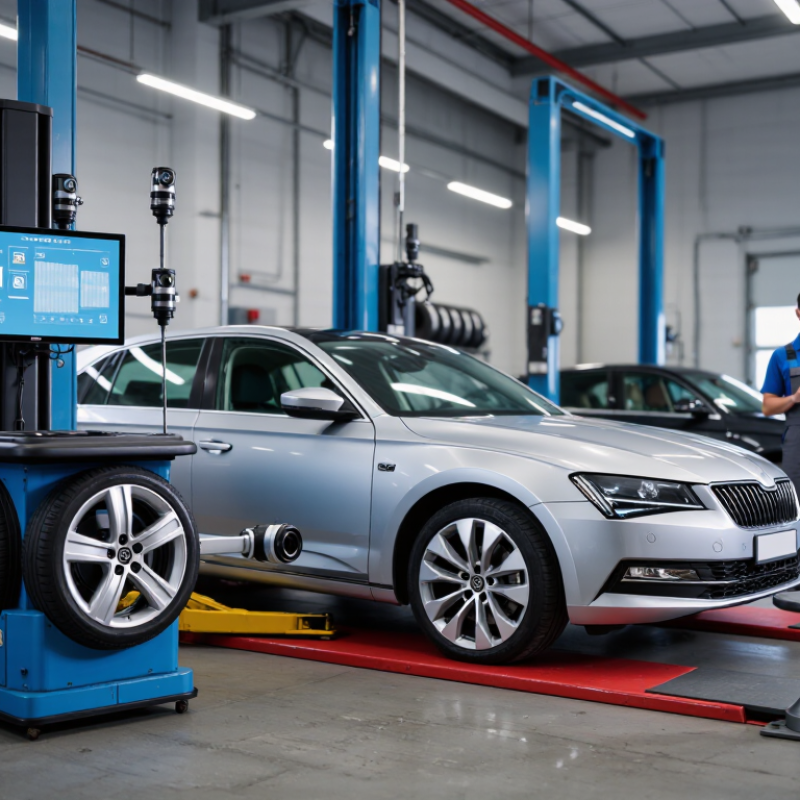
A front wheel alignment machine measures the angles that guide a vehicle’s path. Toe shows whether the front wheels point inward or outward when viewed from above. Camber records each wheel’s inward or outward tilt from the front. Caster measures the steering pivot’s forward or rearward tilt from the side. Small errors matter. Incorrect toe can scrub tire edges; poor caster settings may affect steering return and stability. The machine uses mounted sensors or targets to compare readings with vehicle specifications, then guides adjustments at the suspension.
Technicians should check tire pressure, ride height, and measurement setup before trusting the readings. A neat green screen can still mislead if the vehicle sits unevenly. After adjustment, the steering wheel should be centered, and a road test can reveal issues the display cannot. The U.S. Department of Energy reports that proper tire inflation can improve gas mileage by up to 3 percent. That figure concerns pressure, not alignment, but it highlights why these checks should not be confused. A front alignment machine measures angles; it does not diagnose every cause of uneven wear or a pulling vehicle.
A front wheel alignment machine measures how the wheels sit in relation to the vehicle’s centerline and manufacturer specifications. The technician parks the vehicle on a level alignment rack, checks tire pressure, and mounts measuring targets or sensors to the wheels. Cameras or electronic sensors track their positions as the machine calculates angles. Small details matter.
Before adjustments, many systems compensate for wheel runout by rolling the vehicle slightly or turning the wheels. This helps reduce errors caused by a target sitting unevenly on a rim. The display then shows readings such as toe, camber, and caster. Toe describes whether the front wheels point inward or outward; camber is their tilt when viewed from the front. Caster relates to steering-axis angle and helps influence straight-line stability.
The technician compares these readings with the correct vehicle specifications, then adjusts components such as tie rods to bring angles into range. A screen can look precise while setup is wrong. Worn joints, uneven tire pressure, or a sloped rack can undermine the result, so a careful inspection matters. After adjustment, the machine measures again, and the technician checks that the steering wheel remains centered. Some vehicles allow limited adjustment, so not every reading can be corrected without repairing underlying parts.
Best Front Wheel Alignment Machine Manufacturer in China
A front wheel alignment machine should deliver repeatable readings, not merely impressive graphics. Compare measurement accuracy, target durability, and how quickly the system identifies caster, camber, and toe errors. Ask for documented accuracy specifications and a live demonstration using a vehicle with uneven tire wear. A large screen can still hide a weak workflow.
Confirm that the vehicle database covers your common models and receives regular updates. S&P Global Mobility reported that the average age of U.S. light vehicles reached 12.6 years in 2024, making broad coverage of older vehicles important for many repair shops.
Check the basics. Ensure the machine fits your lift, bay width, and available floor space. Verify that turntables and rear slip plates move freely, since binding can affect measurements. Compare how the system compensates for wheel runout, stores before-and-after readings, and produces customer-friendly reports.
Ask about calibration intervals, spare parts, training, and remote technical support. These details shape daily uptime as much as the sensor design. A quick setup may sound ideal, but test it with real staff and a typical workday. I would not choose on headline accuracy alone; ease of use and dependable service can matter more once the machine is installed.
Chinese manufacturers design front wheel alignment equipment around the conditions found in real workshops: uneven floors, tight bays, and vehicles with different wheelbases. Engineers select camera or sensor layouts, turntables, wheel clamps, and target positions to keep measurements stable and setup practical. Small details matter. A clamp that slips can distort readings, while a poorly placed cable can slow daily work. Software must present toe, camber, and caster readings clearly, not bury technicians in menus.
Production typically moves through component inspection, frame machining, electrical assembly, and calibration. Technicians check sensor response and compare readings against reference equipment before shipment. They may also test the machine with different wheel and vehicle setups, since one successful calibration is not enough. Quality records help trace parts and adjustments. Still, factory tests cannot reproduce every workshop floor or operator habit. Some design assumptions prove wrong after equipment sees regular use. Feedback from installers and repair shops can guide revisions to clamps, instructions, or software screens. The process is technical, but useful improvements often begin with a small, specific complaint.
Evaluating a front wheel alignment machine manufacturer in China starts with the measurements, not the sales presentation. Ask how the system measures toe, camber, and caster, and request accuracy and repeatability specifications. A useful demonstration should show a vehicle being driven onto the lift, targets mounted, and readings captured under normal workshop conditions. Watch for unstable readings or repeated adjustments. A clean screen alone proves little.
Check whether the machine suits your lift, vehicle range, and daily workload. Ask for calibration procedures, inspection records, and details about software updates. Measure twice. If possible, test a sample vehicle and compare readings with a trusted reference. Small differences may reflect setup or vehicle condition, so ask how technicians diagnose them.
Assess the factory’s quality checks and the support available after delivery. Confirm operator training, response times, spare-part availability, and whether remote troubleshooting is practical in your time zone. Request clear manuals and a written warranty scope. A factory visit can reveal assembly and testing practices, though one visit cannot verify every unit. Be candid about your own needs, too: an advanced system may be unnecessary for a small shop, while vague service commitments deserve careful follow-up.
Stay in touch with the latest National Luna Products and News!