How to Choose a Portable Car Battery Charger in 2026?
Choosing a portable car battery charger in 2026 requires more than comparing peak amps. The right device should match your vehicle, driving habits, climate, and storage space. A compact charger may fit neatly beside a spare tire, yet fail when a large diesel engine needs serious starting power. That mismatch is easy to overlook.
Automotive educator Jason Fenske offers a useful reminder: “Understand the system before replacing the part.” His advice applies directly here. A charger should not be treated as a magic box. Check your vehicle’s battery voltage, engine size, battery chemistry, and manufacturer recommendations before buying. Lithium jump starters are light and convenient, while traditional portable chargers may provide steadier support during longer charging sessions. Some models include reverse-polarity protection, thermal monitoring, LED lights, and USB outlets. These details matter beside a dark roadside at 6 a.m.
Real experience also exposes uncomfortable gaps. Advertised peak current can look impressive, but it does not always describe everyday performance. Cable length, clamp quality, charging speed, and standby power can matter more. A charger stored for months may lose power unexpectedly. Test it.
This guide explains how to compare a portable car battery charger by practical specifications, safety features, durability, and actual usability. It also considers cold weather, repeated use, warranty coverage, and emergency preparation. No model is perfect. The best choice is the one you can operate correctly, maintain regularly, and trust when the dashboard goes silent.
Understanding Portable Car Battery Charger Types and Charging Methods
Choosing a portable car battery charger starts with identifying its real function.
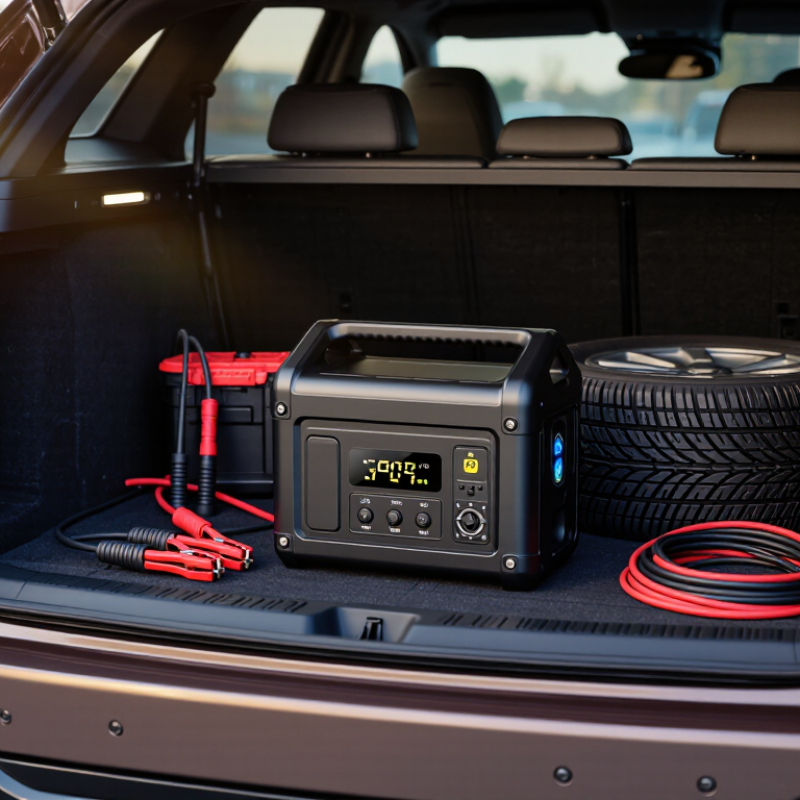
A lithium-ion jump starter delivers short, high-current power for a weak battery. It starts the engine, but it does not fully recharge the battery. A lead-acid booster pack is heavier, yet often tolerates repeated workshop use. A smart charger connects to household power and adjusts current automatically. It suits overnight recovery and long-term maintenance.
Charging method matters more than advertised peak amps.
Standard 12-volt lead-acid batteries commonly use constant-current and constant-voltage stages. AGM batteries may require a dedicated AGM setting. A low-current maintenance mode is gentler during storage, while a fast mode can create heat if the battery is damaged. Never confuse a USB power bank with a proper battery charger.
S&P Global Mobility reported that the average U.S. light vehicle age reached 12.6 years in 2024.
Older vehicles often have greater electrical demand and weaker batteries. My practical choice is a charger with reverse-polarity protection, an internal temperature sensor, clear charge indicators, and certified safety testing. Check the vehicle manual first. A higher number is not always better. I once valued peak current too highly and ignored cable quality. That was a poor decision.
Keep the unit charged, inspect its clamps, and test it before winter travel. Allow ventilation around lead-acid batteries, especially during extended charging.
Checking Vehicle Compatibility, Battery Specifications, and Power Requirements
How to Choose a Portable Car Battery Charger in 2026?
Vehicle compatibility comes before price or peak amps. Check whether your car uses a 12-volt or 24-volt system. Most passenger cars use 12 volts, while some commercial vehicles require 24 volts. Confirm the battery type too, including flooded lead-acid, AGM, EFB, or lithium-based designs. A charger suitable for one chemistry may damage another. Read the label. Do not guess.
Battery specifications also matter. Compare the charger’s rated starting current with the vehicle’s required cranking current, especially for diesel engines and cold climates. Peak amps can look impressive, but they may not reflect sustained output. I used to treat peak amps as the answer. That was too simplistic. The Battery Council International reports that lead batteries remain dominant in transportation, so many drivers still need proper lead-acid support. However, compatibility should never be assumed from appearance.
Power requirements deserve equal attention. Check the charger’s input voltage, charging time, cable rating, and usable capacity. A larger engine usually demands more starting power, while repeated starts drain a small unit quickly. S&P Global Mobility reported that the average U.S. vehicle age reached about 12.6 years in 2024, increasing the chance of worn batteries and higher starting demands. The IEA’s Global EV Outlook 2025 recorded more than 17 million electric-car sales in 2024. Remember, a portable 12-volt unit generally supports an EV’s accessory battery, not its high-voltage traction battery. That distinction is easy to miss.
How to Choose a Portable Car Battery Charger in 2026
Compare typical 12V battery capacity with a conservative charger-current guide. The charging-current values are approximately 10% of the battery's rated capacity and are intended for planning conventional 12V lead-acid charging. Always verify the vehicle and battery specifications before use.
Representative nominal values: motorcycle batteries are commonly around 8–20 Ah, passenger-car batteries around 45–75 Ah, SUV and pickup batteries around 60–110 Ah, and light-commercial diesel batteries around 80–120 Ah. Confirm voltage, battery chemistry, capacity, and charger mode in the owner's manual.
Evaluating Durability, Emergency Functions, Maintenance, and Storage
How to Choose a Portable Car Battery Charger in 2026?
A reliable portable charger should survive vibration, dust, temperature changes, and occasional drops. Look for a reinforced case, protected terminals, and clear battery-status indicators. In my experience, a bright display matters during nighttime roadside repairs. Choose a unit with tested thermal protection and automatic shutoff. Cheap plastic can crack in a cold trunk. I learned that the hard way. Water resistance is useful, but it does not make the charger waterproof.
Emergency functions deserve careful attention. Select a charger with reverse-polarity protection, short-circuit control, and an integrated flashlight. A warning alarm can prevent an incorrect connection when visibility is poor. Some models include an air compressor or USB outlets, which may help during travel. However, extra features can increase weight and charging time. Check the peak current, but do not judge performance by that number alone. Battery chemistry, cable thickness, and clamp quality also affect starting power.
Tips: Test the charger every few months, even if you never use it. Recharge it after each emergency. Store it above freezing, away from direct sunlight and loose metal objects. Keep the clamps clean and dry. Inspect cables for cuts before connecting them. Follow the vehicle manual, because some modern electrical systems need specific procedures. I would also record the purchase date and last recharge date. It feels unnecessary, yet it prevents forgotten maintenance. Storage inside a secure compartment is better than leaving the unit under a hot windshield. Check the manual again each year; my memory is not a maintenance schedule.