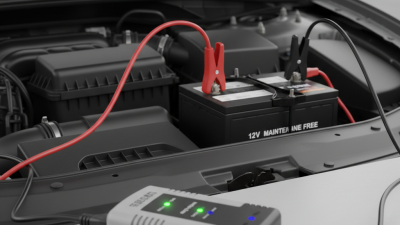
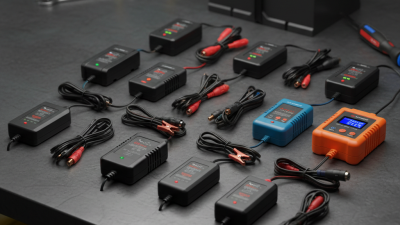
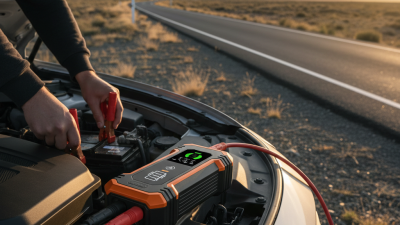
Choosing a smart battery charger in 2026 requires more than comparing screen size, charging speed, or price. The right model must match the battery’s chemistry, voltage, capacity, and intended use. A charger for a 12-volt AGM battery may damage a lithium battery without the correct charging profile. Small details matter, too. Check the connector, cable length, ventilation, temperature range, and reverse-polarity protection before buying.
Battery researcher Jeff Dahn has said, “The battery is the most important component of an electric vehicle.” His point also applies to charging equipment. A smart battery charger should protect that investment through controlled current, automatic voltage adjustment, temperature monitoring, and maintenance charging. Look for clear technical documentation, credible safety testing, and support from an established manufacturer. Marketing labels alone prove little.
Real-world testing can reveal uncomfortable weaknesses. A charger may work well in a warm garage but overheat beside a vehicle engine. A fast mode may reduce waiting time, yet repeated high-current charging can increase stress on some batteries. Read the battery manufacturer’s instructions carefully. Do not assume every automatic mode is genuinely intelligent. The best choice may be slower, simpler, and less impressive on a product page. It should wake a deeply discharged battery safely, stop at the correct voltage, and remain stable overnight. Even experienced buyers can overlook compatibility. That is why this guide examines practical specifications, safety features, charging behavior, and long-term reliability before recommending any smart battery charger.
How to Choose a Smart Battery Charger in 2026?
Identify Battery Chemistry, Voltage, and Capacity Before Buying
Battery chemistry is the first filter. Lead-acid, AGM, gel, and lithium batteries need different charging profiles. A charger designed for lead-acid batteries may damage a lithium battery’s protection system. The International Energy Agency reported that LFP batteries represented about 40% of global electric-car battery deployment in 2023. Chemistry is changing quickly.
Check the battery label before shopping. Confirm its nominal voltage, such as 12V, 24V, or 48V. Then verify the charger’s output voltage and charging stages. A “12V” lithium battery does not always use the same charging voltage as a 12V lead-acid unit. I always check the manufacturer’s maximum charge voltage twice. It feels excessive, but one mistake can shorten battery life.
Capacity matters too. It is usually listed in ampere-hours, or Ah. A practical charger often delivers around 10% to 20% of a lead-acid battery’s capacity. For example, a 100Ah battery may suit a 10A to 20A charger, if its specifications allow it. Lithium batteries can accept higher currents, but the battery management system sets the real limit. The Battery Council International’s market data continues to show lead-acid batteries remain widely used in vehicles and backup systems. That availability can make assumptions tempting. Do not guess. Compare chemistry, voltage, Ah capacity, temperature limits, and the charging profile printed in the technical sheet.
| Battery Chemistry | Typical Nominal Voltage | Common Pack Configuration | Recommended Charge Voltage | Typical Charge Current | Smart Charging Profile | Capacity Matching Guidance | Important Buying Considerations |
|---|---|---|---|---|---|---|---|
| Flooded Lead-Acid | 2 V per cell; commonly 6 V or 12 V | 6 cells for a 12 V battery | Approximately 14.2–14.7 V absorption; 13.2–13.8 V float at 25°C | About 0.10–0.20C for routine charging | Bulk, absorption, float, and temperature compensation | For a 50 Ah battery, a practical charger range is about 5–10 A | Choose a ventilated-area charging mode; avoid sealed-battery settings and excessive charging voltage |
| AGM Lead-Acid | 2 V per cell; commonly 12 V | 6 cells for a 12 V battery | Approximately 14.4–14.7 V absorption; around 13.2–13.8 V float at 25°C | About 0.10–0.30C, subject to the battery specification | AGM-specific bulk, absorption, and float stages | For a 50 Ah battery, approximately 5–15 A is commonly suitable | Use an AGM setting; the charger should prevent prolonged overcharging and excessive heat |
| Gel Lead-Acid | 2 V per cell; commonly 12 V | 6 cells for a 12 V battery | Typically about 14.0–14.3 V absorption; approximately 13.5–13.8 V float | About 0.10–0.20C | Low-voltage gel profile with controlled absorption and float | For a 50 Ah battery, approximately 5–10 A is a conservative range | Do not use an aggressive flooded or equalization mode unless explicitly approved by the battery manufacturer |
| Lithium-Ion NMC/NCA | 3.6–3.7 V per cell | 4S = 14.8 V nominal; 4.2 V per cell when fully charged | 4.20 V per cell; approximately 16.8 V for a 4S pack | Commonly 0.50–1.00C, if permitted by the pack and BMS | Constant-current/constant-voltage; no lead-acid equalization or routine float | For a 10 Ah pack, a 5–10 A charger may be appropriate when approved by the pack specification | The charger must match the exact cell count and include protection against overvoltage, short circuit, and overheating |
| Lithium Iron Phosphate (LiFePO4) | 3.2 V per cell | 4S = 12.8 V nominal; 3.65 V per cell when fully charged | Approximately 14.0–14.6 V for a 4S pack | Commonly 0.20–0.50C; higher rates require pack approval | LiFePO4 constant-current/constant-voltage; generally no equalization and no continuous float | For a 100 Ah battery, approximately 20–50 A is a common planning range | Confirm that the charger is designed for LiFePO4 and that the battery includes a suitable battery-management system |
| Nickel-Metal Hydride (NiMH) | 1.2 V per cell | 10 cells = 12 V nominal | No fixed pack voltage; charging is controlled by cell voltage behavior and temperature | About 0.10C for slow charging; approximately 0.30–1.00C for monitored fast charging | Negative-delta-V, temperature-rise, timer, and overheat protection | For a 2 Ah pack, slow charging is about 0.2 A; fast charging requires temperature monitoring | Use a charger specifically designed for NiMH; do not substitute a lithium or lead-acid profile |
| Nickel-Cadmium (NiCd) | 1.2 V per cell | 10 cells = 12 V nominal | No fixed pack voltage; charging depends on current, temperature, and voltage change | About 0.10C for slow charging; approximately 0.30–1.00C for monitored fast charging | Negative-delta-V, temperature, timer, and overcharge management | For a 2 Ah pack, a 0.2 A slow-charge rate is typical | Verify that NiCd charging is supported and follow applicable disposal and environmental requirements |