How to Choose the Best Portable Refrigerator for Your Needs?
Choosing the right portable refrigerator can be crucial for outdoor activities and travel. In recent years, the portable refrigerator industry has seen a surge in popularity. According to a report by Grand View Research, the global market for portable refrigerators is expected to reach $1.4 billion by 2025. This growth indicates a rising demand for efficient and reliable cooling solutions.
When selecting a portable refrigerator, it's essential to consider your specific needs. Some models offer more storage space, while others focus on portability. For instance, lightweight designs can weigh as little as 22 pounds, making transport easier. However, a smaller size might limit storage capacity. Understanding your priorities can help avoid a mismatch between expectations and performance.
Despite advancements, not all portable refrigerators perform equally. Some may struggle with energy efficiency, draining your battery quickly during extended trips. Additionally, not every brand guarantees durability in rugged conditions. By examining user reviews and expert opinions, you can avoid common pitfalls. Learning from others' experiences can guide you toward a well-informed decision.

Understanding Your Refrigeration Needs and Usage Scenarios
When considering a portable refrigerator, understanding your specific refrigeration needs is crucial. People often underestimate their actual usage scenarios. For instance, outdoor enthusiasts may need a model with a strong cooling capability for extended camping trips. According to a 2022 survey by the Outdoor Industry Association, 45% of campers cited food storage as a primary concern. This emphasizes the importance of capacity and cooling efficiency.
Usage scenarios also vary significantly. If you're planning short road trips, a compact unit may suffice. However, for longer voyages, larger models with better insulation properties are necessary. Research indicates that refrigerators with high thermal efficiency can save users up to 30% on energy consumption. When selecting a portable fridge, think about the duration and conditions of your trips. Are you hiking in warm climates? Or are you tailgating in cooler weather? These factors will influence the type of refrigerator that suits your needs best.
It’s easy to overlook the power sources as well. Some models rely on standard AC outlets, while others may need a car battery or solar power. This can limit your usage flexibility. A 2023 report from the Energy Efficiency Council suggests that around 40% of users found battery life inadequate during extended use. Be sure to evaluate your power options carefully. This will ensure your refrigerator meets all of your unique requirements during adventures or daily use.
Comparing Different Types of Portable Refrigerators
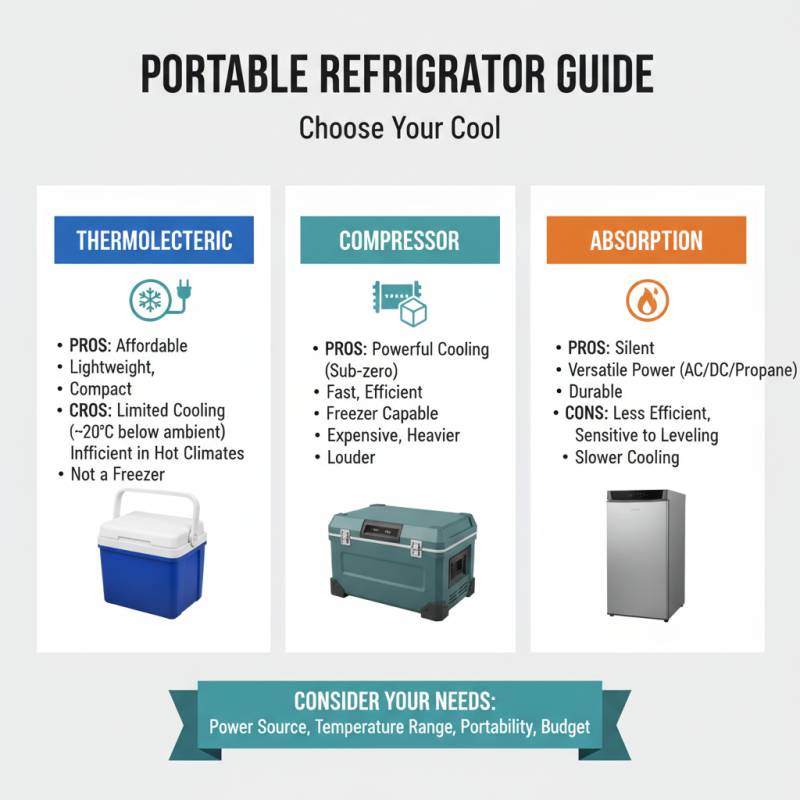
When comparing different types of portable refrigerators, consider your needs and situation. There are thermoelectric, compressor, and absorption models. Each type has its strengths and weaknesses.
Thermoelectric refrigerators are lightweight and energy-efficient. They work well in moderate climates but struggle in extreme heat. Thus, their cooling capacity can be inconsistent. If you're camping, they may be sufficient, but limited in hot weather.
Compressor refrigerators offer better cooling power. They can handle various temperatures, making them ideal for road trips or longer stays. However, they are heavier and consume more energy. If you need reliability, they might be worth the extra weight and power. Absorption refrigerators use gas or electricity and are great for off-grid use. Still, they can be bulky and less efficient in very hot settings. Each type has trade-offs to consider.
Key Features to Consider When Selecting a Portable Refrigerator
When selecting a portable refrigerator, consider key features that match your needs. Size is crucial. Think about the space you have and how much you plan to store. A compact design may work better for small trips, while a larger model suits extended outings or family camping.
Energy efficiency is another important factor. Look for models with good insulation and low power consumption. A well-insulated cooler may keep items cold longer without needing much power. This can lead to significant savings, especially on longer trips.
**Tips:** When in doubt, prioritize what you must keep cold. It often helps to make a list before choosing a model. Also, check how easy it is to transport. Are there wheels? Does it fit in your vehicle? A portable refrigerator should protect your food and drinks, so ensure it seals well and maintains temperature effectively.
Portable Refrigerator Features Comparison
This chart compares various key features of portable refrigerators, including capacity, weight, power consumption, temperature range, and price. This information can help you make an informed decision when selecting a portable refrigerator that meets your specific needs.
Evaluating Energy Efficiency and Power Options
When choosing a portable refrigerator, energy efficiency is a key factor. Reports indicate that well-designed models can consume as little as 45 watts per hour. This is essential for long trips away from power sources. An efficient refrigerator can greatly reduce the need for frequent recharges. The size and insulation quality play a significant role in energy usage. A smaller unit may not cool efficiently if it’s too spacious for your needs.
Power options also matter. Some refrigerators operate on AC or DC power, making them versatile for various situations. Many portable fridges have dual voltage capabilities. This means they can work in your home and your vehicle without issue. Understanding how much power each option consumes can help in planning your trips. It's important to note that an underpowered fridge can result in spoiled food.
Analyses show that around 20% of users overlook energy consumption when buying. Fortunately, assessing this feature can lead to better long-term savings. Adequate battery management is crucial for maximizing performance. If your refrigerator drains the battery quickly, it defeats its purpose. Balancing power options with efficiency is crucial for making an informed purchase.
How to Choose the Best Portable Refrigerator for Your Needs? - Evaluating Energy Efficiency and Power Options
| Model |
Capacity (Liters) |
Power Consumption (W) |
Energy Efficiency Rating |
Price (USD) |
| Model A |
30 |
45 |
A+ |
199 |
| Model B |
45 |
50 |
A |
249 |
| Model C |
60 |
55 |
A++ |
299 |
| Model D |
25 |
40 |
B |
179 |
Budgeting and Price Considerations for Portable Refrigerators
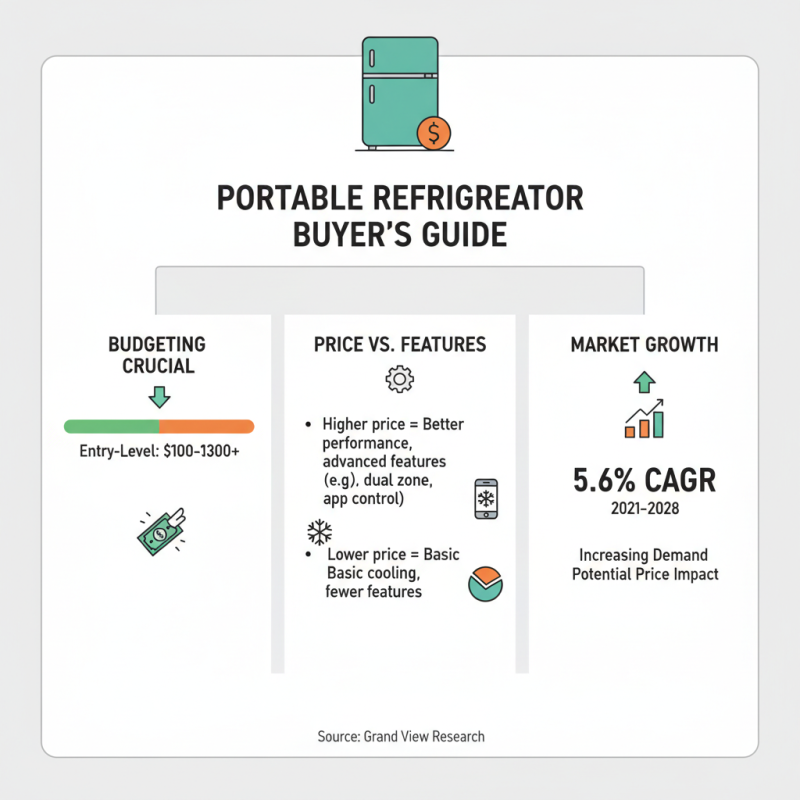
When choosing a portable refrigerator, budgeting is crucial. Prices vary widely, ranging from $100 to over $1,000. Higher-end models often boast better performance and features. A report by Grand View Research found that the portable refrigeration market is expected to grow at a CAGR of 5.6% from 2021 to 2028. This growth indicates increasing demand, which can affect prices.
Consider the features that matter most to you. Basic models often come at a lower cost but may lack durability. The average lifespan of a portable refrigerator is about 5-10 years. Investing a bit more can lead to a longer-lasting product. You might find yourself regretting a cheaper option when it breaks down. Are you willing to compromise on cooling efficiency? This can lead to food spoilage, costing more in the long run.
Your environment plays a role in your budget. If you're frequently camping or traveling, a rugged model might be necessary. These can be pricier, yet their durability often justifies the cost. Consumer reports suggest that spending around 15% more on a reliable model can save you from future disappointments. Assess your budget wisely and choose a refrigerator that meets both your needs and your wallet.