Choosing a 12 volt refrigerator is not just a matter of picking the largest model that fits. It is a decision about space, power, and the conditions of your trips. RVIA reported 333,733 U.S. RV wholesale shipments in 2024, showing the scale of a market where reliable onboard storage matters. The figure does not measure refrigerator demand, but it offers useful context for travelers comparing mobile appliances.
Power deserves close attention. A fridge may look efficient on a product page yet draw more energy in a hot vehicle or when opened often. Battery size, charging options, ventilation, and ambient temperature all affect real-world runtime. Small details matter. The U.S. Bureau of Economic Analysis reported that outdoor recreation generated about $1.2 trillion in economic output in 2023. That broad figure cannot tell you which refrigerator to buy, but it reflects how much activity happens beyond the home.
The ten tips ahead focus on practical checks: usable capacity, compressor performance, measured power draw, insulation, controls, noise, durability, installation space, warranty, and value. Compare test conditions, not just headline claims. A stated runtime is an estimate, not a promise. It is easy to overvalue capacity; power use deserves equal attention. The best choice depends on your battery setup, climate, and travel habits. A compact model may suit weekend drives, while longer trips call for a closer look at energy reserves and charging. A little uncertainty remains, because no specification can reproduce every trip. That is worth remembering before you buy.
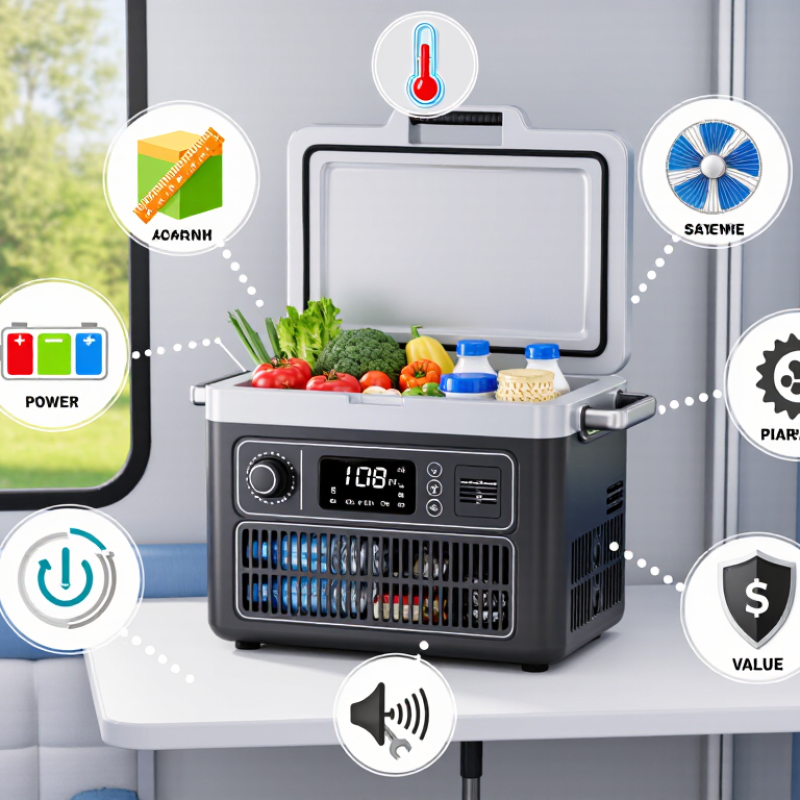
A 12-volt refrigerator uses electricity to move heat from inside the cabinet to the outside air. Most models use a compressor, similar to a household refrigerator, but with a low-voltage power system. When the internal temperature rises, the thermostat signals the compressor to start. The compressor then circulates refrigerant through coils, creating a cold interior. Simple in theory.
In practical use, insulation matters as much as cooling power. A well-insulated cabinet keeps food cold longer and reduces compressor running time. Airflow around the external coils is also essential. Leave clear space around the vents, especially inside a vehicle or a small cabin. Blocked vents can increase heat, noise, and energy use. I once assumed a full refrigerator would cool efficiently, but tightly packed food restricted air movement. That was a useful mistake.
Power demand changes with weather, temperature settings, and how often the lid opens. A typical unit may draw more current during compressor startup, then use less power after reaching the target temperature. Check the refrigerator’s voltage protection feature before connecting it to a battery. Some units stop automatically when voltage becomes too low, protecting the battery from deep discharge. Measure actual consumption with a meter if possible. Manufacturer estimates are helpful, but real conditions can differ. Keep the cable short and suitably thick to reduce voltage loss. Five degrees colder may sound harmless, yet it can increase energy use noticeably.
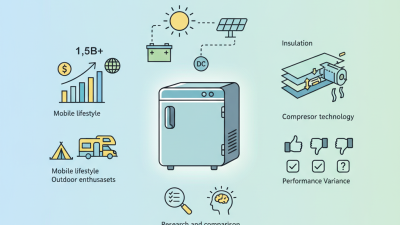
Choosing the right 12-volt refrigerator starts with an honest estimate of your storage needs. Measure the food you usually carry, not the space you wish you had. A compact unit may hold weekend meals, while longer trips require separate areas for drinks, fresh food, and frozen items. Leave some empty space for cold air to circulate. Overpacking reduces cooling efficiency.
Power planning deserves equal attention. Check the refrigerator’s average energy use in watt-hours per day, rather than relying only on its maximum watt rating. Multiply your battery voltage by its amp-hour capacity to estimate available watt-hours. Then allow room for inverter losses, battery protection limits, and colder or hotter weather. A 12-volt battery rated at 100 amp-hours does not always provide 1,200 usable watt-hours. My first estimate was too optimistic.
Track real use for several days. Place the refrigerator in shade, keep the lid closed, and record battery voltage each morning. Frequent opening can raise consumption more than expected. A vehicle battery may start an engine, but it is not automatically suitable for repeated deep discharge. Use a dedicated auxiliary battery and appropriate fusing. Check cable length and thickness, too; long, thin cables can cause voltage drop. Measure twice. Buy once. Even careful calculations can miss personal habits, so choose modest reserve capacity instead of operating at the limit.
10 Tips for Choosing the Best 12 Volt Refrigerator
Cooling performance should be judged under realistic conditions, not only by the lowest advertised temperature. Check how quickly the refrigerator cools from 25°C to 4°C. A strong compressor should recover temperature after repeated door openings. Look for stable cooling across the entire cabinet. Uneven temperatures can spoil delicate food. Measure the internal temperature with a separate thermometer. Built-in displays can be useful, but they are not always perfectly accurate.
Energy efficiency matters just as much on a weekend trip as cooling power. Compare daily energy use in amp-hours, not only rated watts. A 45-watt unit may consume less than expected if its compressor cycles efficiently. Test results should mention ambient temperature, ventilation, and battery voltage. Without those details, comparisons become unreliable. Keep the vents clear and leave space around the condenser. Poor airflow increases power consumption. Small choices matter.
Insulation thickness, lid design, and gasket quality strongly affect efficiency. A tight gasket should resist gently when you lift the lid. Dual-zone models offer flexibility, but they usually demand more energy. Choose the smallest practical capacity for your needs. Empty space wastes cooled air and storage room. I once selected a larger unit for convenience, then carried unnecessary weight every day. That decision still seems questionable. Solar charging, battery capacity, and overnight use must also match the refrigerator’s measured consumption. Temperature performance can look excellent while battery life disappoints.
| Tip | What to Compare | Practical Benchmark | Energy-Efficiency Check |
|---|---|---|---|
| 1. Set your required temperature | Check whether the unit can hold the temperature needed for chilled food, frozen food, or both. | A refrigerator compartment is commonly set around 3–4°C (37–40°F). A freezer is typically kept at −18°C (0°F). | Compare energy figures at the same set temperature; a colder setting generally requires more cooling. |
| 2. Choose the right cooling technology | Compare compressor refrigerators with thermoelectric coolers. | Compressor models can provide refrigerator and freezer temperatures. Thermoelectric coolers typically cool relative to the surrounding air and are generally unsuitable for dependable freezing. | Use energy-consumption figures for the intended temperature, rather than comparing different cooling technologies by peak current alone. |
| 3. Match usable capacity to your needs | Compare usable internal volume in litres, compartment layout, and space for the items you carry. | Check internal dimensions and basket or divider layout; external dimensions do not show how much usable space is inside. | Avoid choosing substantially more capacity than needed, since a larger cabinet can take more energy to cool, especially when frequently opened or lightly loaded. |
| 4. Compare daily energy use fairly | Look for energy consumption in watt-hours per 24 hours (Wh/24 h) or kilowatt-hours per day. | Compare test results only when ambient temperature, setpoint, loading, and test method are similar. | Daily energy use is more useful for battery planning than a compressor’s maximum or start-up current. |
| 5. Convert energy use into battery demand | Estimate amp-hours from the stated daily energy consumption. | At a nominal 12 V, 600 Wh is approximately 50 Ah (600 ÷ 12), before accounting for system losses and battery limits. | Allow extra battery capacity for conversion losses, other electrical loads, temperature effects, and the battery’s recommended usable discharge range. |
| 6. Check performance in hot weather | Review the manufacturer’s stated operating ambient-temperature range and test conditions. | Compare cooling results at the highest ambient temperature you expect to encounter; hot surroundings increase the heat the unit must remove. | Energy use measured in mild conditions may not represent consumption in a hot vehicle or campsite. |
| 7. Inspect insulation and lid sealing | Look for a well-insulated cabinet, a close-fitting lid, and a durable gasket. | A lid that closes evenly and a clean, undamaged seal help reduce warm-air leakage. | Better heat retention can reduce compressor run time, particularly when the unit is kept out of direct sun and opened less often. |
| 8. Compare temperature recovery | Check for pull-down or recovery-time data measured under stated conditions. | For a meaningful comparison, use the same starting temperature, ambient temperature, load, and target setting. | Pre-chilling food at home and limiting warm items can reduce the energy required to bring the contents down to temperature. |
| 9. Check power-input requirements | Confirm 12 V compatibility, input-voltage limits, connector type, and any stated low-voltage protection settings. | Follow the unit’s installation instructions for cable size, fuse rating, and connection method. | Undersized wiring can cause voltage drop and unreliable operation; do not use peak-current figures as a substitute for daily energy data. |
| 10. Consider placement and ventilation | Check the clearance required around vents and the recommended installation position. | Keep air inlets and outlets unobstructed, and avoid placing the refrigerator beside a heat source or in direct sunlight. | Good ventilation helps the cooling system release heat efficiently and can prevent unnecessary energy use. |
Choosing a 12 volt refrigerator starts with the journey, not the product photo.
The RV Industry Association recorded 313,174 wholesale recreational vehicle shipments in 2023, showing how many mobile users depend on compact appliances. For portability, check the empty weight, carry handles, lid clearance, and cable length. A refrigerator weighing 20 kilograms can become awkward on uneven ground. I learned this after lifting one across a muddy campsite. It was manageable, but not pleasant.
Durability needs more than thick plastic. Look for reinforced hinges, vibration-resistant compressor mounting, sealed controls, and corrosion-resistant hardware. Ask whether testing follows recognized appliance standards, such as IEC 60335-2-24, which addresses refrigeration appliance safety. Energy use also deserves measurement. The U.S. Department of Energy explains that appliance consumption varies with size, ambient temperature, and duty cycle. Therefore, compare watt-hours per day, not only advertised running watts. Those numbers can be surprisingly different.
Installation is often underestimated. Confirm ventilation around the compressor, a level mounting surface, fuse protection, and suitable cable size. A long, thin cable may cause voltage drop and poor cooling. Leave room for the lid to open fully. Secure the unit before driving; sliding equipment can damage both the refrigerator and its cabinet. The RV Industry Association’s shipment data reflects a broad market, but it does not guarantee every layout will fit. Measure twice. I would still add a ventilation margin, because real campsites are rarely as tidy as diagrams.
Controls should be easy to read in bright sun and simple to adjust with one hand. Check whether the display shows the set temperature clearly, and whether buttons respond without repeated presses. Small details matter. A useful control panel also remembers its settings after a brief power interruption. If you cannot test the unit, look for a manual that explains temperature ranges and error codes plainly.
Safety features deserve more than a quick glance. A low-voltage cutoff can help protect a vehicle battery, but confirm that its settings suit your battery type and use. Check for secure door latches, covered wiring, and clear ventilation requirements. Restricted airflow around a compressor may cause poor cooling or extra strain. Do not assume every model handles rough roads equally well; mounting and placement still matter.
Read the warranty before comparing prices. Note its duration, covered components, exclusions, and who pays for shipping or service. A longer warranty is not automatically better if support is difficult to reach. Cost includes more than the purchase price: consider power consumption, installation parts, and the space needed for airflow. A cheaper fridge may be the sensible choice for occasional trips, while frequent use can make efficiency more valuable. These estimates are imperfect, so compare real specifications rather than relying on a single advertised figure.
A practical 100-point evaluation model covering controls, safety features, warranty, cost, and everyday performance.
Cooling performance and energy efficiency receive the greatest weight because they directly affect food safety, battery life, and daily usability. Controls, safety features, warranty coverage, and total cost should also be reviewed carefully before purchase. Use this framework to compare models consistently, then adjust the weighting for your travel, camping, or backup-power needs.
Stay in touch with the latest National Luna Products and News!