How to Choose the Best 12V Battery Charger for Your Needs?
Choosing the right 12V battery charger is crucial for maintaining your equipment. A good charger can extend battery life and enhance performance. There are many options available, making it hard to select the best one for your needs.
When selecting a 12V battery charger, consider your specific requirements. Think about the type of battery you are charging. Different batteries need different chargers. For instance, AGM and lithium batteries have unique charging profiles. Look closely at the charger's specifications and features. A smart charger could be the best choice for automatic adjustments.
Don't overlook the importance of safety features. A charger with overcharge protection is vital. This can prevent damage to your battery. Despite the potential for confusion, taking your time can lead to a better decision. Reflect on your usage habits and how often you charge batteries. This insight will guide you in making an informed choice.

Understanding the Functions and Types of 12V Battery Chargers
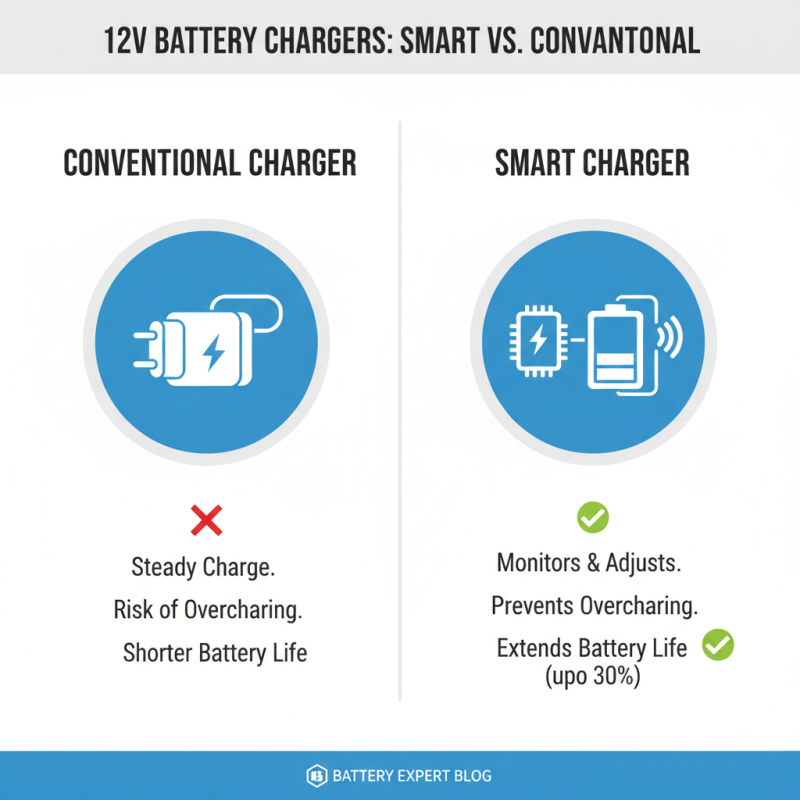
When selecting a 12V battery charger, it’s essential to understand the available types and their functions. There are primarily two types: conventional chargers and smart chargers. Conventional chargers provide a steady charge but may overcharge, damaging the battery. Smart chargers use advanced technology to monitor the battery's status and adjust the charging process accordingly. They can prevent overcharging. Industry reports suggest that smart chargers can extend battery life by up to 30%.
Charge rate is another crucial factor. Most 12V chargers offer different amperage levels, typically ranging from 2A to 10A. A lower amp rate is safer but takes longer to charge. Conversely, a higher amp rate speeds up the process, but it can lead to overheating if not managed properly. Studies indicate that using appropriate amperage can significantly reduce failure rates in batteries, with improper charging causing up to 50% of battery failures.
Lastly, consider compatibility. Not all chargers work with every battery type. Lead-acid, AGM, and lithium-ion batteries have unique requirements. Using the wrong charger can lead to performance issues. A recent survey highlighted that 40% of users unknowingly used incompatible chargers, leading to significant losses. Understanding these factors ensures you choose the right charger that meets your specific needs.
Key Features to Look for in a 12V Battery Charger
When selecting a 12V battery charger, there are key features to consider. One of the most important is the charge rate. Chargers come in various amp ratings. A higher amp rating allows for quicker charging, but it might not be suitable for all batteries. It's crucial to match the charger to your battery type.
Next, monitor compatibility. Not all chargers support every battery chemistry. Some work well with AGM and gel batteries. Others excel with lead-acid batteries. Thorough research can save you from potential damage. Additionally, look for safety features. Overcharge protection, short circuit prevention, and temperature control are vital. These elements can prevent mishaps during charging.
Another factor to weigh is portability. A compact charger with a lightweight design is easier to use in different locations. This is especially useful for those who work with boats or RVs. However, a smaller charger may lack power. Be cautious. It’s important to balance convenience and efficiency. Finally, consider a charger with built-in digital displays. They provide real-time data, which can be helpful for monitoring charging progress.
Comparing Smart Chargers vs. Conventional Chargers for Efficiency
When choosing a 12V battery charger, the decision often comes down to
smart chargers versus
conventional chargers.
Smart chargers are designed with advanced technology. They actively monitor
battery health and adjust their output accordingly. A report by the
Battery University indicates that these chargers can improve battery lifespan by
30%. This is a significant advantage for users long-term.
Conventional chargers lack this adaptive capability.
They deliver a fixed charge and may overcharge the battery if left unattended. This not only shortens
battery life but also poses risks of overheating. According to a study by the
National Renewable Energy Laboratory, overcharging can lead to up to a
50% reduction in battery efficiency.
Users have noted that conventional chargers can be less user-friendly. The need for constant monitoring
can be a hassle.
Smart chargers often come with additional features. Some have USB ports or built-in safety metrics.
However, they can carry a higher initial cost. Users might feel hesitant about investing more upfront.
Balancing affordability and technology is crucial. In some cases, the lack of simplicity in smart designs
can confuse users. For many, the choice between the two types depends on individual needs.
It's essential to reflect on these factors before making a decision.
Battery Capacity and Charging Speed: What You Need to Know
When choosing a 12V battery charger, considering battery capacity is crucial. Battery capacity, measured in amp-hours (Ah), indicates how much energy a battery can store. Larger capacity batteries need chargers that can handle higher loads. Smaller batteries can use less powerful chargers.
Charging speed varies too. Some chargers offer rapid charging. This saves time, but it can hurt battery life if used too often. Other chargers are slower but safer for the battery. Think about your needs. Do you often need a quick charge? Or is battery longevity more important?
Tips: Check your battery specifications. A mismatched charger can cause damage. Also, look for smart chargers that adjust the charging rate. This helps avoid overcharging. Remember, not all chargers are created equal. A fast charger may not always be the best option. Choose wisely.
Safety Considerations and Guidelines for 12V Battery Chargers
When selecting a 12V battery charger, safety comes first. It’s crucial to look for features like overcharge protection. Overcharging can damage the battery and pose a fire risk. A charger with short circuit protection adds an extra layer of safety. This feature prevents the charger from failing under unusual conditions.
Always consider the environment where you will use the charger. If you plan to charge in damp or outdoor settings, waterproof designs are preferable. A well-ventilated area is also important. Many people overlook this, which can lead to overheating. Regularly check for signs of damage, like frayed wires or burnt components.
Read user reviews carefully. Sometimes, what seems great on paper can turn out to be less reliable in practice. Look for feedback on the charger’s longevity and performance. A good charger should last for years with proper care. Reflect on your own usage needs. It may be tempting to choose the cheapest option, but investing in safety can prevent costly accidents.
How to Choose the Best 12V Battery Charger for Your Needs? - Safety Considerations and Guidelines for 12V Battery Chargers
| Feature |
Description |
Safety Considerations |
| Automatic Shut-off |
Automatically turns off when the battery is fully charged. |
Prevents overcharging, which can damage the battery. |
| Trickle Charging |
Maintains battery charge without overcharging. |
Suitable for long-term storage of batteries. |
| Multi-stage Charging |
Incorporates multiple phases like bulk, absorption, and float charging. |
Enhances battery life and efficiency. |
| LED Indicators |
Shows charging status and faults. |
Provides visual feedback to prevent misuse. |
| Short Circuit Protection |
Prevents damage to the charger and battery in case of a short. |
Crucial for safety during operation. |