How to Choose the Best Grain Silo in 2026?
How to Choose the Best Grain Silo in 2026? The decision now reaches beyond capacity and steel thickness. A reliable grain sild must protect quality, reduce energy waste, and support fast loading during harvest. Moisture migration, condensation, insects, and uneven airflow can quietly damage valuable grain. The warning signs may be small: a warm patch near the roof, a musty smell, or crusted kernels beneath the surface.
The FAO’s State of Food and Agriculture 2019 reported that about 14% of food is lost between harvest and wholesale worldwide. Better storage cannot solve every loss, but it can prevent avoidable deterioration. USDA Grain Stocks reports also show why storage planning matters. Crop volumes and regional inventories can change sharply each season. A silo sized for an average harvest may become a bottleneck during a strong one.
Dr. Kenneth Hellevang, a respected grain-storage engineer at North Dakota State University, emphasizes, “Proper grain management requires controlling temperature and moisture.” His point is practical. Choose a system with dependable aeration, accurate temperature cables, safe access, and discharge equipment suited to your crop. Check the fan’s airflow, not only its horsepower. Ask whether the roof can handle local snow and wind loads. Consider corrosion protection near fertilizer or coastal air.
The uncomfortable truth is that the cheapest silo may become the most expensive choice. Many buyers focus on the initial quotation. They overlook electricity, maintenance, cleaning time, and spoilage risk. A careful 2026 evaluation should compare total ownership cost, supplier experience, warranty terms, and local service availability. Industry reports provide useful direction, but site conditions still decide performance.
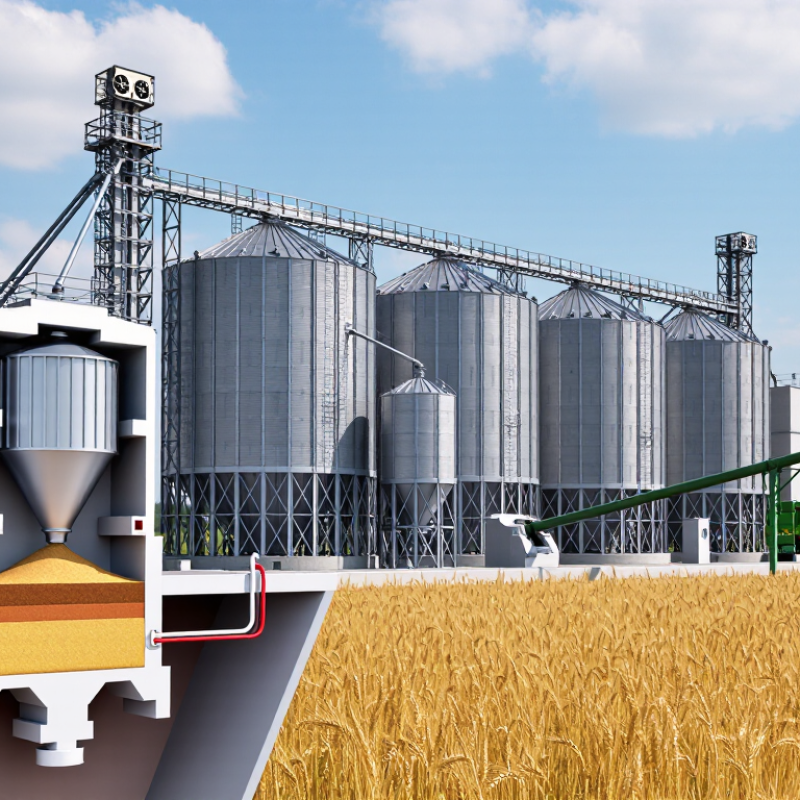
Understanding Grain Silo Types and Their Main Applications
Choosing a grain silo begins with its application, not its advertised capacity. FAO’s 2024 Statistical Yearbook reports more than 3 billion tonnes of global cereal production in 2023. That scale increases pressure on safe, efficient storage. A flat-bottom silo suits long-term storage at large farms and commercial terminals. It offers high capacity and economical construction. However, unloading usually requires conveyors or sweep systems.
A hopper-bottom silo supports frequent turnover and cleaner discharge. Its sloped floor moves grain toward the outlet, reducing manual cleaning and residual carryover. This design fits feed mills, seed facilities, and smaller receiving sites. It usually costs more per tonne of capacity. Aeration still matters. A hopper cannot correct grain that entered too wet.
For temporary storage, grain bags can provide flexible capacity during harvest peaks. They need firm ground, careful sealing, and regular inspection for tears or moisture. The USDA’s Grain and Feed Annual reports repeatedly highlight storage, transport, and quality management as critical factors in grain supply chains. Temperature cables, airflow control, and moisture monitoring should match the crop and local climate. In humid regions, poor ventilation can damage grain quickly. In cold regions, condensation creates a quieter risk. Capacity alone misleads. I would compare usable capacity, discharge speed, foundation conditions, energy use, and expected turnover before selecting a silo. The cheapest structure may become expensive when cleaning, spoilage, and downtime are counted.
How to Choose the Best Grain Silo in 2026? – Understanding Grain Silo Types and Their Main Applications
This comparison shows representative nominal storage capacities for common grain storage systems. Hopper-bottom steel silos suit frequent loading and unloading, flat-bottom steel silos support economical bulk storage, concrete tower silos serve large terminals, and grain bags provide flexible short-term capacity.
Capacity values are representative industry figures in metric tonnes; actual capacity depends on silo dimensions, grain density, moisture content, aeration requirements, and local engineering standards.
Assessing Storage Capacity, Grain Quality, and Site Requirements
Measure the usable volume, not only the advertised capacity, because cones, ducts, and safe operating space reduce storage. Match capacity with harvest size, delivery schedules, and expected expansion. A 1,000-ton silo may suit one farm but create unnecessary costs elsewhere. Check whether trucks can turn safely, foundations suit the soil, and maintenance crews can reach ladders and inspection points. Site limitations matter. I once underestimated drainage needs; seasonal water later complicated access and cleaning.
Grain quality depends on more than airtight walls. Select systems with reliable aeration, temperature monitoring, moisture checks, and accessible sampling points. Sensors should be calibrated and compared with manual readings during commissioning. Watch for condensation beneath the roof, uneven airflow, and warm grain near the center. These details often reveal trouble before visible spoilage appears. Ask an independent engineer to review structural loads, local weather exposure, and electrical safety. A spreadsheet may look exact, but field conditions are less cooperative.
Tips: Leave room for safe grain movement and future equipment. Test the soil before designing the foundation. Request maintenance records and sensor accuracy data. Inspect the roof after heavy rain. If the proposed capacity feels excessive, recalculate using real harvest records, not optimistic forecasts.
Comparing Silo Materials, Construction, and Safety Features
How to Choose the Best Grain Silo in 2026?
In 2026, silo selection depends on material, construction quality, and daily safety controls. Galvanized steel offers strong weather resistance and easier installation. Stainless steel handles corrosion better, especially in humid storage areas. Concrete provides thermal stability, but repairs can be more demanding. The correct choice depends on grain type, climate, capacity, and maintenance skills. During field inspections, I have seen small foundation cracks become expensive problems. They are easy to overlook.
Tips: Check the steel coating thickness, bolt quality, and floor support before purchase. Ask for structural drawings and inspection records. Compare lifecycle costs, not only the initial price. A cheaper design may require frequent cleaning and repairs.
Construction details affect service life. Bolted panels allow easier replacement, while welded sections can reduce leakage when produced correctly. Every silo needs a level foundation, reliable aeration, and safe access points. Temperature cables can identify hot spots before spoilage spreads. Pressure relief and dust-control features also deserve close attention. Guardrails, non-slip ladders, emergency stops, and clear maintenance paths reduce avoidable injuries. I would not claim that one design fits every farm. Even experienced buyers can underestimate ventilation needs during a wet harvest. Inspectors should verify load calculations, drainage, and assembly quality before filling the silo.
Evaluating Automation, Maintenance, Energy Use, and Operating Costs
Choosing the best grain silo in 2026 requires more than checking storage capacity. Automation should reduce routine labor without creating a fragile control system. Look for level sensors, temperature probes, automated aeration, and clear alarm settings. A local control panel remains valuable when internet access fails. Simple systems often work better.
Maintenance begins with access. Inspectors should reach fans, conveyors, ladders, and discharge gates without unsafe improvisation. Galvanized surfaces, sealed bearings, and corrosion-resistant fasteners can reduce repair frequency. Ask how quickly common parts can be replaced. A low purchase price may hide expensive downtime. It happens.
Energy use deserves careful measurement. Efficient fans can lower electricity consumption, but poor airflow design may force them to run longer. Install separate meters for aeration, conveying, and lighting. Compare actual power use during humid nights and cool mornings. Seasonal data is more useful than a single sales estimate. Some calculations remain uncertain.
Operating cost also includes cleaning, calibration, software updates, inspections, and staff training. Remote monitoring can identify heating grain before spoilage spreads, yet false alarms may waste attention. During evaluation, request maintenance records from similar installations and examine the assumptions behind projected savings. I would test the alarm system under realistic failure conditions, not only during a scheduled demonstration. A reliable silo should be efficient, repairable, and understandable to the people operating it.
Selecting the Best Grain Silo for 2026 and Future Expansion
How to Choose the Best Grain Silo in 2026?
Selecting the best grain silo requires more than comparing today’s storage capacity. Plan for future expansion, changing harvest volumes, and stricter quality controls. FAO’s State of Food and Agriculture estimates that about 14% of food is lost between harvest and retail. Poor moisture management remains a major contributor. A well-designed silo can reduce this risk through controlled aeration, temperature monitoring, and reliable discharge systems.
USDA National Agricultural Statistics Service reports that U.S. off-farm grain storage capacity exceeds 13 billion bushels in recent surveys. This scale highlights an important lesson: capacity alone does not guarantee performance.
Select silos with modular construction, accessible foundations, and space for additional units. Review site drainage, vehicle movement, power availability, and fire-safety requirements before construction. A ten-year expansion model should include optimistic and disappointing harvest scenarios. Perfect forecasting is impossible.
Tips:
Measure actual incoming grain volumes for at least three seasons. Choose aeration fans for your local climate, not only the average temperature. Install independent temperature cables and moisture sensors. Check whether conveyors can handle future throughput. Ask for corrosion protection details, inspection access, and maintenance records. Keep spare capacity for wet grain, because hurried decisions during harvest often become expensive. I would also question oversized designs. Empty steel still costs money, and unused capacity can hide weak planning. Consult an agricultural engineer and verify recommendations against FAO guidance, USDA storage data, and applicable national safety standards.