How to Choose Waterproof Switchgear for Global Projects?
Global projects rarely fail because a switchgear cabinet looks inadequate. They fail when site conditions were underestimated.
The IEA’s Electricity 2024 report forecasts average global electricity-demand growth of 3.4% annually through 2026. More power networks also mean more outdoor switching equipment. In coastal substations, salt spray can enter through a poorly tightened cable gland. In tropical sites, condensation may form behind the door gasket before sunrise. In dusty industrial zones, conductive particles can settle on insulators and terminals.
Waterproof Switchgear selection must therefore begin with evidence, not marketing language. IEC 60529 defines IP protection ratings, while IEC 62271-200 addresses metal-enclosed high-voltage switchgear. An IP66 enclosure may resist powerful water jets, but it does not automatically guarantee long-term performance underwater. IP68 claims also require careful review of test depth, duration, and installation conditions.
Electrical-safety expert John Cadick is often quoted as saying, “Electrical safety is not a matter of luck.” That warning remains practical. Buyers should verify short-circuit ratings, corrosion protection, operating temperature, altitude limits, gasket materials, and factory test records. They should also request project references from similar climates.
The World Bank’s Global Electrification Database shows continuing infrastructure gaps across many regions. Reliability requirements will not be identical everywhere. A desert feeder, offshore platform, and flood-prone utility room need different designs.
Some specifications still overfocus on IP ratings. That is a weakness. Real protection depends on enclosure design, drainage, installation quality, maintenance access, and local compliance. Choosing Waterproof Switchgear means matching tested performance to the physical reality of the project.
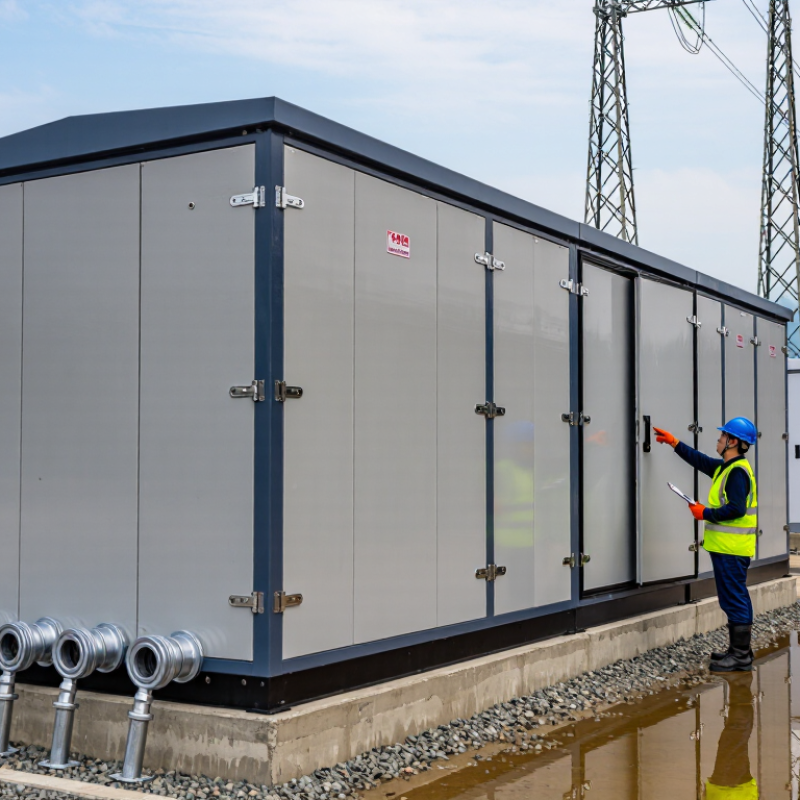
Define Waterproof Ratings and Project Requirements
Choosing waterproof switchgear starts with defining the actual exposure, not selecting the highest IP code. IEC 60529 rates solid protection with the first digit and water protection with the second. IP65 resists dust and water jets. IP66 handles stronger jets. IP67 permits temporary immersion, while IP68 depends on the manufacturer’s stated depth and duration. These ratings are not interchangeable. A cabinet surviving rain may still fail under condensation.
Project requirements must describe the site in measurable terms. Record rainfall, washdown pressure, immersion risk, temperature range, ultraviolet exposure, salt, dust, altitude, and maintenance access. NEMA 250 also classifies enclosure protection, but its categories should not be treated as automatic equivalents to IP ratings. Engineers should verify test conditions, cable entries, door seals, drainage, and corrosion resistance. Small details matter. One unsealed gland can defeat the enclosure.
The International Energy Agency’s 2023 Electricity Grids and Secure Energy Transitions report estimates annual grid investment must rise from about 300 billion dollars to over 600 billion dollars by 2030. More outdoor infrastructure increases the cost of preventable enclosure failures. In practice, specifications often focus too heavily on IP numbers. That is a weakness. A coastal installation may need stronger corrosion protection than a dry inland site, even with the same IP rating. Requirements should also include short-circuit withstand, operating voltage, local certification, spare parts, and inspection intervals. Assume nothing. Check the environment twice.
How to Choose Waterproof Switchgear for Global Projects?
The IP code is defined by IEC 60529. The first digit indicates protection against solid objects and dust, while the second digit indicates protection against water. IP65 and IP66 are commonly considered for outdoor enclosures exposed to water jets; IP67 adds temporary immersion protection up to 1 metre for 30 minutes, while IP68 requires immersion conditions to be agreed with the manufacturer.
Select the rating according to the highest expected exposure, including rain, hose-down cleaning, flooding risk, condensation, dust, installation orientation, cable entries, and local project standards.
Match Switchgear Materials to Climate and Site Conditions
Choosing waterproof switchgear for global projects starts with the site, not the catalogue. Climate changes material performance. Coastal installations face salt spray, while desert sites bring dust, heat, and intense ultraviolet exposure. Stainless steel resists corrosion well, but suitable grades still depend on salt concentration and maintenance access. Powder-coated steel can work inland, yet damaged coatings may rust beneath the surface.
Consider non-metallic enclosures for chemical plants, wastewater facilities, or locations with persistent humidity. Polycarbonate and glass-reinforced polyester are lightweight and corrosion-resistant. They may, however, age differently under strong sunlight or repeated temperature changes. Check the enclosure’s IP rating, gasket quality, cable glands, and door compression. An IP rating alone is not enough. Condensation can still form inside a tightly sealed box during cold nights.
Cold regions need materials and seals that remain flexible below freezing. Hot regions require attention to internal temperature rise and ventilation design. In snowy areas, place cable entries away from meltwater paths. On dusty sites, avoid unnecessary openings. Field inspections should include fasteners, hinges, drainage points, and signs of coating failure. Small details matter.
A common mistake is choosing the highest rating without studying the environment. That approach feels safe, but it can increase cost and hide thermal problems. Project teams should compare climate records, chemical exposure, cleaning methods, and local electrical requirements. A practical selection may be less perfect, but it should remain serviceable after years of weather, maintenance, and human error.
Evaluate Electrical Performance, Safety, and Compliance
Waterproof switchgear should be selected as a safety system, not as a sealed metal box.
Start with electrical performance: rated voltage, short-circuit withstand, temperature rise, insulation coordination, and switching endurance. For wet locations, verify the tested IP level under IEC 60529. IP65 resists dust and water jets; IP66 handles stronger jets. Neither rating guarantees corrosion resistance or safe operation after condensation. That distinction matters.
The IEA Electricity 2024 report expects global electricity demand to grow by an average 3.4% annually through 2026. Growing loads make thermal margins and fault ratings more important in remote installations. Check the complete assembly against IEC 61439, and coordinate protective devices with IEC 60947 requirements. Ask for type-test evidence, routine-test records, enclosure materials, gasket data, and verified cable-entry methods. Do not accept a certificate without its scope.
Safety also depends on human access. NFPA’s Home Fires Involving Electrical Distribution and Lighting Equipment report recorded about 35,150 home fires annually from 2012 to 2016. That statistic is residential, not a direct switchgear failure rate, but it shows the cost of weak control. Specify earthing continuity, door interlocks, isolation distances, arc-flash labeling, and maintenance access. Field teams should inspect condensate drainage, damaged seals, and loose glands after transport.
I would still challenge the specification. Will it survive salt spray, washdown, heat, and local grid faults? Many projects test only the first two.
Select Suppliers Through Testing, Certification, and Lifecycle Cost Analysis
Waterproof switchgear selection should begin with evidence, not catalogue language. Ask suppliers for type-test reports, routine-test records, and enclosure verification under IEC 60529. An IP66 rating indicates protection against dust and powerful water jets, but it does not guarantee performance after ultraviolet exposure, salt spray, or repeated door movement. Site conditions matter more than labels.
Require testing that reflects the project environment. Check temperature-rise results, short-circuit withstand ratings, corrosion resistance, gasket ageing, and cable-entry sealing. Independent laboratory reports deserve greater weight than supplier declarations. Certification must also match the destination market, installation method, and maintenance rules. A missing test boundary can become an expensive assumption.
Lifecycle cost needs real numbers. Uptime Institute’s 2023 Global Data Center Survey reported that 60% of respondents experienced outages costing at least 100,000 US dollars. That figure makes cheap enclosures look less attractive when moisture causes a shutdown. Compare purchase price, installation hours, spare seals, inspection frequency, energy losses, and replacement access. Use a ten-year cost model. Include shipping delays and technician travel. Be careful with optimistic maintenance estimates. They are often too neat. A practical supplier should provide failure data, service intervals, and clear warranty limits. No laboratory test reproduces every coastal site, dusty substation, or rushed installation. That is worth admitting.