How to Choose the Right Industrial Panel Hinge?
Choosing the right Industrial Panel Hinge is a small engineering decision with significant operational consequences. In a factory, a hinge may open an electrical enclosure dozens of times daily, beside vibration, dust, coolant, and temperature changes. A weak selection can cause door sag, seal compression, misalignment, or unsafe access. The International Federation of Robotics reported 541,302 industrial robots were installed worldwide in 2023, showing how demanding modern production environments have become. Hinges supporting automation enclosures must therefore match real operating conditions, not only catalog dimensions.
A reliable selection process begins with load, door size, opening angle, and mounting method. Engineers should also review corrosion resistance, cycle life, removable-pin design, and compatibility with gaskets or locking systems. IEC 60529 remains essential when enclosure protection requires an IP rating, although the hinge itself does not automatically guarantee that rating. That detail is often overlooked. Reports from Fortune Business Insights and Grand View Research describe continued expansion in industrial automation and enclosure-related applications, increasing demand for durable access hardware. However, market growth alone does not identify the best hinge for a specific machine. Site evidence matters more.
Inspect an existing panel after several months of use. Look for polished wear marks, loose fasteners, uneven gasket contact, or a door that needs lifting before closing. These clues reveal practical loading that drawings may miss. Stainless steel may suit washdown areas, while zinc-plated steel can be adequate in controlled indoor settings. The final choice should balance strength, serviceability, environmental exposure, and total lifecycle cost. There is no universal hinge. Careful testing remains necessary.
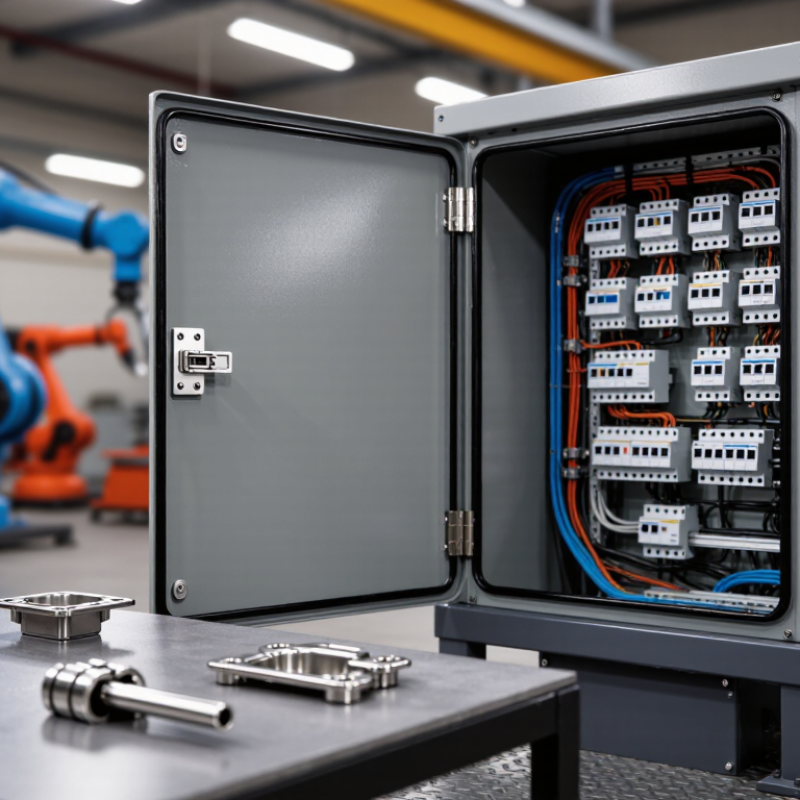
Define the Operating Requirements for the Industrial Panel Hinge
Choosing an industrial panel hinge starts with the panel’s real operating conditions, not its catalog appearance. Record the panel weight, dimensions, center of gravity, and required opening angle. Then estimate the hinge load during opening, closing, vibration, and accidental support. Measure it twice. If operators open the panel fifty times daily, cycle life matters more than a low purchase price. Access direction also matters. Vertical doors, removable covers, and upward-opening lids create different force patterns.
Define the environment precisely. Note temperature swings, moisture, cleaning chemicals, dust, salt exposure, and nearby heat sources. A hinge for a dry cabinet may fail quickly beside a washdown area. Specify corrosion resistance, surface finish, operating temperature, and whether lubrication is practical. Do not assume the enclosure seal will protect the hinge. Gaps and repeated movement can invite contamination. Select the mounting method after checking panel thickness, frame clearance, fastener access, and service space. Small clearances often become expensive problems.
Translate these requirements into measurable targets: load rating, cycle count, opening torque, closing control, and positional stability. For heavy panels, use a safety margin, but do not hide poor alignment behind an oversized hinge. Alignment deserves attention. A practical trial should reproduce real vibration, temperature, and operator force. Inspect loosened fasteners, deformation, noise, and seal damage after testing. I have seen sound designs fail because the hinge was chosen before the cable path was checked. That detail is easy to miss. The first estimate is rarely perfect. Recheck it when the panel, gasket, or latch changes.
How to Choose the Right Industrial Panel Hinge?
Define the Operating Requirements for the Industrial Panel Hinge
Before selecting an industrial panel hinge, define the required ingress protection of the complete panel assembly. The chart compares the first IP digit, which indicates protection against solid objects, with the second IP digit, which indicates protection against water, according to IEC 60529. Higher protection levels may require sealed hinges, compatible gaskets, controlled compression, and suitable installation tolerances.
Match Hinge Materials and Finishes to the Working Environment
How to Choose the Right Industrial Panel Hinge?
A panel hinge must match its working environment, not just its load rating. Stainless steel suits washdown areas, coastal air, and chemical exposure. Zinc-plated steel works better in dry, controlled interiors. Aluminum reduces weight, but it may lose strength under repeated impact. Material choice is rarely perfect.
The NACE IMPACT study estimated global corrosion costs at about $2.5 trillion annually, equal to roughly 3.4% of global GDP. This figure explains why surface protection deserves careful attention. In humid rooms, select passivated or coated stainless steel. In dusty factories, avoid finishes that trap abrasive particles. For outdoor enclosures, use a durable coating system and check edge coverage. ISO 12944 corrosion categories can help define the required protection level, although real exposure may vary around one site.
Tips: Touch the hinge after installation. Look for white corrosion, staining, loose fasteners, or coating damage. Test movement with the panel fully loaded. Salt-spray results can mislead; ASTM B117 itself does not predict every field condition. Ask for coating thickness, substrate details, and test limits. A hinge that looks clean after testing may still fail near cut edges. Review the choice after one season. That practical check is often missed.
Calculate Load, Door Size, and Required Hinge Capacity
How to Choose the Right Industrial Panel Hinge?
Calculate Load, Door Size, and Required Hinge Capacity
Choosing an industrial panel hinge starts with the door, not the hinge catalog. Measure the panel’s height, width, thickness, and total weight. Include locks, cables, handles, seals, and attached equipment. A steel door weighing 45 kilograms may carry another 8 kilograms after installation. Small additions matter.
Calculate the hinge load from both weight and leverage. If the door’s center of gravity sits 0.45 meters from the hinge axis, a 53-kilogram door creates about 234 newton-meters of torque. Use the force of gravity, 9.81 m/s², in the calculation. Divide the torque across the hinges, but do not assume equal sharing. Frame flexibility and alignment can shift most of the load onto one hinge. This is where many basic estimates fail.
Choose a combined hinge capacity above the calculated load. A safety factor between 1.5 and 2 is commonly practical for stable indoor panels. Increase it for vibration, frequent cycling, outdoor exposure, or impact. A tall door also needs enough vertical spacing between hinges to control twisting. Three hinges may support weight better than two, but poor alignment can still cause binding. I have seen a lightweight panel sag because the mounting surface was uneven. Recheck the frame, fasteners, and hinge axis before approving the design. Leave clearance for seals and full opening movement. A calculation is only a starting point.
How to Choose the Right Industrial Panel Hinge? - Calculate Load, Door Size, and Required Hinge Capacity | Panel Type | Door Size
(W × H × T) | Door Mass
(kg) | Center-of-Gravity Offset
(m) | Hinge Spacing
(m) | Hinges Used
for Calculation | Door Weight
(N) | Opening Moment
(N·m) | Maximum Static Load
per Hinge (N) | Safety Factor | Required Rating
per Hinge | Suggested Minimum
Nominal Rating |
| Light inspection panel | 500 × 700 × 30 mm | 20 | 0.25 | 0.50 | 2 | 196 | 49 | 196 | 2.0 | 392 N
(40 kgf) | 500 N
(51 kgf) |
| Medium electrical enclosure door | 800 × 1,200 × 40 mm | 45 | 0.35 | 0.80 | 2 | 441 | 154 | 413 | 2.5 | 1,034 N
(105 kgf) | 1,200 N
(122 kgf) |
| Large reinforced access door | 1,000 × 1,800 × 50 mm | 90 | 0.45 | 1.20 | 2 | 883 | 397 | 772 | 3.0 | 2,316 N
(236 kgf) | 2,500 N
(255 kgf) |
| Heavy insulated service door | 1,200 × 2,000 × 60 mm | 140 | 0.50 | 1.40 | 2 | 1,373 | 687 | 1,177 | 3.0 | 3,531 N
(360 kgf) | 4,000 N
(408 kgf) |
| Calculation basis: Door weight = mass × 9.81 m/s². Opening moment = door weight × center-of-gravity offset. For a two-hinge arrangement, the estimated maximum static reaction per hinge is: Maximum hinge load = (door weight ÷ 2) + (opening moment ÷ hinge spacing) Required hinge rating = maximum static load per hinge × safety factor. Values are preliminary sizing estimates and should be verified against the hinge manufacturer’s rated load, mounting orientation, fastener strength, door deflection, impact loads, vibration, operating frequency, and environmental conditions. The nominal rating should be equal to or greater than the required rating. |
Select the Suitable Hinge Type and Mounting Configuration
Choosing the right industrial panel hinge starts with the panel’s movement, load, and environment. A hinge that fits the hole pattern may still fail under vibration. In field inspections, I check door weight, center of gravity, opening angle, and cycle frequency. Record them before comparing hinge types. A small mismatch becomes obvious later. For light access panels, a compact butt hinge may be adequate. Removable hinges suit service doors requiring frequent panel removal. Continuous hinges distribute load along the edge and reduce local stress. Lift-off hinges can speed maintenance, but they need accurate alignment.
Mounting configuration matters as much as hinge type. Weld-on hinges create a rigid connection, yet repair work becomes difficult. Screw-mounted hinges allow replacement and adjustment, especially on painted or thin panels. Through-bolting is stronger than short screws when the frame accepts backing plates. Concealed mounting protects the hinge from impacts, but it can complicate inspection. Check clearance behind the panel before drilling. Also verify fastener material, thread engagement, and washer size. Do not rely on nominal dimensions alone.
I prefer a trial installation with the actual gasket, latch, and cable routing. The door should open smoothly without forcing the hinge leaves sideways. Test it under realistic temperature and vibration conditions. I once approved a neat layout that blocked a service tool, so the design had to change. That mistake was avoidable. Leave practical access for cleaning, lubrication, and future replacement. If the panel sags, revisit the load path rather than simply tightening fasteners.