7 Industrial Vacuum Piping Tips for Buyers
Buying industrial vacuum piping can look straightforward until a system loses suction, clogs at a bend, or wears through near a pickup point. Industrial Vacuum Piping should be selected around the material, airflow, distance, and operating schedule—not just pipe diameter. Small decisions matter.
A buyer should confirm what will move through the line: fine dust, abrasive chips, warm air, or mixed debris. Each puts different demands on pipe material, wall thickness, joints, and grounding. Ask suppliers for documented specifications, vacuum ratings, and compatibility details for your process. A polished catalog photo cannot answer those questions. Neither can a vague promise.
Layout deserves equal attention. Long runs, sharp elbows, undersized branches, and poorly placed cleanouts can increase resistance and complicate maintenance. Picture a technician clearing a blockage above a production aisle; access is not a minor detail. Compare total installed cost, including supports, fittings, inspection access, and future expansion. The cheapest quote may leave these out.
This guide presents seven practical checks for evaluating a piping system before purchase. It focuses on questions buyers can verify, not claims that sound impressive. Still, no checklist can replace site measurements or a qualified review of the system design. That is worth remembering. Some details become obvious only after startup, so sound planning should leave room to learn. Check airflow at likely demand, not only on paper, and ask how wear or changing materials could affect the line. A little skepticism helps.
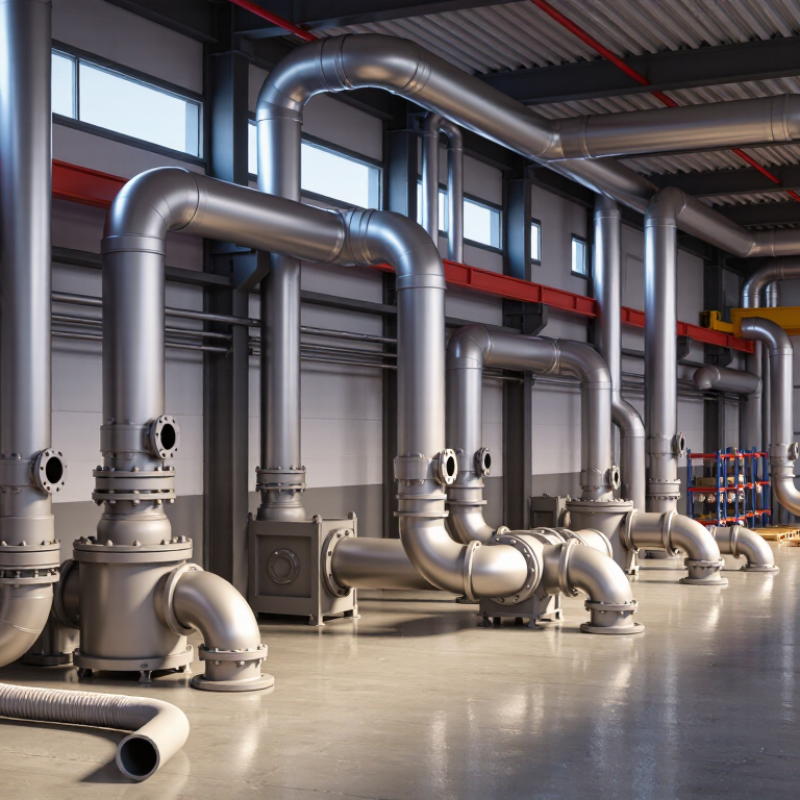
Understanding Industrial Vacuum Piping and Its Role
Industrial vacuum piping links the pickup point, separator, filter, and vacuum source. Its job is to move air and, in many systems, dust or product without excessive pressure loss. Pipe diameter, run length, elbows, and surface condition all affect performance. A narrow branch may look tidy, yet create a noticeable drop in suction at a distant hood. Smooth, appropriately sized runs and gradual bends usually help maintain flow.
Leaks matter. The U.S. Department of Energy’s Improving Compressed Air System Performance sourcebook reports that leaks can waste 20–30% of compressor output in poorly maintained compressed-air systems. That figure is not a vacuum-piping benchmark, but it underlines why joints deserve regular checks.
Listen for a hiss, inspect gaskets, and compare suction at the pickup with suction near the source. Small details matter. Dust buildup can quietly narrow a line, while an oversized pipe may increase cost without improving capture.
A practical design review should consider the material being conveyed, cleaning access, and future branch connections. I would still verify performance under real operating conditions; drawings alone can miss awkward restrictions. That sounds obvious, but it is often overlooked.
Assessing Vacuum Demand, Flow Rate, and Operating Conditions
Before selecting industrial vacuum piping, define how much air the process needs at the pickup point—not just the pump’s advertised capacity. List each connected machine, whether they run together, and how often suction is required. A line serving one steady workstation may need a different design from several branches opening intermittently. Measure the distance, elevation changes, and number of elbows. Small details matter. A long route or tight bend can increase resistance and reduce useful flow at the tool.
Match pipe diameter to the required flow and expected operating pressure. Oversizing is not automatically better; it can increase cost and leave conveying velocity too low for some solids. Undersizing may create excessive pressure loss. Ask suppliers to evaluate the complete layout, including branches, valves, filters, and collection equipment. The calculation should reflect real operating conditions, not an ideal straight pipe. That distinction is easy to miss.
Consider what the system will carry and where it will operate. Warm air, moisture, fine dust, or abrasive particles can affect material choice and maintenance intervals. Check expected temperature, exposure, and cleaning method before approving a specification. Leave access for inspection near filters and bends, where deposits may collect. And revisit the assumptions. Production changes, and yesterday’s demand estimate can become a poor fit.
Choosing Pipe Materials, Diameters, and Fittings
Choose pipe material for the gas, temperature, cleaning method, and expected wear. Stainless steel suits many clean or moisture-prone systems; carbon steel can be practical for dry, dusty service, but corrosion needs attention. Crane Technical Paper No. 410 lists commercial steel pipe roughness at 0.045 mm, a useful friction-loss input. It is not, by itself, a vacuum-sizing answer.
Size the line for peak simultaneous flow and operating absolute pressure, not just the pump’s inlet connection. At lower pressure, the same gas throughput occupies more volume, so an undersized header can reduce effective pumping speed. Long straight runs help. Elbows, tees, reducers, and narrow valves add resistance. Small details matter. A neat drawing can still hide a restrictive fitting.
Match fittings to the pipe and vacuum level. ISO 1609:2020 specifies dimensions for non-sealed vacuum flanges; confirm flange compatibility and sealing requirements before ordering. Use gradual reducers where possible, and keep bends broad rather than stacking tight elbows near a pump inlet. For dusty service, include access points for cleaning. That adds cost and can complicate the layout, but neglecting it may be worse. Validate the final diameter with a vacuum-flow calculation for the actual gas and pressure range.
Planning Pipe Routes to Reduce Pressure Loss and Blockages
Industrial vacuum piping works best when the route is planned around airflow, material, and access—not just the shortest distance. Every bend adds resistance, and sharp elbows can encourage material to collect. Keep runs direct where possible, use long-radius bends, and avoid unnecessary changes in pipe diameter. Even a neat drawing can miss a tight corner above a machine.
Tip: Check the route in three dimensions. Leave room for cleanout access, especially near bends and branch connections. Support long runs securely so joints do not shift or create lips inside the pipe. Small details matter.
Choose pipe diameter with the required airflow and the material being handled in mind. A line that is too small may raise pressure loss; an oversized section can reduce conveying velocity and let solids settle. Avoid abrupt reducers, and review branches for uneven airflow. A layout that looks balanced on paper may behave differently once several pickup points run together.
Tip: Walk the proposed route with maintenance staff before installation. Look for low spots, hidden joints, and places where a blockage would be difficult to clear. One detail worth revisiting is access: it is often sacrificed to save space, then regretted later. Test the system under realistic operating conditions and record pressure readings for future checks.
Checking System Compatibility, Safety, and Maintenance Needs
Before buying industrial vacuum piping, compare its diameter and total run length with the vacuum unit’s airflow requirements. A narrow line or several tight elbows can increase pressure loss and weaken pickup at the tool. Check pipe materials against the dust, temperature, and process residues; abrasive particles can wear thin sections faster than expected. Small details matter.
Safety needs a site-specific check. Where dust may create a static hazard, confirm that the piping, joints, and bonding plan suit the material and system. Metal alone is not a complete safety plan. Include secure supports, suitable connections, and access for isolation during service. Have a qualified person review the layout against the equipment documentation and site procedures. I would double-check this step, even when a layout looks familiar.
Plan maintenance before the pipework is installed. Provide access to bends, cleanout points, and joints that may need inspection. A simple pressure or vacuum reading at key points can help reveal blockages or leaks over time. Look for wear at elbows and low sections where material may collect. Make room to remove parts without dismantling half the line; this is easy to overlook on a crowded shop floor. The best layout may not be the shortest one. It should be inspectable, cleanable, and compatible with the actual workload.
7 Industrial Vacuum Piping Tips for Buyers: Check System Compatibility, Safety, and Maintenance
Schedule 40 Steel Pipe: Standard Internal Diameter by Nominal Pipe Size
Internal diameter affects airflow capacity and pressure loss, so check the pipe schedule—not just the nominal size—when verifying compatibility with your vacuum system. Values shown are standard dimensions for NPS Schedule 40 steel pipe; confirm the selected pipe’s material, fittings, and actual specifications with the supplier and system designer.
Source: ASME B36.10M standard pipe dimensions. Chart values are internal diameters in millimeters.