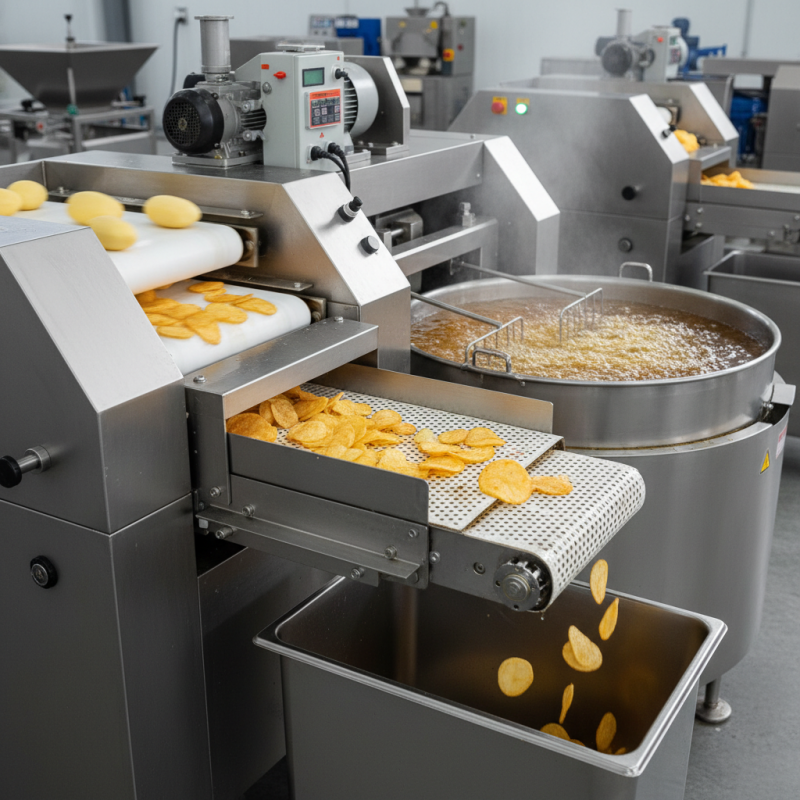
What is a Potato Chips Machine and How Does It Work?
The potato chips machine is an intriguing device. It transforms raw potatoes into crispy snacks. This process is fascinating yet complex. How does it achieve this?
Typically, the potato enters a series of steps. The machine slices the potatoes into thin pieces. Then, it uses hot oil to fry them quickly. The result is a golden-brown, delicious chip. But not every machine produces perfect chips every time.
Some machines struggle with consistency. It's a challenge to ensure an even fry. Other factors, like oil temperature, can affect taste. As we explore this topic, we must consider both the engineering and the culinary art. Understanding the potato chips machine reveals much about food production and innovation.
What is a Potato Chips Machine?
A potato chips machine is a specialized device designed for making crispy potato snacks. It takes raw potatoes and transforms them into delicious chips through a series of processes. The machine typically involves washing, peeling, slicing, frying, and seasoning. Operators load whole potatoes into the machine.
During the washing phase, dirt and impurities are removed to ensure clean chips. Next, potatoes are peeled either manually or automatically. Slicing follows, where uniform pieces are important for even cooking. After slicing, the chips are fried in oil at controlled temperatures. This creates that perfect crunch.
Here’s a tip: Always monitor the frying temperature to avoid burning. It’s crucial for crispy texture. Also, consider experimenting with seasonings. It adds unique flavors. Remember, overcooked chips can lose their appealing taste and color.
Another important point to consider is maintenance. Regular cleaning is vital. Oil buildup can affect flavor and quality. Check for worn-out parts; they can compromise the machine's efficiency. Reflecting on these aspects can improve production consistency and quality.
The History of Potato Chips Machines
Potato chips machines have a fascinating history. They date back to the late 19th century. The machine was influenced by the cultural push for convenient snacks. Early machines were simple, operated manually. They transformed raw potatoes into crispy snacks. Over time, automation took over. Production became faster and more efficient. The quality of chips also improved significantly.
In the 1920s, machines began to mass-produce chips. This was a turning point in snack history. More people could enjoy these crispy delights. The machines adjusted cooking times and temperatures. They allowed for different flavors and textures. The growing demand led to innovations. Today, machines can produce various styles and cuts of chips.
**Tips**: Keep the potatoes fresh for the best taste. Experiment with different seasonings for unique flavors. Remember that overcooking can ruin even a great chip. Before mass production, it's essential to test small batches. The balance between crispiness and flavor is critical. Sometimes, it's okay if they don't look perfect; a little imperfection adds character!
What is a Potato Chips Machine and How Does It Work? - The History of Potato Chips Machines
| Feature | Description |
| Type of Machine | Industrial Fryer |
| Primary Function | Frying sliced potatoes to produce chips |
| Process Steps | Slicing, washing, frying, seasoning, packaging |
| Energy Source | Electric or Gas |
| Production Capacity | 100-1000 kg/hour |
| Control System | Automatic or Manual |
| Cleaning Method | Automatic cleaning cycles |
| Historical Significance | Technology evolution from manual to fully automated systems |
Key Components of a Potato Chips Machine
A potato chips machine consists of several key components that work together to produce the perfect snack. At its core, the machine includes a slicing unit. This part quickly cuts potatoes into thin, uniform slices. Consistency is vital for even frying. A poorly sliced potato can lead to uneven cooking.
Next, there’s the frying section. This component uses hot oil to fry the potato slices. Temperature control is crucial here. Too hot, and chips burn; too cool, and they become soggy. This balance can sometimes be tricky.
Finally, the machine has a cooling and seasoning unit. After frying, chips must cool to retain crunchiness. Once cooled, seasoning is applied. The seasoning process can be imprecise. Some chips may end up over-seasoned, while others might lack flavor. Manufacturers often need to adjust this step for the best results. These components work together, but the process requires constant monitoring for optimal quality.
Potato Chips Production Process
How a Potato Chips Machine Operates
A potato chips machine is designed to automate the process of making crispy snacks. The machine takes whole potatoes and transforms them into perfectly sliced chips. It starts with washing the potatoes. Clean potatoes are then moved to a slicing area. Here, sharp blades cut them into thin, even slices.
Once sliced, the chips move to a frying section. Hot oil bathes the slices, making them golden and crunchy. After frying, excess oil is removed. Some machines have a cooling conveyor that helps in this step. Each phase is crucial; an error could lead to uneven cooking or burnt chips.
The final stage often includes flavoring. Automated systems sprinkle salt or other seasonings evenly. However, the calibration may require adjustments. Operators must monitor the machine closely. It's a balance of precision and experimentation, as each batch can differ slightly. Adjustments are necessary to achieve that perfect taste.
Applications and Benefits of Potato Chips Machines
Potato chips machines are fascinating devices that transform raw potatoes into crispy snacks. Their design varies from small countertop units to large industrial machines. These machines slice potatoes uniformly, ensuring consistent cooking. The process begins with washing and peeling the potatoes, which are then cut into thin strips.
The applications of potato chips machines extend beyond home kitchens. Many commercial snacks businesses rely on them for production. They enable mass production, boosting efficiency and reducing labor costs. Additionally, they can produce different chip varieties, offering flavors like barbecue or sour cream.
Benefits are notable. They improve consistency in chip thickness. This ensures even frying, resulting in a superior product. However, imperfect adjustments can lead to uneven texture. Some batches might be too crispy or too soft. Even experienced operators face challenges while obtaining the perfect crunch. It's essential to monitor the frying process closely for optimal results.