China Top 10 12V Freezer Manufacturers for Global Buyers introduces a practical market shaped by mobility, energy efficiency, and dependable temperature control. A quality 12v freezer can protect frozen food during road transport, camping trips, marine journeys, and remote work. Its performance depends on more than advertised capacity. Compressor efficiency, insulation thickness, battery protection, cable quality, and recovery time matter in real conditions.
The International Energy Agency reports that global energy demand for space cooling could more than triple by 2050. The United Nations Environment Programme also identifies cooling as a major growth area for energy efficiency and climate action. These reports do not measure portable freezers directly. That limitation matters. Industry statistics remain fragmented, especially for private-label and export manufacturers in China.
As Professor Toby Peters, a leading cold-economy researcher at the University of Birmingham, has stated, “Cooling is not a luxury; it is a basic need.” His observation applies to small mobile refrigeration, where a stable temperature can reduce waste and protect valuable supplies. Still, buyers should remain cautious. A low-wattage label may hide weak insulation or slow cooling in 35°C heat.
This guide examines ten Chinese manufacturers serving global buyers. It considers product design, compressor technology, temperature range, certification practices, customization, and after-sales support. Some suppliers excel at rugged outdoor units. Others focus on compact dual-zone models or large-volume cargo solutions. The best choice is not always the cheapest one. Real-world reliability deserves closer attention.
A high-quality 12V freezer manufacturer proves performance with repeatable data, not attractive catalog claims. The Global Cooling Watch 2023 reports that cooling demand could more than triple by 2050. Efficiency is becoming a purchasing requirement.
Experienced factories should measure energy use in Ah per day, pull-down time, temperature stability, and noise. Ask for test conditions, such as 25°C ambient temperature and a fully loaded cabinet. A credible supplier can provide inspection records, compressor specifications, wiring diagrams, and batch traceability. It should also explain performance between 10.5V and 14.4V, because real vehicle batteries rarely deliver a perfect 12V. Small detail. Big consequence.
Safety documentation matters. IEC 60335-2-24 addresses safety requirements for refrigerating appliances, while ISO 9001 supports controlled production processes. However, certification alone cannot prove long-term reliability. I would request sample testing, vibration checks, door-seal inspection, and several days of thermal logging. The UNEP 2023 Cooling Emissions and Policy Synthesis Report links efficient cooling with lower energy demand and emissions, but practical results depend on insulation, controls, and user conditions. Some manufacturers publish impressive laboratory figures that are difficult to reproduce outdoors. That weakness deserves honest discussion. A dependable Chinese manufacturer welcomes factory audits, keeps spare parts available, and states warranty limits clearly.

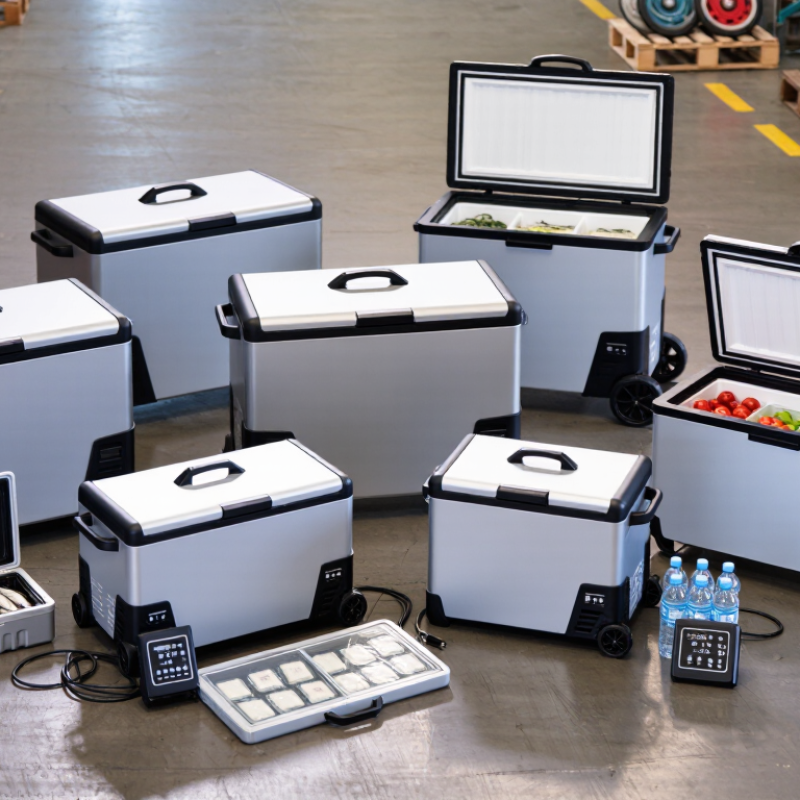
China’s top 12V freezer manufacturers typically design units for trucks, boats, campsites, and mobile medical storage. Their strongest models support both 12V and 24V power systems. This flexibility helps buyers manage different vehicle batteries and solar setups. Efficient compressor systems can cool quickly, even after frequent lid openings. Thick insulation reduces heat transfer and limits battery consumption. Many units also include low-voltage protection, temperature memory, and digital controls. Clear displays make daily operation easier.
Reliable manufacturers pay close attention to practical testing. They may check compressor endurance, temperature stability, vibration resistance, and seal performance. Some factories test products in hot and cold environments before shipment. Buyers should request test records, wiring diagrams, and product specifications. This step shows whether technical claims match actual performance. Production lines with incoming-material checks and final inspections usually offer better consistency. However, inspection quality can vary between suppliers.
Customization is another important feature. Manufacturers may adjust cabinet sizes, drawer layouts, insulation thickness, handles, and control panels. They can also prepare packaging for long-distance transport. After-sales support matters when a freezer operates far from a workshop. Spare fans, sensors, seals, and control boards should be available. Field experience shows that small parts often cause more trouble than compressors. No factory is perfect. A minor noise issue or loose connector can still appear after delivery. Careful sampling, realistic testing, and written quality terms help reduce these risks.
Chinese 12V freezer manufacturers are attracting global buyers because they combine compact engineering with flexible production. The International Energy Agency reported nearly 14 million electric-car sales in 2023, expanding demand for mobile cooling across road travel, service fleets, and outdoor logistics. This trend does not guarantee quality. Buyers still need evidence.
A reliable Top 10 shortlist should compare compressor efficiency, insulation thickness, battery protection, and temperature recovery. In factory audits, ask for operating tests below 32°C ambient conditions. Request cycle-test records, wiring diagrams, and export packaging photos. A useful unit should cool consistently, not only during a showroom demonstration. Many Chinese factories offer private labeling, 12V and 24V compatibility, and sample customization. However, some published capacity figures appear optimistic. That deserves careful checking.
The U.S. Department of Energy notes that refrigeration efficiency depends heavily on insulation, controls, and compressor performance. These details matter when a freezer runs from a vehicle battery overnight. Buyers should also review ISO 9001 evidence, electrical safety reports, warranty response times, and spare-parts availability. The strongest manufacturers usually provide clear manuals and measurable test conditions. Price alone is a weak filter. Even experienced importers can miss connector quality or voltage-drop problems. A pre-shipment inspection remains worthwhile.
When comparing Chinese 12V freezer suppliers, begin with actual cooling performance, not catalog photos. Ask for test results at 25°C and 38°C ambient temperatures. A reliable supplier should provide internal temperature data, pull-down time, and average power consumption. Check whether the compressor can maintain stable cooling during long vehicle trips. Small details matter. Door seals, hinge strength, insulation thickness, and drain design affect daily use.
Request a working sample before placing a large order. Test it with a power meter, digital thermometer, and a fully loaded basket. Some units cool quickly when empty but struggle with warm food. That weakness is easy to miss. Review the supplier’s quality process, production capacity, inspection records, and response time. Factory experience is useful, but documented evidence is better. Confirm available voltage protection, battery cut-off settings, control-panel accuracy, and noise levels. Certification documents should match the exact model, not a similar product.
Tips: Compare quotations line by line. Check compressor type, usable capacity, warranty terms, spare parts, packaging, and minimum order quantity. Ask who pays for defective units and how claims are handled. A clear answer builds confidence. Be cautious when energy figures look unusually low. They may come from ideal laboratory conditions. I have found that supplier communication can change after payment, so record every specification in the purchase agreement. Do not rely on friendly promises alone. Supplier comparison is imperfect, but careful testing reduces expensive surprises.
Climate class is a useful specification when comparing 12V freezer suppliers. The ranges shown are based on IEC 62552 climate-class limits: SN covers 10–32°C, N covers 16–32°C, ST covers 16–38°C, and T covers 16–43°C. Buyers should ask each supplier to provide test reports, compressor performance data, and confirmation that the declared range applies to the complete freezer.
Choosing among China’s top 10 12V freezer manufacturers requires more than comparing prices. Export experience should be checked through shipping records, product documentation, and clear communication. Ask whether the supplier understands your destination’s voltage, plug, labeling, and customs requirements. A reliable factory can provide commercial invoices, packing lists, manuals, and test reports without hesitation. Small documentation gaps often create expensive delays.
Certification must match the target market. Request current certificates, test reports, and model numbers that match the actual freezer. Do not accept a certificate for a similar product. Check electrical safety, electromagnetic compatibility, refrigerant details, and energy performance where required. Independent verification is valuable. Factory claims alone may not be enough. I have found that buyers sometimes focus heavily on certification, yet overlook packaging strength during long sea transport.
Tips: Test one sample under realistic conditions. Measure cooling time, power consumption, noise, and battery protection. Confirm operation inside a vehicle, not only in a showroom. Ask about compressor sourcing, spare parts, warranty duration, and repair procedures. Get response-time commitments in writing. After-sales support should include troubleshooting videos, replacement parts, and technical assistance across time zones. A low failure rate sounds impressive, but service records are more useful. Leave room for doubt. Supplier promises can change after payment. Reliable cooperation needs evidence, not optimism.
| No. | Evaluation Dimension | Relevant Fact or Benchmark | Documents or Evidence to Request | Buyer Verification Point |
|---|---|---|---|---|
| 1 | 12V Electrical Compatibility | A 12V freezer should state its acceptable voltage range, polarity, connector type, and protection against reverse polarity, over-current, and low battery voltage. | Electrical specification sheet, wiring diagram, protection-function test report, and product photographs. | Confirm whether the unit supports 12V DC only or both 12V and 24V DC, and match the specification with the intended vehicle, solar system, or battery bank. |
| 2 | Cooling Performance | Performance depends on ambient temperature, insulation, compressor efficiency, thermostat settings, and cabinet loading. A stated test condition is essential for comparison. | Temperature test report, rated ambient-temperature range, pull-down test results, and internal temperature records. | Check the lowest achievable temperature, cooling time, test load, and ambient temperature used during testing. |
| 3 | Energy Consumption | Daily energy use is not a fixed value; it varies with ambient temperature, setpoint, opening frequency, ventilation, and battery condition. | Wh-per-24-hour test data, test methodology, compressor duty-cycle data, and sample energy-monitoring records. | Compare products only when test conditions are equivalent. Calculate required battery capacity using measured consumption plus a safety reserve. |
| 4 | Electrical and Product Safety | Household and similar refrigeration appliances are commonly assessed against the applicable parts of the IEC 60335 safety standard series; destination-market requirements may differ. | CB test report where available, electrical safety test report, insulation test results, and risk-assessment records. | Verify that the report covers the exact model, rated voltage, compressor configuration, and production version being purchased. |
| 5 | Market Access Certification | Market-access markings and declarations are jurisdiction-specific. For the European Economic Area, applicable product legislation may include safety, electromagnetic compatibility, and substance restrictions. | Declaration of Conformity, technical file index, EMC report, restricted-substance declaration, and labeling artwork. | Check the destination country’s legal requirements rather than accepting a generic certificate or an unsupported conformity logo. |
| 6 | Refrigerant and Environmental Compliance | Refrigerant type, charge quantity, leakage control, and local rules can affect import, servicing, and end-of-life handling. | Refrigerant declaration, safety data where applicable, refrigerant charge information, leakage test record, and environmental compliance statement. | Confirm that the refrigerant is permitted in the destination market and that service technicians can legally handle it. |
| 7 | Export Classification and Shipping | Chest and upright freezers are commonly classified under different subheadings within HS Chapter 84, but the correct code depends on product construction and the importing country’s tariff schedule. | Commercial invoice, packing list, proposed HS code, country-of-origin statement, carton dimensions, and gross weight. | Ask the customs broker to validate the HS code, duty rate, import permits, and labeling obligations before shipment. |
| 8 | Quality Management and Production Control | A quality-management certificate can indicate documented processes, but it does not by itself prove product performance or long-term reliability. | Current ISO 9001 certificate, factory audit report, incoming-inspection records, final-test checklist, and batch traceability procedure. | Confirm certificate validity, issuing-body accreditation, factory address, scope, and whether production is performed at the audited site. |
| 9 | Warranty and Spare-Parts Support | Warranty length, coverage, response time, and replacement-part availability are commercial terms and should be defined in writing. | Warranty policy, parts price list, recommended spare-parts list, fault-code guide, service manual, and response-time commitment. | Check coverage for compressor, controller, wiring, seals, and labor, plus the cost and delivery time for replacement parts. |
| 10 | Pre-Shipment Inspection and Commercial Terms | A documented pre-shipment inspection can verify quantity, appearance, dimensions, electrical operation, packaging, and agreed product specifications before release. | Approved sample, purchase specification, inspection checklist, packaging test records, inspection photos, and signed corrective-action report if needed. | Define acceptance criteria, payment milestones, Incoterms, claim procedure, replacement policy, and responsibility for freight damage in the purchase contract. |
Stay in touch with the latest National Luna Products and News!