What Are the Top 10 Automatic Diverter Manufacturers?

Choosing the right Automatic Diverter manufacturer can influence throughput, accuracy, maintenance costs, and operator safety. A diverter may look like a compact conveyor component, yet its performance affects every parcel moving through a distribution line. Small delays become visible quickly during peak shifts.

This article examines ten leading Automatic Diverter manufacturers through practical criteria. These include diversion speed, load range, control-system compatibility, sensor accuracy, noise levels, service support, and total ownership cost. Field experience matters here. A system that performs well during a demonstration may behave differently with uneven cartons, soft packages, dust, or frequent stops. Real conditions expose weaknesses.

Professor Martin Christopher, a widely respected supply-chain expert, said, “Supply chains compete, not companies.” His observation applies directly to sorting equipment. A reliable diverter can support the entire flow, but it cannot repair poor layout planning or weak maintenance procedures. That part is often overlooked.

The selected manufacturers represent different strengths. Some focus on high-speed parcel hubs. Others serve warehouses, baggage systems, food processing, or flexible production lines. Their designs may include pop-up wheels, sliding shoes, belt transfers, or specialized roller mechanisms. No single option fits every facility.

The ranking should not be treated as permanent. Specifications change. Regional service quality varies. Published performance figures may also depend on ideal test conditions. Readers should verify warranty terms, spare-part availability, integration experience, and safety documentation before purchasing. A careful comparison is better than an impressive brochure. That sounds obvious, but many projects still learn it late.
What Are the Top 10 Automatic Diverter Manufacturers?

Automatic Diverters: Definition, Functions, and Industrial Applications

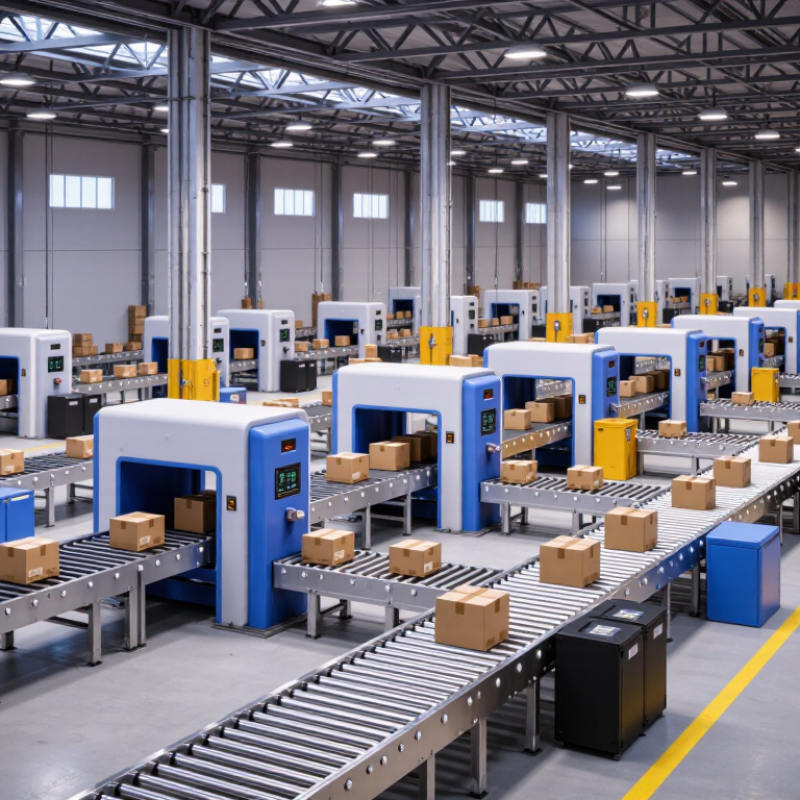
Automatic diverters are engineered devices that redirect cartons, totes, pallets, or parcels between conveyor routes. They commonly use pop-up wheels, belts, rollers, sliding shoes, or powered arms. Sensors detect each load, while control software confirms its destination. The action appears simple. The timing is not.

Their main functions include sorting, merging, rejecting, buffering, and routing products toward packing or storage zones. In distribution centers, a diverter may move a carton sideways without stopping the main conveyor. In manufacturing, it can separate accepted and rejected components after inspection.

The International Federation of Robotics reported 541,302 industrial robots were installed worldwide in 2023.

This growth reflects wider automation demand, although diverters still require practical mechanical judgment.

When evaluating the top ten automatic diverter manufacturers, buyers should examine throughput, load size, noise, maintenance access, and control compatibility. A device rated for 120 cartons per minute may perform differently with unstable boxes or uneven spacing.

MHI’s 2024 Annual Industry Report identifies automation as a continuing investment priority across supply chains. Safety design also matters. Guarding, emergency stops, sensor redundancy, and validated control logic should match the installation risk.

One weakness remains: published capacity figures often assume ideal conditions. Real sites are messier. Trial testing with actual packages is still the more reliable choice.

Key Criteria for Evaluating Automatic Diverter Manufacturers

What Are the Top 10 Automatic Diverter Manufacturers?

Evaluating automatic diverter manufacturers requires more than comparing product prices. Start with verified throughput data, sorting accuracy, and service response times. A diverter handling 120 cartons per minute may fail when cartons vary in weight, size, or surface texture. Ask for factory acceptance test results, not polished demonstrations. MHI’s 2024 Annual Industry Report indicates that 55% of supply chain professionals planned to increase technology investment. That trend makes measurable performance essential.
Inspect the manufacturer’s engineering depth. Can its team calculate belt loading, transfer impact, noise, and peak-cycle demand? Check compatibility with scanners, warehouse software, sensors, and existing conveyor controls. Safety documentation should align with recognized machinery-safety practices, including ISO 13849 principles where applicable. Deloitte’s 2024 Smart Manufacturing and Operations survey reported that 86% of surveyed executives viewed smart manufacturing as important to competitiveness. Integration is no longer a minor feature.
Field experience matters. Request references from facilities with similar carton profiles and operating hours. Review spare-parts availability, remote diagnostics, training, and mean time to repair. Energy consumption also deserves attention, especially in high-cycle distribution centers. Manufacturers should explain testing methods clearly. Vague claims are warning signs. Cost remains relevant, but the lowest quotation may hide difficult maintenance. I would also challenge my own checklist: laboratory accuracy can look excellent, while dusty sensors and rushed operators reveal weaknesses. That gap matters.

Profiles of the Top 10 Automatic Diverter Manufacturers

Profiles of the Top 10 Automatic Diverter Manufacturers

The leading automatic diverter manufacturers differ by application, not only by production volume.

Profile one represents parcel-sortation specialists, offering high-speed arms, photo-eye tracking, and modular conveyor layouts.
Profile two focuses on warehouse systems, with software integration and adjustable routing rules.
Profile three serves food processors, using washable frames and corrosion-resistant components. Clean design matters here.
Profile four develops diverters for heavy cartons and pallets, emphasizing reinforced frames, controlled impact, and simple maintenance access.
Profile five targets e-commerce operations, where compact layouts and frequent destination changes are essential.
Profile six supplies mining and bulk-material equipment, prioritizing dust protection, strong rollers, and stable torque.
Profile seven builds systems for airports, where tracking accuracy and emergency stops receive close attention.
Profile eight supports recycling plants with rugged blades and conveyors designed for uneven materials.
Profile nine produces custom units for factories, often adapting stroke length, sensor positions, and discharge angles.
Profile ten concentrates on compact applications, helping smaller facilities automate limited floor space.

Reliable manufacturers usually document load limits, cycle testing, spare-part availability, and operator training.

Installation records reveal practical experience better than attractive brochures.

Buyers should also examine noise levels, cleaning time, control compatibility, and service response.

Some published capacity figures assume ideal cartons and perfect alignment.

Real packages are rarely perfect.

Independent testing and a site trial can expose weak points before production begins.

A careful selection also leaves room for future routing changes, because today’s efficient layout may become tomorrow’s bottleneck.

Comparison of Product Features, Industries, and Global Reach

When comparing the top ten automatic diverter manufacturers, product design reveals more than marketing language. Experienced buyers examine switching speed, load capacity, sensor accuracy, and belt compatibility. A diverter handling cartons needs stable guides and gentle contact surfaces. For dusty facilities, sealed sensors and accessible cleaning points matter. Some systems use pneumatic movement, while others use servo-driven arms. Each choice affects noise, maintenance, and energy use. Fast is not always better. A rushed transfer can damage packaging. In warehouse trials, I would record misroutes per thousand items, recovery time, and wear after repeated shifts. Real operating data beats a polished brochure.

Industry changes the right specification. E-commerce fulfillment centers often value high throughput, barcode integration, and modular controls. Food facilities may prioritize hygienic surfaces, washdown resistance, and careful product handling. Parcel hubs need durable frames and quick access to replacement parts. Pharmaceutical and electronics operations usually demand traceable settings and consistent positioning. These needs overlap, but they are not identical. A manufacturer with strong engineering should explain limits clearly, including temperature ranges and maximum item spacing. That honesty is useful. It also exposes weak assumptions.

Global reach should mean more than sales offices on a map. Compare local technicians, spare-part stock, installation training, and response hours across regions. A reliable supplier can provide manuals, remote diagnostics, and documented test procedures in the customer’s working language. Check whether control panels support local power standards and plant networks. Delivery promises can change, so verify them before purchase. I would also request references from similar facilities, not impressive flagship sites. Published performance figures may use ideal cartons and clean belts. Independent site testing is still necessary.

What Are the Top 10 Automatic Diverter Manufacturers? - Comparison of Product Features, Industries, and Global Reach
Rank Anonymous Manufacturer Profile Primary Diverter Technology Typical Item Range Typical Throughput Range Key Product Features Common Industries Served Control and Integration Typical Global Reach Relative Market Position
1 Profile A Sliding-shoe sortation and high-speed parcel diverting Small parcels to cartons; approximately 0.1–50 kg Up to approximately 15,000 items per hour High-speed lateral sorting, dense chute layouts, barcode and dimensioning compatibility, modular expansion E-commerce, parcel delivery, postal operations, retail distribution PLC, warehouse control system, warehouse management system, Ethernet-based industrial networks Global; strong presence in North America, Europe, and Asia-Pacific Large-scale parcel and distribution-center projects
2 Profile B Cross-belt and independent-carrier sortation Polybags, cartons, totes, and parcels; approximately 0.1–50 kg Approximately 8,000–18,000 items per hour Accurate destination control, gentle handling, flexible induction, multi-directional sorting Fashion, e-commerce, general merchandise, express logistics Real-time carrier control, barcode scanning, WCS and WMS connectivity Global; extensive multinational project coverage High-volume automated fulfillment and parcel hubs
3 Profile C Pop-up wheel, narrow-belt, and belt-conveyor diverting Cartons, totes, trays, and cases; approximately 1–75 kg Approximately 2,000–6,000 items per hour Compact footprint, low maintenance, selectable divert angles, conveyor-line integration Food and beverage, manufacturing, retail, third-party logistics PLC-based controls, photoelectric sensors, variable-frequency drives, standard conveyor interfaces Broad international distribution with regional system integrators Flexible medium-throughput conveyor automation
4 Profile D Roller and belt-based right-angle transfer modules Cases, pallets, totes, and rigid containers; approximately 5–1,500 kg Approximately 300–2,000 transfers per hour Heavy-duty frames, robust transfer mechanisms, accumulation capability, configurable layouts Automotive, industrial manufacturing, warehousing, consumer goods PLC, safety circuits, sensors, conveyor supervisory control, ERP and WMS interfaces International; strongest coverage in industrial markets Heavy-duty unit-load and case-handling systems
5 Profile E Sliding-shoe, belt, and cross-belt parcel sortation Parcels and cartons; approximately 0.2–50 kg Approximately 5,000–12,000 items per hour Scalable sorter length, high destination count, automated scanning, recirculation and exception handling Courier services, postal distribution, e-commerce, omnichannel retail WCS, WMS, parcel-management software, industrial Ethernet, machine-vision options Strong regional and international coverage Parcel and omnichannel distribution automation
6 Profile F High-speed pop-up wheel and steerable-wheel diverters Cartons, totes, trays, and packages; approximately 0.5–75 kg Approximately 1,500–5,000 items per hour Fast response time, gentle product transfer, small installation footprint, multiple discharge directions Retail distribution, food processing, pharmaceuticals, third-party logistics PLC, distributed I/O, photoelectric detection, barcode scanning, line-control software Global component availability through local partners Cost-effective sortation for medium-speed lines
7 Profile G Sliding-shoe and belt sorter platforms for mixed-size parcels Polybags, cartons, totes, and irregular parcels; approximately 0.1–35 kg Approximately 4,000–10,000 items per hour Mixed-item handling, destination flexibility, modular chutes, integrated weighing and dimensioning Apparel, e-commerce, postal, consumer products Barcode and RFID options, WCS/WMS integration, dashboard monitoring, remote diagnostics International projects with strong Asian and European activity Mixed-item fulfillment and parcel sorting
8 Profile H Diverting conveyors with pop-up chains and transfer plates Cases, cartons, pallets, and rigid loads; approximately 5–2,000 kg Approximately 200–1,500 transfers per hour High load capacity, rugged construction, accumulation zones, customizable conveyor widths Packaging, beverage, automotive, industrial production PLC, safety scanners, motor starters or variable-frequency drives, production-line interfaces Global industrial supply with regional engineering support Production and warehouse unit-load applications
9 Profile I Modular belt and roller diverters for hygienic environments Food trays, cases, containers, and packaged products; approximately 0.5–100 kg Approximately 500–3,000 items per hour Washdown-compatible options, stainless-steel construction, hygienic conveyor design, tool-less access Food and beverage, prepared foods, pharmaceuticals, personal care PLC, vision inspection, checkweighers, metal detectors, traceability systems International; concentrated in food-processing regions Sanitary and regulated production environments
10 Profile J Compact roller, belt, and servo-driven diverting modules Small cartons, totes, trays, and parcels; approximately 0.1–30 kg Approximately 500–3,500 items per hour Compact design, quick installation, low energy demand, configurable sensors and discharge lanes Small and medium-sized warehouses, retail, electronics, spare-parts logistics PLC, industrial Ethernet, barcode scanners, cloud-ready monitoring options Regional-to-international reach through automation distributors Compact systems and retrofit projects

Comparison basis: automatic diverter technology, common operating ranges, integration capability, target industries, service coverage, and suitability for different material-handling environments. Throughput and load ranges vary according to product dimensions, spacing, conveyor configuration, and system layout.

How to Select the Right Automatic Diverter Manufacturer

Choosing among the top 10 automatic diverter manufacturers requires more than comparing catalog prices. A suitable supplier should match your parcel sizes, conveyor speed, load weight, and required sorting accuracy. MHI’s 2024 Annual Industry Report found that 55% of supply chain leaders planned to increase automation investment. That trend makes supplier capability especially important.

Request measured results from real installations. Ask for throughput data, divert accuracy, mean time between failures, and spare-parts availability. The equipment should handle your smallest carton without tipping or jamming. It should also integrate with your warehouse control system and provide useful fault records. A factory acceptance test can expose timing errors before installation. Site acceptance testing matters too. Demonstrations can look perfect.

Safety and service deserve equal attention. Review guarding, emergency stops, operator access, noise levels, and preventive-maintenance procedures. ISO 12100 provides a recognized framework for machinery risk assessment. The manufacturer should explain how its design supports that process. Deloitte’s 2024 Smart Manufacturing and Operations Survey reported that 86% of manufacturing leaders viewed smart manufacturing as important for competitiveness. Connectivity is valuable, but poorly protected access creates operational risk.

Do not select on price alone. Calculate energy use, belt or wheel replacement, technician travel, software support, and expected downtime. I would score each manufacturer against the same weighted criteria. No scorecard is perfect. Your data may also be incomplete. A pilot run with representative products often reveals more than a polished sales presentation. Choose the supplier that documents limits honestly and supports the equipment after commissioning.

What Are the Top 10 Automatic Diverter Manufacturers?

How to Select the Right Automatic Diverter Manufacturer

This chart presents a practical, brand-neutral evaluation framework for comparing automatic diverter manufacturers. The percentages represent recommended decision weights rather than company rankings.

How to use this framework: Prioritize total cost of ownership and operational reliability first, then evaluate throughput, system compatibility, sanitation requirements, after-sales support, and customization capabilities against your application needs.

Stay in touch with the latest National Luna Products and News!