Choosing among China’s portable ice machine suppliers requires more than comparing factory prices. Buyers must examine production capacity, compressor quality, ice-making speed, noise levels, and after-sales support. A supplier may advertise 15 kilograms of ice daily, yet real output can fall sharply in a warm kitchen or crowded food truck.
Refrigeration engineer Charles E. Wilkes offers a practical reminder: “Equipment must match the operating environment, not the catalog.” This principle matters when evaluating Chinese manufacturers. A reliable portable ice machine should produce consistent bullet, nugget, or cube ice under clearly stated conditions. Ask for test records, energy data, warranty terms, and videos from actual production lines. Do not rely on polished product photos alone.
Look closely at factory experience. Suppliers serving hotels, outdoor retailers, restaurants, and appliance brands usually understand repeated commercial use. Check whether they control key parts, including condensers, water pumps, control boards, and food-contact materials. Certifications also deserve verification, not casual acceptance. A lower quote can be attractive. It can also hide weaker insulation, louder fans, or limited replacement support.
The best China portable ice machine suppliers communicate clearly before purchase. They explain capacity honestly, identify suitable markets, and provide realistic delivery schedules. A factory audit, sample order, or third-party inspection can reveal details that brochures miss. Even then, no supplier is perfect. Buyers should compare evidence, question optimistic claims, and select the manufacturer offering dependable performance rather than the cheapest headline price.
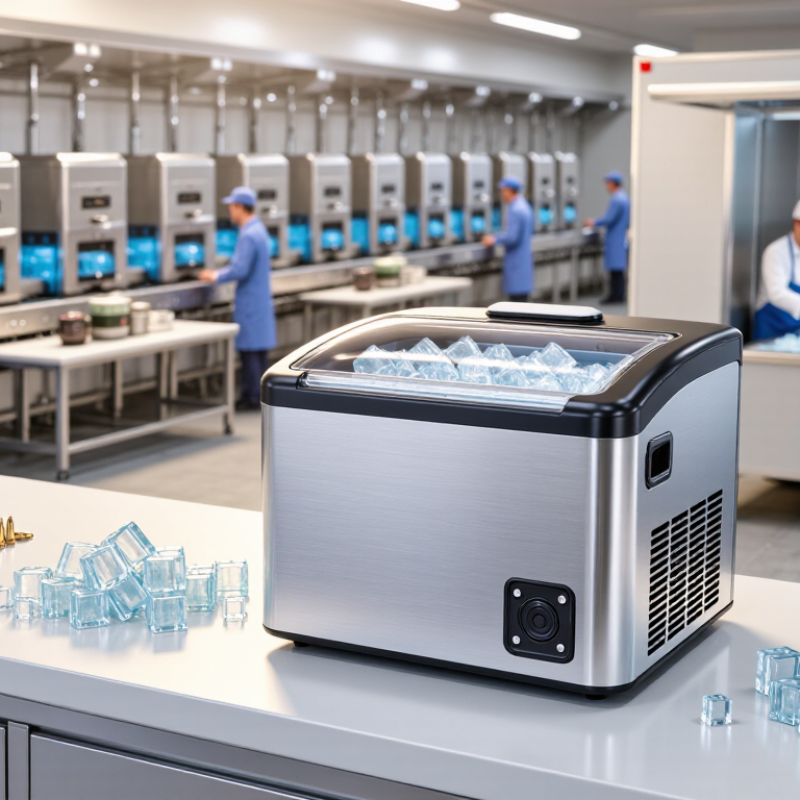
When comparing China portable ice machine suppliers, start with measurable specifications, not attractive product photos. A practical target is 10–20 kg of ice production within 24 hours. This figure depends heavily on room temperature, water temperature, ice size, and ventilation. Ask suppliers for test results under clearly stated conditions. A machine producing 20 kg in a cool showroom may deliver less in a warm kitchen.
Input power between 100 and 150 W can suit compact household or small-service applications. However, confirm whether this number means running power or excludes compressor startup demand. Check the rated voltage, cycle time, water tank capacity, noise level, and drainage method.
Reliable suppliers should provide technical sheets, sample testing, quality-control records, and responsive after-sales support. I would also request a real production video. It is not perfect evidence, but it can reveal loading speed and operating stability.
Tips: Calculate expected output conservatively. Leave airflow around the machine. Test the unit for several hours before regular use. Ask about replacement filters, pumps, sensors, and control boards. A low purchase price can become expensive when small parts are unavailable. Also, do not treat the 10–20 kg rating as guaranteed daily output. Actual results change with weather, maintenance, and user habits.
China’s portable ice machine supply base is best mapped by OEM scale, export reach, and MOQ. The scale is uneven. Factory audits often separate small workshops, mid-sized OEM plants, and integrated exporters. Typical trial MOQs range from 100 to 300 units, while customized housings and control panels may require 500 units or more. These figures are market observations, not universal rules.
Export reach needs a careful data lens. UN Comtrade data for HS 841869, a broad refrigeration-equipment category, places China among the leading global exporting countries. However, this code includes products beyond portable ice machines. The International Trade Centre’s Trade Map therefore offers direction, not a perfect product count. Export-ready suppliers usually show stronger documentation, multilingual manuals, and shipment records across several regions. Ask for proof.
OEM capability is more than production volume. The China Household Electrical Appliances Association highlights energy efficiency, safety testing, and appliance quality as recurring industry priorities. A capable supplier should provide test reports, compressor details, sample inspection records, and spare-part plans. Large factories may support annual programs, while smaller plants can offer faster design changes and lower pilot quantities. That trade-off matters. A low MOQ can hide weak process control, though. Supplier maps should score factory experience, audited output, export evidence, and response quality—not price alone. The map remains imperfect, especially when suppliers outsource key components.
| Supplier Profile | OEM Scale | Typical Annual Portable-Ice Output | Export Reach | Typical OEM MOQ | Main Product Range | Private-Label Capability | Typical Lead Time | Best Fit |
|---|---|---|---|---|---|---|---|---|
| Profile A Large integrated OEM |
Very large | 100,000–300,000 units | North America, Europe, Middle East, Southeast Asia | 500–1,000 units per model | Countertop bullet, nugget-style, and compact commercial units | Full logo, packaging, color, plug, and firmware customization | 45–75 days after approval | National retailers and established importers |
| Profile B Export-focused manufacturer |
Large | 50,000–150,000 units | Europe, Australia, North America, Latin America | 300–800 units per model | Portable bullet ice makers and self-cleaning household models | Logo, carton artwork, manuals, voltage, and plug options | 35–60 days after approval | E-commerce sellers and regional distributors |
| Profile C Mid-sized ODM specialist |
Medium to large | 25,000–80,000 units | Southeast Asia, Europe, North America, Africa | 200–500 units per model | Compact bullet, clear-ice, and low-noise portable units | Moderate housing, display, control-panel, and packaging changes | 40–70 days after design confirmation | Growing brands requiring product differentiation |
| Profile D Flexible private-label factory |
Medium | 10,000–40,000 units | Asia-Pacific, Europe, Middle East, Latin America | 100–300 units per model | Entry-level countertop machines with 12–15 kg daily output | Logo, labels, packaging, manuals, and electrical configuration | 30–55 days after artwork approval | Start-ups and online test launches |
| Profile E Trading-plus-production supplier |
Small to medium | 5,000–25,000 units | Broad multi-region coverage through partner factories | 50–200 units per model | Standard portable bullet machines and seasonal models | Basic logo, carton, label, and plug customization | 25–50 days, subject to factory availability | Small importers prioritizing low entry volume |
| Profile F Commercial refrigeration OEM |
Large | 30,000–100,000 units | Europe, North America, hospitality markets, and distributors | 300–1,000 units per model | Higher-output portable and compact under-counter ice systems | Strong engineering support, custom controls, packaging, and compliance files | 50–90 days after technical approval | Hotels, food-service distributors, and commercial projects |
When comparing China portable ice machine suppliers, I start with cycle time, not advertising language. A published ten-minute cycle may apply only in cool rooms with chilled water. Ask for test conditions, water temperature, and ice output per hour. In practical use, a slightly slower machine may produce firmer cubes and run more consistently. Fast is attractive, but unstable performance becomes frustrating.
Ice size also affects daily convenience. Small cubes cool drinks quickly, while larger cubes usually melt more slowly. Confirm whether the size is fixed or adjustable. Storage capacity needs equal attention. A compact bin holding 1.5 kilograms may suit a bedroom, but it can empty quickly during a family gathering. Check usable storage, not just the stated maximum.
Noise below 45 dB sounds quiet, but measurement methods can differ. Ask whether the reading comes from one meter away, during refrigeration, or during water filling. A brief pump sound may exceed the average rating. Request a sample video or independent test record. Supplier reliability depends on more than specifications. Review compressor details, insulation, cleaning access, spare parts, and warranty response time. I would also test one sample before a larger order. That step costs time. It can reveal slow freezing, uneven ice shapes, or a bin sensor that needs refinement. Specs alone are not enough.
What Are the Top China Portable Ice Machine Suppliers?
For portable ice machines, supplier selection should begin with evidence, not product photos. The European Commission’s Safety Gate 2023 report recorded more than 3,400 product alerts. This highlights the cost of weak compliance controls. Ask for a current EU Declaration of Conformity covering the exact model and voltage. CE marking is supported by this declaration, not by a decorative certificate. Check whether the EMC report names the same model, power supply, and test configuration.
RoHS documentation should identify restricted substances, assessment methods, and component suppliers. A simple “RoHS compliant” statement is not enough. Request laboratory reports, material declarations, and test dates. EMC evidence should reference suitable standards, such as EN 55014-1 and EN 55014-2, where applicable. Small details matter. A missing suffix can invalidate confidence in an otherwise convincing report.
ISO 9001 supports process reliability, but it does not certify ice-machine safety. The ISO Survey 2022 recorded 1,265,216 ISO 9001 certificates worldwide, showing its broad industrial adoption. Still, verify the certificate number, issuing body, validity period, and certification scope. The scope should include manufacturing or assembly of refrigeration appliances. I have seen impressive files with expired attachments. That is not rare. Suppliers should also provide corrective-action records and production inspection procedures. If documents are translated poorly, ask for the original versions. A careful review may feel slow, yet it can reveal mismatched test samples, outdated factory addresses, or missing technical files.
Supplier-neutral verification of CE, RoHS, EMC, and ISO 9001 compliance documentation
The chart shows the core evidence categories buyers should verify for each compliance area: declaration or certificate, technical documentation, test or production-control evidence, and validity or scope checks. These are verification requirements, not supplier rankings or company-specific claims. CE marking is supported by an EU Declaration of Conformity and technical documentation; RoHS and EMC evidence should match the product model and applicable EU requirements; ISO 9001 documentation should include a valid certificate and its certification scope.
A practical ranking should begin with landed cost, not the factory quotation. Calculate the unit price, export packing, ocean freight, insurance, duties, and local delivery. A supplier offering a lower invoice may become expensive after port charges. In my purchasing reviews, the strongest candidates usually sit in the middle, not at the absolute bottom. That finding is easy to miss.
Warranty quality deserves equal weight. Check whether coverage includes the compressor, control board, water pump, and labor. A clear 12-month warranty is more useful than a longer promise with vague exclusions. Ask for repair procedures, replacement-part availability, and response times. Test the answers before placing a large order.
Defect rate should come from inspection records, not sales claims. Request recent batch data, pre-shipment inspection results, and photos of rejected units. A reasonable ranking can score suppliers by verified defects per 1,000 machines. Lead time must include production, inspection, and booking delays. Ask for a calendar date, not “about three weeks.”
The best supplier may rank first overall with a slightly higher landed cost, a documented defect rate below two percent, and stable delivery within 30 days. Still, my early rankings were too dependent on quoted lead times. Port congestion and component shortages changed the outcome. Build a small trial order into the evaluation. It exposes weaknesses quickly.
Stay in touch with the latest National Luna Products and News!