Choosing a reliable China supplier matters when a rubber dust boot must survive heat, grease, vibration, and road debris. Small parts can create expensive failures.
Dr. James Busfield, a respected rubber engineering specialist, offers a useful reminder: “Material choice must match the working environment, not merely the catalogue.” This principle applies directly to steering racks, CV joints, suspension links, and industrial shafts. A boot may look flexible on a sample table, yet crack after repeated bending or ozone exposure.
Experienced global buyers should inspect more than factory photographs. They should review compound data, compression-set results, dimensional drawings, mold quality, and batch traceability. NBR may suit oil contact, while EPDM often performs better against weather and heat. The correct choice depends on the application.
Supplier evaluation should include production audits and sample testing. Check the sealing lips, bellows spacing, clamp fit, and flash removal. Ask how the manufacturer controls hardness and wall thickness. These details are easy to overlook.
No supplier is perfect. I have seen attractive samples fail because the clamp groove was slightly undersized. That small defect allowed dust and moisture inside. Better communication can prevent it, but communication alone is not enough.
This guide examines China’s leading rubber dust boot suppliers for global buyers. It focuses on manufacturing capability, material reliability, customization, quality systems, export experience, and practical purchasing risks. Price matters. Long service life matters more.
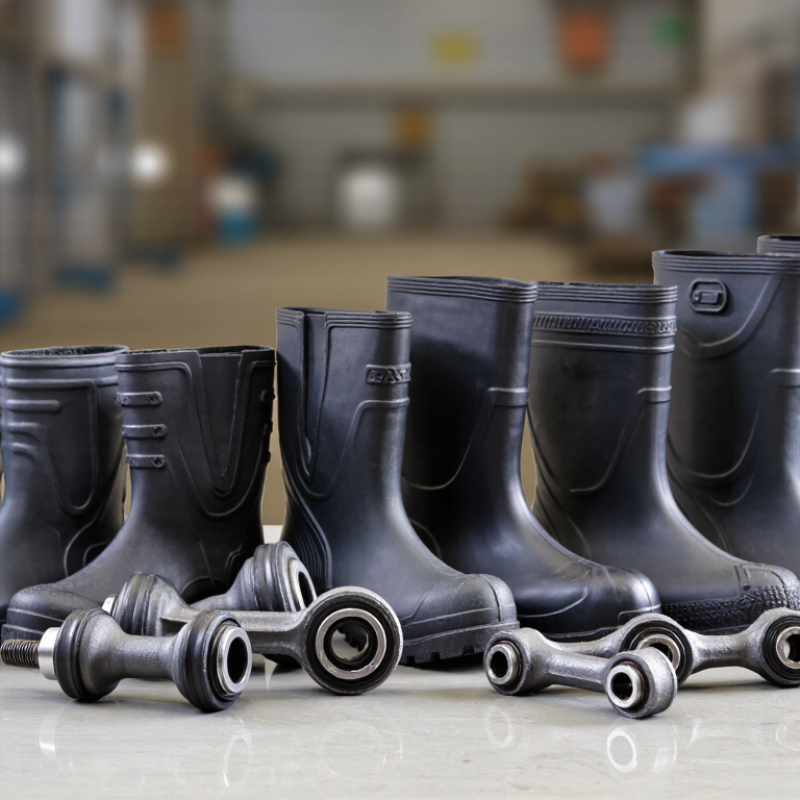
Rubber dust boots are flexible protective covers fitted around moving automotive joints, shafts, and steering components. They keep grease inside while blocking water, road grit, salt, and fine dust. A healthy boot often looks simple, but its design matters. It must stretch during movement without cracking, twisting, or pulling away from its clamp. In workshop inspections, a small split can leave thick grease on nearby parts and expose the joint to contamination.
Global buyers need these boots because vehicles operate across very different roads and climates. Hot regions can harden unsuitable rubber, while freezing temperatures may make it brittle. Coastal roads add salt exposure, and unpaved routes create constant dust. Buyers should check the original dimensions, shaft diameter, joint angle, material grade, and operating temperature before placing bulk orders. A good fit reduces premature wear and unnecessary replacement work.
Tips: Request samples and inspect them by hand. Look for even wall thickness, clean molding, flexible lips, and secure clamp areas. Ask suppliers for material data, dimensional drawings, batch inspection records, and aging-test results. Do not judge quality by softness alone. Very soft rubber may fit easily, yet it can weaken faster. I have seen purchasing teams focus on price and overlook storage conditions. That decision can create hidden costs later, especially when boots sit compressed in a hot warehouse.
Rubber dust boots rely on material selection more than appearance. Nitrile rubber suits applications exposed to mineral oils, grease, and moderate heat. EPDM performs better against weathering, ozone, water, and brake fluids. Silicone handles wider temperature ranges, but it may offer weaker tear resistance in some designs. Thermoplastic elastomers can simplify processing, yet their low-temperature behavior needs verification. The best compound depends on the joint, movement, and surrounding fluids.
Performance testing should match the working environment. Tensile strength, elongation, and tear resistance are commonly checked under ISO 37 and ISO 34-1 methods. Compression set testing, such as ISO 815, helps assess sealing recovery after long compression. ASTM D2000 can support compound classification, but it does not replace application testing. Inspectors should also measure wall thickness, lip geometry, flash, and clamping areas. Small defects can become cracks after repeated flexing. Harder rubber is not always better. It may resist abrasion, but reduce flexibility around a moving shaft. A realistic validation plan includes heat, cold, ozone, oil exposure, and cycling tests. One laboratory result can mislead. Batch traceability and retained samples make supplier evaluation more reliable. In practice, incomplete test records remain a common weakness.
Choosing a rubber dust boot supplier requires more than comparing online prices. Check the supplier’s production experience, material control, and inspection process. Ask for samples from the same mold used for bulk production. Measure the boot’s inner diameter, wall thickness, flexibility, and sealing edge. Request rubber compound details, hardness results, and resistance data for oil, heat, and abrasion. A polished catalogue is not proof of stable quality.
Tips: Order 30 to 50 samples when possible. Test them under real assembly conditions. Check for cracking after repeated stretching. Confirm packaging details, batch labels, and replacement policies. Ask whether the supplier can provide inspection records before shipment. Small details matter.
A reliable factory should explain its mold maintenance, curing controls, and traceability system clearly. Visit the facility, or arrange an independent inspection with photographs and measurements. Confirm production capacity against your monthly demand, not just the claimed maximum. Discuss lead times during busy seasons. Suppliers may promise quickly, but mold changes can create delays. I have found that clear drawings prevent many disputes, although drawings alone cannot replace physical testing. Some evaluations also miss storage conditions, which may affect rubber performance before installation. Keep communication written, specific, and easy to verify.
China’s leading rubber dust boot suppliers serve automotive, industrial, and machinery buyers worldwide. Their experience begins with material selection. Common compounds include NBR, EPDM, and silicone, chosen according to oil exposure, temperature, and outdoor conditions. Engineers review working movement before designing the boot. A boot must flex repeatedly without cracking or losing its seal.
Manufacturing usually includes rubber mixing, mold preparation, injection or compression molding, trimming, and curing. Customization may cover dimensions, ribs, mounting lips, color, hardness, and packaging. Technical teams often develop samples from customer drawings or physical parts. Clear drawings matter. Small dimensional errors can cause installation problems. Suppliers should confirm tolerances, mold steel, production volume, and expected service conditions before tooling begins.
Quality control requires more than visual inspection. Experienced factories measure critical diameters with gauges and check hardness using Shore A equipment. They may also test tensile strength, elongation, compression set, heat aging, ozone resistance, and repeated flexing. Batch records should connect raw materials, curing conditions, operators, and inspection results. Random sampling helps, but it cannot replace process control. No factory is flawless. A mold may wear, or an operator may miss a trimming defect. Reliable suppliers investigate these failures, adjust procedures, and document corrective actions. Buyers should request sample reports, dimensional data, and production photos before approving large orders.
China Top Rubber Dust Boot Suppliers for Global Buyers
China remains a major sourcing base for rubber dust boots used in automotive, industrial, and machinery applications. The International Rubber Study Group reported global rubber consumption above 31 million metric tonnes in 2024. This scale increases material availability, but it does not guarantee consistent quality. Buyers should request compound specifications, compression-set results, ozone-resistance data, and dimensional inspection records. A boot may look acceptable while cracking after repeated movement.
Export compliance requires more than a commercial invoice. Confirm the correct HS classification, country-of-origin documents, packing details, and destination-specific chemical requirements. For European shipments, suppliers should provide evidence supporting REACH and, where applicable, RoHS compliance. ISO 9001 certification can indicate controlled processes, but it is not proof of product performance. Independent testing is wiser. Shipment records, batch codes, and retained samples also improve traceability when defects appear months later.
Tips: Ask for three production samples, not one. Measure wall thickness at several points. Check fit on the actual shaft and housing. Review the supplier’s mold-maintenance schedule and response time for corrective actions. Clarify Incoterms, lead times, replacement terms, and inspection responsibility before payment. A low quotation can hide tooling wear, weaker compounds, or expensive port delays. I would also audit packaging under humid conditions, because small cracks are sometimes discovered only after long ocean transport.
| Supplier Profile | Typical Product Focus | Common Materials | Customization Capability | Typical MOQ | Typical Production Lead Time | Export Documentation | Compliance and Quality Checks | Best Fit for Global Buyers |
|---|---|---|---|---|---|---|---|---|
| Profile A High-volume molded-parts manufacturer Established industrial production model with automated molding capacity. | Standard and custom rubber dust boots for steering, suspension, driveline, and mechanical protection applications. | CR EPDM NBR Silicone | Existing tooling modification, new compression or injection molds, compound color matching, vent design, and dimensional adjustment. | 1,000–3,000 pieces per part number for standard production; custom tooling normally quoted separately. | 25–45 days after drawing approval, material confirmation, and purchase-order release. | Commercial invoice, packing list, bill of lading or air waybill, certificate of origin where required, and customs HS-code information. | Dimensional inspection Visual inspection Hardness testing Tensile testing | Automotive aftermarket distributors, industrial wholesalers, and buyers requiring stable repeat production. |
| Profile B OEM-oriented rubber component supplier Engineering-led supplier focused on drawing-based production and customer approvals. | Application-specific dust boots for automotive, agricultural machinery, construction equipment, and industrial assemblies. | NBR HNBR FKM EPDM | 2D and 3D drawing review, tolerance analysis, prototype sampling, mold-flow discussion, and first-article inspection support. | 500–2,000 pieces per part number, subject to tooling, compound, and production scheduling requirements. | 30–60 days for new development; 20–35 days for repeat orders after approval. | Commercial invoice, packing list, shipping documents, material declaration, inspection report, and agreed quality records. | First-article inspection Material traceability Lot control Seal-performance testing | Global buyers needing technical documentation, controlled tolerances, and application-specific material selection. |
| Profile C Small-batch customization supplier Flexible production model suited to multiple part numbers and moderate order volumes. | Replacement dust boots, protective bellows, custom covers, and low-to-medium-volume rubber components. | NR SBR NBR EPDM | Sample-based development, simple tooling, profile changes, short-run production, and mixed-part-number order support. | 100–500 pieces per part number for selected standard or simple custom products. | 15–35 days for repeat items; 25–50 days for new molds or compound development. | Commercial invoice, packing list, export declaration support, and shipping documents arranged according to the agreed Incoterm. | Sample approval Basic dimensional checks Visual inspection Confirm testing scope | Importers testing market demand, maintenance distributors, and buyers with diverse low-volume requirements. |
| Profile D Performance-material specialist Supplier positioned for demanding temperature, oil, ozone, or chemical exposure. | High-performance dust boots for engine compartments, hydraulic systems, driveline components, and harsh environments. | HNBR FKM Silicone CR | Compound formulation support, temperature-range evaluation, chemical-resistance selection, surface finish control, and specialized tooling. | 1,000–5,000 pieces per part number, depending on compound and mold configuration. | 35–65 days for development orders; 25–45 days for approved repeat production. | Commercial invoice, packing list, bill of lading or air waybill, certificate of origin where applicable, and test reports agreed in the purchase specification. | Heat aging Oil resistance Ozone resistance Compression set | Industrial, automotive, and equipment buyers requiring documented performance rather than lowest initial price. |
| Profile E Export-focused private-label supplier Supplier experienced with overseas packaging, labeling, and distributor order programs. | Standard replacement dust boots, repair kits, protective rubber covers, and packaged aftermarket components. | NBR EPDM CR | Packaging artwork, barcode labeling, neutral packaging, mixed cartons, product inserts, and private-label packing subject to buyer requirements. | 500–2,000 pieces per part number; packaging minimums may apply separately. | 20–40 days for repeat items; 30–55 days for new packaging or tooling. | Commercial invoice, packing list, export customs documentation, shipping documents, carton details, and origin information where required. | Pre-shipment inspection Carton verification Barcode check Verify material claims | Aftermarket importers, e-commerce distributors, and regional wholesalers requiring export-ready packaging. |
| Profile F Integrated rubber-and-metal assembly supplier Production model combining elastomer molding with metal inserts or clamps. | Dust boots supplied with retaining rings, metal sleeves, clamps, fasteners, or assembled protective components. | NBR EPDM CR FKM | Insert molding, bonded assemblies, crimped or clamped components, assembly fixtures, and customer-specific packaging. | 1,000–5,000 assemblies per part number, depending on metal components and assembly process. | 35–70 days for new assemblies; 25–45 days for established products. | Commercial invoice, packing list, bill of lading or air waybill, component material information, and agreed inspection records. | Pull-out testing Assembly verification Dimensional inspection Leak or sealing checks | Buyers seeking a ready-to-install assembly and reduced supplier coordination for multiple components. |
Stay in touch with the latest National Luna Products and News!