Top Control Valve Manufacturers and Suppliers Worldwide
Control Valve technology quietly governs pressure, flow, temperature, and process stability across modern industry. In a refinery, a valve may adjust steam within seconds while handling heat, vibration, and corrosive fluids. In a water plant, accurate throttling can protect pumps and reduce energy waste. These details explain why buyers assess more than brand recognition.
MarketsandMarkets identifies steady growth in the global control valves market, driven by process automation, industrial modernization, and expanding energy infrastructure. Grand View Research also reports continued demand for automated valve systems across oil and gas, chemicals, power, and water treatment. Reported market values differ because researchers use different product definitions and regional assumptions. That difference deserves attention.
This guide examines leading Control Valve manufacturers and suppliers worldwide through practical criteria. These include product range, actuation technology, certifications, service coverage, delivery capability, and lifecycle support. It also considers experience in demanding applications, not merely catalogue size. Companies such as Emerson, Flowserve, Metso, Siemens, Baker Hughes, IMI, and KITZ are widely recognized in industrial valve markets. However, market leadership is not permanent.
A strong supplier should help users select the right trim, body material, fail-safe position, and control response. It should also provide testing records, maintenance guidance, and transparent technical documentation. Field performance matters more than polished claims. A low purchase price can become expensive when calibration, spare parts, or local support are missing. That is an uncomfortable but practical reality.
This overview is not a perfect ranking. No single report captures every regional supplier or project-specific requirement. Instead, it offers a reliable starting point for engineers, procurement teams, and plant operators comparing global options.
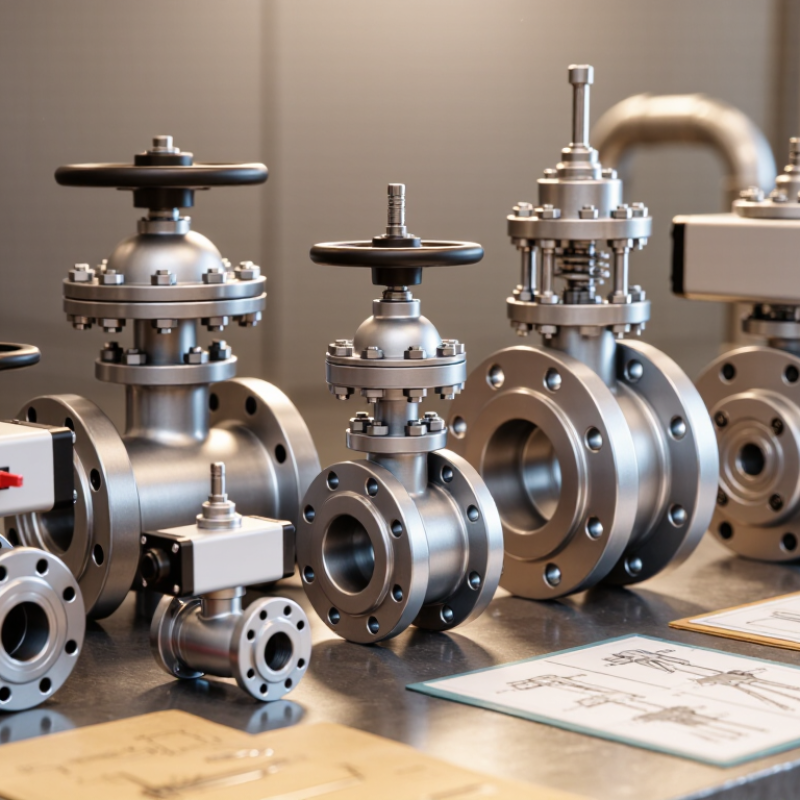
What Control Valves Are and How They Regulate Industrial Processes
A control valve is a mechanical device that adjusts fluid flow inside an industrial system. It uses a movable plug, ball, or disc to change the passage size. This regulates pressure, temperature, level, or flow rate. A controller compares the measured condition with the required value. It then sends a signal to the valve actuator. Small movements matter.
In a steam line, the valve may reduce pressure before steam reaches a heat exchanger. In a water system, it can maintain a steady tank level despite changing demand. Pneumatic actuators are common because they respond quickly and operate reliably in demanding areas.
Electric actuators suit applications requiring precise positioning or limited instrument air. Valve bodies and trim must match the fluid, temperature, pressure, and corrosion risk.
Correct sizing is essential. An oversized valve may hunt, while an undersized valve can restrict production. That mistake is easy to miss during early design. Experienced engineers review operating ranges, not only maximum conditions. They also check cavitation, noise, leakage class, and actuator force. During maintenance, technicians inspect packing, seat wear, position feedback, and air quality. A dependable supplier should provide test records, material documentation, clear specifications, and practical technical support. Field conditions often expose weaknesses that a catalog cannot show.
Key Factors for Evaluating Global Control Valve Manufacturers
When evaluating global control valve manufacturers, market scale is only a starting point. Grand View Research estimated the control valve market at about USD 7.8 billion in 2023, with growth expected through 2030. MarketsandMarkets reported different forecasts, showing why buyers should question headline figures. Report definitions vary. That matters.
Engineering capability should be tested against operating conditions, not brochures. Ask for documented flow coefficients, pressure-drop calculations, leakage classifications, and material traceability. Compliance with IEC 60534 supports consistent valve performance testing. For hazardous process environments, request functional safety evidence aligned with IEC 61508. Certification alone is not enough. Review test records, calibration methods, and nonconformance handling.
Supplier reliability also appears after installation. Check spare-parts availability, regional service coverage, response times, and technician training. A valve may perform well in a factory test but fail under erosion, flashing, or repeated cycling. Request references from plants with similar media, temperatures, and duty cycles. Total cost models should include energy use, actuator maintenance, downtime, and expected service life. The International Energy Agency’s industrial efficiency reports repeatedly identify process optimization as an important energy-saving opportunity, although they do not isolate control valves. That limitation deserves attention. Forecasts can guide planning, but plant-specific evidence should guide purchasing.
Leading Control Valve Manufacturers and Suppliers by Region
Leading control valve manufacturers and suppliers are increasingly shaped by regional process demands. Grand View Research estimates the global control valve market will expand at about 5.8% annually through 2030. Asia-Pacific remains the strongest growth center, driven by chemical processing, power generation, water treatment, and expanding industrial infrastructure. Suppliers in China, India, Japan, and South Korea often compete through short lead times, localized engineering, and broad material options. Stainless steel bodies matter near humid coastlines. Severe-service designs matter in high-pressure steam lines.
North American suppliers typically emphasize digital positioners, emissions monitoring, and retrofit support. The United States also benefits from established oil, gas, pharmaceutical, and power sectors. Europe places greater weight on energy efficiency, functional safety, and traceable manufacturing. Recent European industrial reports show continued investment in hydrogen, district heating, and wastewater systems, although project approvals can move slowly. That delay affects inventory planning.
The Middle East focuses on desalination, refining, and large energy projects. Regional suppliers must handle dust, heat, and demanding maintenance schedules. Latin America shows practical demand for mining, pulp, food processing, and municipal water equipment. MarketsandMarkets projects steady global control valve growth through 2028, with Asia-Pacific among the fastest-expanding regions. Yet market reports are not field experience. A valve that performs well in a laboratory may struggle with abrasive slurry, unstable air supply, or poor commissioning. Buyers should verify pressure class, trim material, service history, local technicians, and spare-part availability before selecting a regional supplier. Expect trade-offs. Reliability is rarely the cheapest option.
Major Control Valve Types, Applications, and Industry Sectors
Top Control Valve Manufacturers and Suppliers Worldwide
Major Control Valve Types, Applications, and Industry Sectors
Control valves regulate flow, pressure, temperature, and liquid level in demanding process systems. Globe valves provide accurate throttling, especially in steam and thermal applications. Ball valves offer fast, tight shutoff with relatively low pressure loss. Butterfly valves suit large pipelines where compact design and moderate control are practical. Diaphragm valves handle corrosive, sterile, or particulate fluids with reduced contamination risk.
Selection depends on fluid properties, operating pressure, temperature, flow range, and response speed. In a water treatment plant, a butterfly valve may control clean water through a wide pipeline. A chemical facility may require corrosion-resistant trim and a diaphragm design. Food and pharmaceutical systems often need smooth surfaces, hygienic construction, and easy cleaning. Power stations commonly use control valves on feedwater, boiler systems, and steam lines.
Experienced engineers also examine actuator sizing, fail-safe behavior, positioner accuracy, and maintenance access. A valve that performs well in laboratory testing may behave differently after months of vibration or scaling. That detail is easy to overlook. Regular calibration, leakage checks, and inspection records improve reliability across industrial sites. No valve is perfect. Poor sizing can create noise, unstable flow, or premature wear, even when the equipment appears technically suitable. Manufacturers and suppliers should provide material data, performance curves, testing evidence, and application support before installation.
How to Compare Supplier Quality, Compliance, and Technical Support
When comparing control-valve suppliers, start with evidence, not brochure language. Request material certificates, pressure-test records, calibration traceability, and documented nonconformance handling. The ISO Survey 2023 reports 1,265,216 ISO 9001 certificates across 189 economies. Certification helps, but it does not prove every valve is consistent. Ask for three recent lot records. Look for measurable acceptance criteria.
Compliance review should match service risk. Confirm pressure class, fugitive-emission testing, functional safety data, and change-control procedures. For safety-related applications, request IEC 61508 or IEC 61511 evidence, including proof-test assumptions and failure-rate calculations. A certificate without scope is weak evidence. Check the issuing body. Then verify the certificate directly. This takes minutes, yet teams often skip it. Export documentation, local conformity duties, and serial-number traceability also matter.
Technical support is easier to judge through a failure scenario. Ask who responds at 2 a.m., what data they need, and whether spare actuators can ship quickly. Remote access should follow a controlled cybersecurity process. The Cost of a Data Breach Report 2024 places the global average breach cost at 4.88 million dollars. That is not a valve metric, but connected assets enlarge exposure. Require commissioning records, tuning guidance, repair limits, and realistic response times. I still distrust polished service promises. A scored trial, using one sample valve and one difficult question, reveals more than a sales presentation.