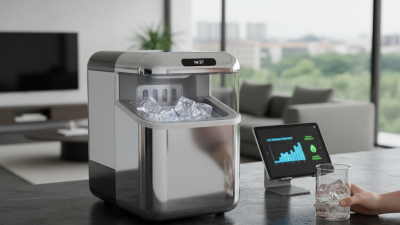
2026 Best Portable Ice Maker for Global Buyers?
The 2026 Best Portable Ice Maker for Global Buyers? That question deserves more than a glossy specification sheet. A practical portable ice maker must produce usable ice quickly, fit a crowded countertop, and remain dependable in different climates. Buyers may compare bullet-shaped ice, water capacity, operating noise, energy use, cleaning access, and international voltage support. Small details matter. A 1.5-liter reservoir can feel generous at breakfast, yet inadequate during a long outdoor gathering.
Lena Ortiz, a refrigeration engineer and appliance-testing consultant, says, “The best portable ice maker is not the fastest one; it is the model that performs consistently after repeated daily use.” Her point is easy to overlook. Speed attracts attention. Reliability saves frustration. Our evaluation considers ice production claims, actual cycle behavior, compressor sound, drain design, and the clarity of the user manual. We also examine whether replacement parts and warranty support appear accessible to buyers outside the manufacturer’s home market.
Some results will be imperfect. Ambient heat can slow production. Ice may melt inside the storage basket. Voltage and plug differences can create avoidable problems. These limitations deserve honest attention, not marketing language. The following guide compares leading portable ice maker models for homes, offices, boats, travel, and small hospitality spaces. It focuses on practical ownership, not exaggerated promises. Global buyers need clear evidence, realistic expectations, and a machine that works when the first cold drink is already waiting.
What Is a Portable Ice Maker and How Does It Work?
2026 Best Portable Ice Maker for Global Buyers?
What Is a Portable Ice Maker and How Does It Work?
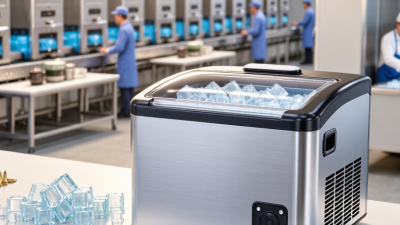
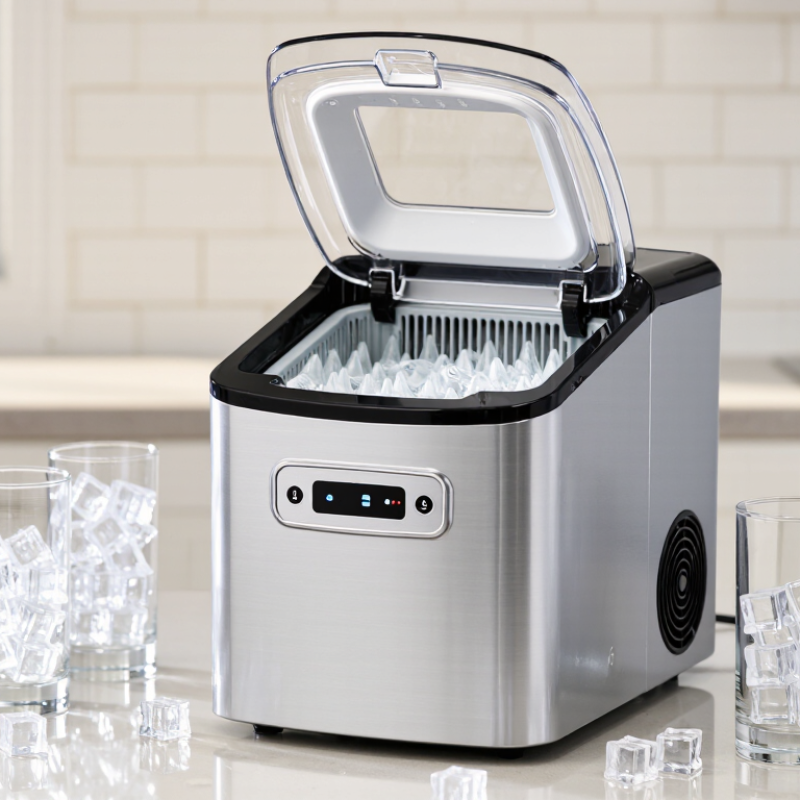
A portable ice maker is a compact appliance that produces ice without a freezer connection. It usually needs electricity, clean drinking water, and a level surface. I have found that setup matters more than many buyers expect. A tilted machine may vibrate, drain poorly, or make uneven ice.
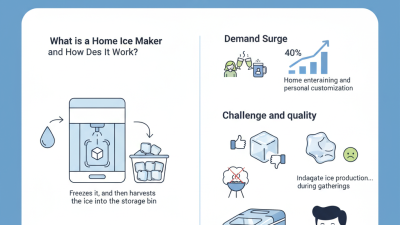
Inside, a small pump moves water from the reservoir over a refrigerated metal plate. The plate becomes cold enough to freeze a thin layer of water around its chilled fingers or molds. Sensors monitor the freezing process. When the ice reaches the programmed size, a warm gas cycle briefly loosens it. A motor then pushes the pieces into the storage basket.
Most countertop models create bullet-shaped ice within several minutes. This shape cools drinks quickly, but it can melt faster than dense freezer ice. Production also depends on room temperature, water temperature, ventilation, and cleaning habits. In a warm kitchen, the first batch may take longer. That is normal, although product claims can sound too optimistic.
The storage basket usually is not a freezer. Meltwater returns to the reservoir for another cycle. For safe use, empty old water, wipe internal surfaces, and follow the cleaning instructions. I would also check voltage compatibility before international travel. Portable does not always mean travel-ready. Even reliable machines can disappoint when airflow is blocked or the water sensor becomes dirty.
Which Ice-Making Features Matter Most for Global Buyers in 2026?
For global buyers, the most important ice-making feature is electrical compatibility. Check voltage, frequency, plug type, and certification before comparing production speed. A machine marked only 110–120V may fail on a 220–240V supply. Dual-voltage support helps, but it still requires the correct plug and fuse rating. This detail is easy to miss.
Cooling efficiency also matters. UNEP’s 2023 Global Cooling Watch projects that cooling demand could more than triple by 2050. Portable ice makers should therefore offer insulated storage, automatic shutoff, and a low-power standby mode. A clear cycle time is useful, but advertised output can change in hot rooms. Small print matters. Noise below 45 decibels is preferable for bedrooms, offices, and small hotels, although manufacturers may measure sound differently.
Water handling deserves equal attention. Look for removable baskets, washable filters, drainage plugs, and materials suitable for food contact. The World Health Organization’s Guidelines for Drinking-water Quality stresses safe water management, even though an ice maker does not purify water. Use filtered water when local quality is uncertain. Repairability is another practical test. The Global E-waste Monitor 2024 reported 62 million tonnes of electronic waste in 2022, with the figure projected to reach 82 million tonnes by 2030. Replaceable pumps, accessible seals, and available manuals can extend service life. I still tend to overvalue fast ice cycles. That may be the wrong priority.
2026 Best Portable Ice Maker for Global Buyers
Which ice-making features matter most for global buyers in 2026?
This benchmark ranks the practical features most relevant to international buyers on a 100-point importance scale. Energy efficiency, fast ice production, low noise, flexible voltage support, and compact storage are especially important for different household sizes, climates, kitchens, and electrical standards worldwide.
Values are rounded planning benchmarks based on common portable ice-maker specifications and global-use requirements.
How to Compare Ice Output, Capacity, Speed, and Energy Use
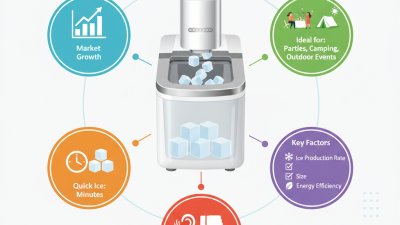
A portable ice maker should be compared by usable ice, not impressive advertising numbers. Check its rated output over 24 hours, then examine how quickly it fills a small basket. A machine claiming 26 pounds daily may produce far less in a warm kitchen. Ambient temperature, ventilation, and water temperature change results.
Capacity matters during real use. A compact basket may hold only 1.5 pounds, requiring frequent transfers. A larger water reservoir reduces refilling, but it can increase weight and cleaning effort. AHRI Standard 810 evaluates commercial ice equipment using energy per 100 pounds of ice and water consumption. Portable buyers should request similar figures, even when manufacturers provide incomplete testing details.
Energy use needs a practical calculation. Multiply the stated watts by operating hours, then compare that estimate with local electricity prices. The U.S. Energy Information Administration’s 2020 Residential Energy Consumption Survey reported average household electricity use of about 886 kilowatt-hours monthly. One small appliance rarely dominates that total, but continuous operation still adds cost. I once valued production speed above insulation and airflow. That judgment was wrong. A fast cycle can become inefficient when the condenser sits beside a hot wall. Look for clear test conditions, removable parts, noise information, and an energy figure supported by documentation. Some specifications remain vague. That deserves caution.
2026 Best Portable Ice Maker for Global Buyers? - How to Compare Ice Output, Capacity, Speed, and Energy Use
Comparison values are representative specifications for commonly available portable countertop ice-maker classes. Actual performance varies with ambient temperature, water temperature, ventilation, ice size, voltage, and test method.
| Product Class |
Daily Ice Output
(kg / 24 h) |
Ice Basket Capacity
(kg) |
First Ice Cycle
(min) |
Cycle Yield
(pieces) |
Rated Input
(W) |
Typical Energy Use
(kWh / 24 h) |
Water Reservoir
(L) |
Noise Range
(dB(A)) |
Typical Weight
(kg) |
Best Use |
| Compact Personal |
8–10 |
0.5–0.7 |
6–10 |
8–12 |
100–150 |
1.8–2.8 |
1.2–1.8 |
42–48 |
6–8 |
Single users, small offices, occasional drinks |
| Standard Countertop |
10–15 |
0.7–1.0 |
6–9 |
9–15 |
120–180 |
2.0–3.5 |
1.5–2.2 |
43–50 |
8–11 |
Homes, small teams, everyday beverage use |
| High-Output Countertop |
15–20 |
0.9–1.3 |
6–8 |
12–18 |
150–220 |
2.8–4.5 |
2.0–3.0 |
45–52 |
10–13 |
Large households, events, frequent ice demand |
| Self-Cleaning Premium |
12–18 |
0.8–1.2 |
7–10 |
10–16 |
130–200 |
2.5–4.0 |
1.8–2.5 |
44–51 |
9–13 |
Users prioritizing maintenance convenience and hygiene |
| Large Portable |
18–25 |
1.2–1.8 |
7–12 |
14–22 |
180–300 |
3.5–6.0 |
2.5–3.5 |
48–55 |
13–18 |
Parties, hospitality areas, mobile service locations |
How global buyers should compare:
Prioritize daily output for demand, basket capacity for serving intervals, first-cycle time for immediate use, rated input and measured energy consumption for operating cost, and voltage compatibility before purchase. Portable ice makers generally produce ice but do not keep it frozen indefinitely; unused ice will gradually melt and return to the water reservoir.
What Safety, Voltage, Plug, and Certification Standards Apply Worldwide?
2026 Best Portable Ice Maker for Global Buyers?
Buying one for worldwide use requires more than checking ice speed and storage size. Electrical safety comes first. A unit marked 100–240 V and 50/60 Hz can suit more regions, but the label must match the actual model. Some machines accept only 110–120 V or 220–240 V. A travel plug adapter cannot convert voltage. That mistake can cause overheating, failure, or electric shock. Keep the manual nearby.
Plug design matters too. Type A, C, G, I, and other systems use different pins, fuses, and grounding arrangements. Never rely on a loose adapter for a high-load appliance. Check the cable rating, earth connection, insulation, and moisture protection. Ice and water create a harsh environment. Look for market-appropriate approvals, such as CE in the European Economic Area, UKCA in Great Britain, UL or ETL marks in North America, PSE in Japan, RCM in Australia and New Zealand, and KC in South Korea. Requirements can change by country and product category.
Certification marks are not interchangeable passports. Ask for a declaration of conformity, test reports, factory identification, and local-language safety instructions. Confirm food-contact materials and refrigerant compliance, not only electrical approval. Importers may carry the final compliance duty. That is easy to miss. A careful buyer should also verify warranty service and replacement plugs before ordering. I would not treat a universal voltage claim as proof of universal safety. Product listings can be incomplete, and that deserves a second check.