How to Choose the Best Fridge and Freezer?

Choosing the right fridge and freezer is not only about stainless steel finishes or oversized screens. It affects food safety, household energy use, storage habits, and long-term costs. A family that buys fresh produce needs different interior space from someone storing frozen meals or bulk meat. The best appliance fits your kitchen, shopping routine, climate, and budget.

Energy deserves careful attention. The International Energy Agency’s The Future of Cooling report projects global cooling electricity demand could more than triple by 2050 without stronger efficiency improvements. Refrigerators and freezers operate continuously, so small efficiency differences can accumulate across many years. ENERGY STAR guidance states that certified refrigerators use at least 10% less energy than the federal minimum standard in the United States. However, labels should not be viewed alone. Compare annual kilowatt-hours, usable capacity, and estimated running costs.

Measurements matter more than showroom impressions. Record the doorway width, counter depth, hinge clearance, and ventilation space behind the unit. A 36-inch model may look impressive, yet its doors might block a narrow kitchen walkway. Features can also complicate decisions. Ice makers, water dispensers, convertible compartments, and smart controls add convenience, but they may increase purchase price and maintenance points.

There is no perfect model. I have found that real value often appears in quiet details, such as adjustable shelves, stable temperature control, and a freezer drawer that opens smoothly. This guide will compare these practical factors with expert standards, manufacturer specifications, and independent energy data. The goal is a fridge and freezer choice that remains useful after the showroom shine fades.
How to Choose the Best Fridge and Freezer?

Define Household Capacity Using 4–6 Cubic Feet of Fresh Food per Person

Choosing a fridge and freezer starts with fresh-food capacity, not exterior size. A practical estimate is 4 to 6 cubic feet of fresh-food space per person. One adult may manage with 4 cubic feet. A household cooking daily may need closer to 6. This range allows room for milk, vegetables, prepared meals, and containers.

For four people, plan approximately 16 to 24 cubic feet for the refrigerator section. This does not include freezer space. Check the specification sheet carefully. Some usable space disappears behind drawers, ice systems, and thick door bins. Measure your largest containers before shopping. A tall soup pot can expose a poor layout quickly.

Shopping habits matter as much as headcount. Weekly shoppers who buy fresh produce need more room than daily shoppers. Bulk purchases, packed lunches, and holiday cooking can push a household toward the higher end. A small freezer may create awkward stacks and forgotten food. The 4–6 cubic foot rule is helpful, but it is not perfect. Families vary, and habits change. A couple may need less space now but more later. Leave one or two shelves partly empty. That feels inefficient, yet it makes cooling, cleaning, and finding leftovers easier.

Measure the Opening, Door Swing, and Manufacturer-Required Clearances

Choosing the Best Fridge and Freezer

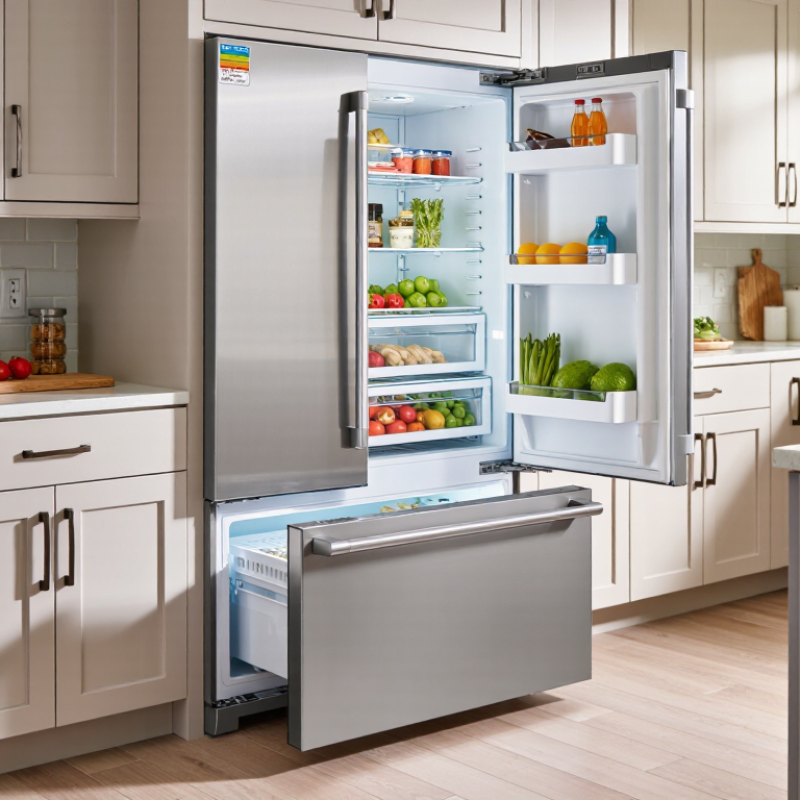
Measure the opening before comparing features. Use a metal tape measure, not an estimate. Record the narrowest width between cabinets, the floor-to-ceiling height, and the full depth. Check for baseboards, wall tiles, pipes, and uneven flooring. A cabinet opening may look spacious, yet a raised floor can reduce usable height. Write each measurement down immediately.

Door movement needs equal attention. Open the door to at least 90 degrees and mark its outer edge with masking tape. Check whether it hits a wall, cabinet handle, island, or nearby appliance. Measure the hallway, doorway, and stair landing too. I once measured the kitchen opening perfectly but forgot a tight hallway turn. That mistake made delivery much harder. It was avoidable.

Read the installation section in the manufacturer’s specifications. Required gaps may apply above, behind, and beside the appliance. These spaces support ventilation, door movement, and safe operation. Never assume a tight fit is acceptable. Some models need extra room on the hinge side or behind the power connection. Leave enough space to remove shelves and clean the rear area. If the floor is uneven, allow for leveling feet and recheck the door swing afterward. A second measurement is worthwhile.

How to Choose the Best Fridge and Freezer? - Measure the Opening, Door Swing, and Manufacturer-Required Clearances

Measurement or Design Factor What to Measure or Check Typical Planning Guidance Why It Matters
Opening width Measure at the top, middle, and bottom of the opening. Use the smallest measurement. The appliance width should be smaller than the narrowest point after allowing the clearance stated in its installation instructions. Walls, cabinets, flooring, and trim may not be perfectly square or parallel.
Opening height Measure from the finished floor to the lowest obstruction, including cabinets, soffits, and trim. Compare the smallest height with the appliance’s total height, including adjustable feet and top hinges. An appliance may not fit if the height is measured before flooring or if the hinge rises above the cabinet.
Opening depth Measure from the rear wall to the front edge of surrounding cabinets or counters. Compare cabinet-depth and standard-depth models separately; include doors, handles, and rear connections. Cabinet depth does not always include the doors or handles, which may project beyond the counter.
Finished floor level Confirm that the floor is installed and level where the appliance will stand. Allow for flooring thickness and use the appliance’s leveling feet during final installation. Uneven flooring can affect door alignment, sealing, drainage, and stability.
Door-swing width Open each door to the angle required by the installation instructions and measure the full swept area. Keep the swing path clear of walls, islands, handles, and adjacent appliances. A refrigerator can fit the opening but still be unusable if the doors cannot open far enough.
Hinge-side clearance Check the required space beside the hinge side for the door, hinge covers, and handle movement. Use the exact side clearance specified for the selected model; requirements vary by design. Insufficient space can prevent drawers and door bins from opening fully.
Wall-side door opening For a unit beside a wall, check the distance from the appliance side to the wall at the intended opening angle. Some models need additional wall clearance or a specific hinge configuration. The wall can stop the door before shelves or drawers are accessible.
Door reversal or hinge position Confirm whether the door is reversible and whether the hinge can be installed on the preferred side. Check installation timing, required parts, and whether the chosen configuration changes clearance needs. Changing the hinge side may improve traffic flow and prevent collisions.
Top clearance Measure the space above the unit, including any cabinet, shelf, molding, or ceiling obstruction. Follow the manufacturer’s specified top gap; do not assume a zero-clearance fit. The top gap may be needed for ventilation, hinge movement, leveling, or service access.
Side ventilation clearance Review the installation diagram for required space at both sides. Many freestanding units require a small gap, while some built-in designs use front ventilation; requirements are model-specific. Correct airflow helps the cooling system operate efficiently and safely.
Rear clearance Measure space for the condenser area, power cord, water line, and any rear components. Use the exact rear gap in the installation instructions; avoid sharply bending utility lines. A tight rear space can restrict airflow or damage the cord and water connection.
Drawer and shelf extension Measure the space in front of the unit needed to pull out freezer drawers, shelves, and produce bins. Keep the full extension path free from islands, tables, and opposite cabinets. A blocked drawer reduces usable storage even when the appliance doors open.
Delivery route Measure entry doors, hallways, stairways, elevator openings, and tight turns; note the narrowest point. Compare route measurements with the packaged and unpackaged appliance dimensions; confirm whether doors can be removed. The kitchen opening may be large enough even when the delivery route is not.

Important: Final clearance requirements differ by appliance design. Always verify the selected model’s installation manual before purchase, especially for ventilation, hinge-side space, door-opening angles, water connections, and electrical access.

Set Food-Safety Targets: Refrigerator ≤40°F and Freezer 0°F

How to Choose the Best Fridge and Freezer?

A reliable refrigerator should hold 40°F or colder, while a freezer should stay at 0°F. These temperatures slow bacterial growth and preserve frozen food quality. Do not trust the front display alone. Place a separate appliance thermometer on the middle refrigerator shelf and near the freezer door. The door area often warms during repeated opening.

Check temperatures at different times. Measure once in the morning and again after dinner. A refrigerator may become warmer after grocery shopping or while cooling a large pot of soup. Keep leftovers in shallow containers, and refrigerate them promptly. Hot food can cool more safely in smaller portions. Avoid packing shelves tightly, because cold air needs room to circulate.

I once relied on a refrigerator dial and assumed “cold” meant safe. That assumption was weak. A thermometer showed several degrees of difference between shelves. Small details matter. Set the control slightly colder if readings rise above 40°F, but avoid freezing fresh produce. Keep the freezer organized, leaving small gaps between packages. Frost buildup can also signal airflow problems or a poor door seal. Check the gasket with a thin sheet of paper; if it slips out easily, the seal may need attention. Recheck temperatures after every adjustment, since one setting does not suit every kitchen.

Compare Annual Energy Use in kWh and ENERGY STAR’s 10% Savings

Choosing a fridge or freezer should begin with annual energy use, not appearance. The yellow EnergyGuide label shows estimated electricity consumption in kilowatt-hours, or kWh, each year. A lower number usually means lower running costs. It also supports a fair comparison between different capacities.

The U.S. Department of Energy explains that annual estimates use standardized testing, yet household conditions vary. A warm kitchen, frequent door openings, or poor ventilation can increase actual use. The U.S. Energy Information Administration reported an average residential electricity price of about 16 cents per kWh in 2023. Therefore, a 100 kWh difference may equal roughly 16 dollars yearly. Small savings become more meaningful over a decade.

ENERGY STAR-qualified refrigerators and freezers use at least 10% less energy than the federal minimum standard. This figure comes from the U.S. Environmental Protection Agency and Department of Energy efficiency criteria. However, 10% is not always the best deal. Compare the listed kWh first. A larger efficient model may still consume more electricity than a smaller standard model. That detail is easy to miss.

Tips: Measure your space carefully, including door clearance. Leave room around the cabinet for airflow. Compare annual kWh, not only the efficiency logo. Check the label’s estimated cost using your local electricity rate. I once treated an efficiency label as a guarantee, but real kitchen habits changed the result. Efficiency needs daily discipline.

How to Choose the Best Fridge and Freezer?

Compare annual energy use in kWh and the potential 10% ENERGY STAR savings benchmark.

Annual electricity use varies by refrigerator configuration, capacity, temperature settings, and usage. This comparison uses representative annual consumption values for common refrigerator-freezer configurations. The savings series applies a 10% reduction benchmark to show how lower energy use can affect annual consumption.

Energy use is shown in kilowatt-hours per year (kWh/year). Actual consumption should be verified on the appliance’s EnergyGuide label.

Assess Storage Layout, Noise Levels, Warranty, and Lifetime Ownership Cost

Choosing the best fridge and freezer starts with usable storage, not advertised capacity. Measure the shelves, door bins, and drawer openings with a tape measure. A tall cavity may waste space when large containers cannot fit. USDA guidance recommends 40°F or below for the refrigerator and 0°F for the freezer. Separate drawers can support safer organization and steadier airflow. My first layout check often missed the freezer basket depth.

Noise deserves a measured comparison. The European Product Registry for Energy Labels records appliance sound output in decibels. Under current European labeling rules, the quietest class is below 30 dB(A). However, kitchen walls amplify vibration. Listen during compressor startup, not only during a showroom visit. A low hum can still become irritating beside a dining table. This detail is easy to underestimate.

Warranty terms should be read beside repair access and energy use. European Ecodesign requirements generally require critical spare parts for seven or ten years, depending on the component. Check whether the warranty covers labor, sealed-system repairs, transport, and door seals. ENERGY STAR’s refrigerator specification requires certified models to use at least 10% less energy than federal minimum standards. Estimate lifetime cost with purchase price, annual electricity, filters, repairs, and disposal. Use your local tariff. A simple 12-year estimate is useful, but imperfect; electricity prices and repair costs rarely stay still. The U.S. Department of Energy’s appliance energy guidance supports comparing annual consumption rather than relying on capacity alone. A cheaper unit may become expensive after repeated service visits.

Stay in touch with the latest National Luna Products and News!