Why Choose a Commercial Fridge and Freezer?
A commercial fridge and freezer is more than a larger version of a household appliance. In a busy café, its doors may open dozens of times each hour. Warm air rushes in. Shelves need to stay organized, temperatures consistent, and ingredients easy to reach. The right equipment can help protect food quality and keep service moving, but the best choice depends on daily volume, available space, and cleaning routines.
Food-refrigeration researcher Professor Judith Evans has studied how refrigeration affects food quality and energy use. A paraphrase of a principle reflected in her research is: “Good refrigeration protects food while using energy wisely.” That balance matters. A unit that is oversized may waste space and energy; one that is too small can struggle during a rush. Buyers should compare usable capacity, temperature performance, insulation, door design, and service access—not just the price tag.
There is no perfect machine. Even a reliable fridge and freezer needs sensible loading, regular checks, and room for airflow. A crowded shelf can block circulation; a door left ajar can undo careful temperature control. These details are easy to overlook. For restaurants, shops, and commercial kitchens, choosing equipment starts with an honest look at how the business works each day. The sections ahead explain the practical advantages, key selection factors, and ongoing costs to consider before investing.
What Defines a Commercial Fridge and Freezer?
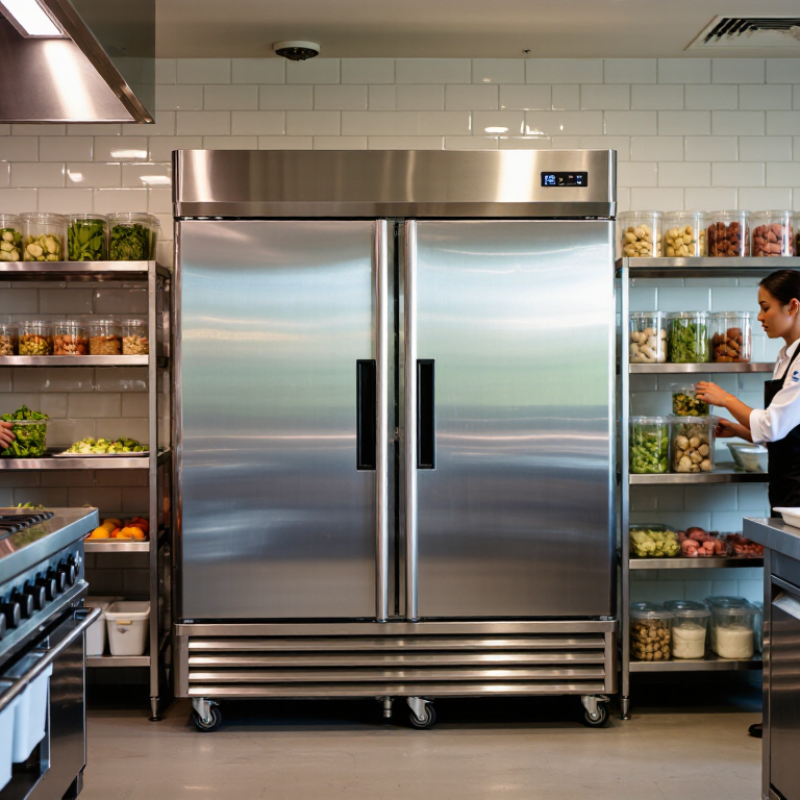
A commercial fridge and freezer is defined less by its appearance than by its working demands. It is built for frequent door openings, larger stock volumes, and steady temperature recovery during busy service. Shelves often need to hold heavy pans, while interiors must be practical to clean. Some models provide separate temperature zones, digital displays, and alarms. Details vary, so “commercial” alone does not guarantee a good fit.
Temperature control is central. The FDA Food Code 2022 sets 41°F (5°C) or below as the standard for cold holding of time-and-temperature-controlled foods. That benchmark makes reliable sensors and clear temperature displays useful, not decorative. A unit’s stated capacity also matters less if stored items block airflow. The distinction is not always neat: a powerful cabinet can still perform poorly when overloaded or opened carelessly.
Tips: Check internal temperature with a separate, calibrated thermometer. Leave room around vents, and measure the door opening before delivery. Then consider your real routine—how often staff reach inside, and what they store. Small details get missed.
Why Choose a Commercial Fridge and Freezer? - What Defines a Commercial Fridge and Freezer?
| Dimension |
What Defines Commercial Equipment |
Why It Matters in Daily Use |
| Intended use |
Designed for food-service, retail, and other business settings where equipment may be accessed frequently throughout the day. |
It is built around regular service demands rather than occasional household use. |
| Temperature control |
Refrigerators are generally operated around 0–5°C (32–41°F), while freezers are commonly set at −18°C (0°F) or colder. Exact requirements depend on the food and local regulations. |
Appropriate settings help keep food within safe storage conditions; operators should follow applicable food-safety rules and monitor temperatures. |
| Temperature recovery |
Commercial units are designed to manage routine door openings and loading. Recovery performance varies by model, installation, and operating conditions. |
This supports more consistent storage temperatures during busy periods, when doors may be opened often. |
| Construction |
Many models use durable interior and exterior materials, reinforced components, and shelving intended for frequent handling. Materials and features differ across models. |
Robust construction can suit demanding work areas, while cleanable surfaces and removable shelves can make routine cleaning easier. |
| Storage and layout |
Available formats include reach-in cabinets, undercounter units, prep tables, and walk-in rooms, with different capacities and shelf arrangements. |
A format suited to the workspace can improve access, organization, and use of available floor area. |
| Air circulation |
Many commercial cabinets use fan-assisted air circulation, although cooling systems vary by design and product. |
Following loading instructions and avoiding blocked vents helps support even cooling inside the cabinet. |
| Maintenance |
Routine care commonly includes cleaning interior surfaces, checking door seals, keeping air inlets clear, and maintaining condenser components as directed by the manufacturer. |
Regular maintenance helps preserve cooling performance and can reduce avoidable equipment problems. |
| Installation requirements |
Electrical supply, ventilation clearance, ambient-temperature limits, and installation requirements are model-specific and should be checked before purchase. |
Confirming site requirements helps ensure the unit can be installed and operated as intended. |
How Commercial Models Differ from Domestic Appliances
Why Choose a Commercial Fridge and Freezer?
How Commercial Models Differ from Domestic Appliances
Commercial refrigerators and freezers are designed for frequent access, heavier loading, and longer daily operation. Many use stronger refrigeration systems and faster air circulation to help recover temperature after staff open the doors repeatedly. Their shelves and interiors are often made for practical cleaning and regular use. Domestic appliances usually prioritize quiet operation, appearance, and occasional household access. Different jobs, different designs.
Capacity is only part of the difference. A commercial cabinet may hold bulky containers, sheet pans, or stacked ingredients, but it can also take up more floor space and use more energy. It may sound louder, too. Commercial equipment is not automatically the better choice for every kitchen; actual workload, ventilation, and service access matter. A poor fit can be costly.
Tips: Measure doorways and installation space before ordering. Check the unit’s temperature range, cleaning requirements, and available repair support. Leave room around ventilation areas, and avoid packing shelves so tightly that air cannot circulate. Keep a simple temperature log. It helps spot changes early, though it will not explain every cause.
Key Benefits for Food Businesses
Commercial refrigeration gives food businesses dependable cold storage during busy service. A commercial fridge can hold prepared ingredients, dairy, and ready-to-serve items at steady temperatures, even when staff open the door repeatedly. That matters during a lunch rush. Less temperature fluctuation helps protect food quality and supports safe handling routines.
Capacity and layout can make daily work smoother. Wide shelves, deep drawers, and clear door storage help staff find items without shifting everything around. A freezer with organized compartments can separate bulk ingredients from smaller portions. This saves time when orders come in quickly. Not always better. An oversized unit may waste space and energy, so measure the kitchen and estimate stock levels before choosing.
Commercial models are generally designed for frequent use and heavier loads than household appliances. Strong shelving can handle stacked containers, while accessible controls make routine temperature checks easier. Look for practical details such as door seals, adjustable shelves, and space for cleaning around the unit. Maintenance still takes effort. Coils collect dust, seals wear, and crowded shelves can restrict airflow; these small issues are easy to overlook until cooling performance changes. A suitable fridge and freezer can support consistent service, but only when staff use and maintain them well.
How to Choose the Right Capacity and Configuration
Choosing capacity begins with your busiest service period, not an average day.
Estimate the food volume on hand during peak deliveries, then allow space for containers and airflow. Measure the largest trays, cartons, and ingredient bins you actually use. Small details matter. A unit’s advertised volume may not match usable shelf space once racks and interior fittings are installed.
Configuration should fit the work pattern.
A reach-in suits frequent access near a prep line; an undercounter model can keep ingredients close but offers less storage. Walk-ins can handle larger inventories, though they require careful planning for aisle space, door clearance, and temperature monitoring. USDA Food Safety and Inspection Service guidance recommends keeping refrigerators at 40°F or below and freezers at 0°F. Check whether each compartment can hold those temperatures during busy opening and closing periods.
Energy use deserves a place in the comparison.
ENERGY STAR reports that certified commercial refrigerators are about 20% more energy-efficient than standard models; certified freezers are about 10% more efficient. Compare capacity, shelving, door style, and energy data together, rather than choosing by cubic feet alone. A tidy spreadsheet can still miss a real constraint: staff may need to open the same door dozens of times per shift. Observe the workflow before deciding, and revisit the estimate if your menu or delivery schedule changes.
What to Consider for Energy Use and Maintenance
Why Choose a Commercial Fridge and Freezer?
What to Consider for Energy Use and Maintenance
A commercial fridge or freezer is built for frequent door openings, heavier loads, and faster recovery than most household units. But capacity alone does not determine running costs. Check the energy label and daily consumption, then compare models of similar size and temperature range. Placement matters too: leave the recommended ventilation space, keep units away from ovens and direct sunlight, and avoid tightly packed shelves that restrict airflow. Small details add up.
Tips: Keep a temperature log. Clean condenser coils as directed in the manual, and check door gaskets with a strip of paper. A blocked coil or loose seal can make the compressor run longer. Keep vents clear.
Maintenance is easy to overlook during a busy shift. Set reminders, note unusual noise or longer cooling cycles, and arrange qualified service if temperatures drift or ice builds unexpectedly. Defrost only as the manual directs; procedures vary by equipment. Energy figures are useful for comparisons, not exact bill estimates, since room heat and usage differ. The most efficient model may not suit every kitchen if staff cannot easily reach its controls or clean its coils.