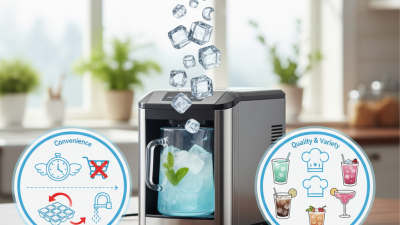
Choosing the best home ice maker manufacturer in China requires more than comparing prices or counting production claims. A reliable machine should produce clear, firm ice, maintain a steady cycle, and fit naturally beneath a kitchen cabinet. Noise matters too. A loud compressor can quickly become irritating in a small apartment.
John Barba, a refrigeration educator, often stresses a practical principle: “Clean equipment performs better and lasts longer.” That advice applies directly to every home ice maker. Buyers should examine water-contact materials, filter access, drainage design, compressor quality, and after-sales support. Chinese manufacturers such as Aucma, Hicon, Koller, and other specialized OEM factories offer different strengths. Some focus on compact countertop models. Others provide stronger insulation, faster production, or private-label customization.
Still, no manufacturer is perfect. A low-cost unit may look attractive, yet replacement parts can be difficult to source. A premium model may produce excellent ice, but its control panel might feel unnecessarily complicated. This guide compares manufacturers through practical details, including output capacity, cycle speed, cleaning requirements, noise levels, warranty support, and export experience. It also considers the less visible issues, such as quality consistency between production batches.
The best choice is not always the cheapest one. It is the manufacturer that delivers dependable performance after repeated use. That standard deserves careful questioning. Calibration, packaging, and service can matter as much as the ice itself.

A strong home ice maker manufacturer in China is defined by more than production capacity. It should understand how families use the appliance every day. Reliable manufacturers test ice output, water contact parts, noise, and shutdown performance. They inspect samples from different production batches, not only the first approved unit. This matters because a quiet machine on a showroom table may sound different in a small kitchen. Clear records also show professional control. They should provide material specifications, test reports, and traceable quality checks. Practical details build trust.
Manufacturers stand out when they improve the product after real user feedback. A removable water tank, a simple control panel, and an easy-to-clean ice basket can prevent daily frustration. Energy use deserves attention too. Small design changes may reduce waste during repeated cycles. After-sales support is equally important. Spare parts, repair guidance, and responsive communication protect the buyer’s investment. Some factories still focus too heavily on appearance. That is a weakness worth questioning. Glossy panels cannot fix weak seals or inconsistent ice size. The best partners welcome factory visits, explain production limits honestly, and accept independent inspections. They may not perfect every detail, but they should show how problems are found, corrected, and prevented. That level of openness reflects experience, technical discipline, and dependable manufacturing.
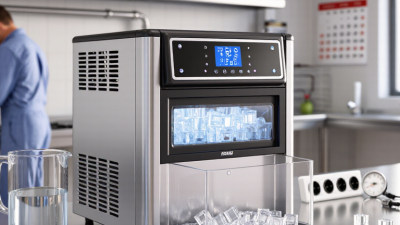
Home ice maker manufacturers in China usually serve distinct product categories. Portable countertop producers focus on compact machines for apartments, offices, and small kitchens. Their models often produce bullet-shaped ice within minutes, using removable baskets and simple control panels. Buyers should check noise levels, water tank capacity, and cleaning access. Small details matter.
Built-in and under-counter manufacturers target renovated kitchens, bars, and premium residential projects. Their machines require stronger insulation, front ventilation, and stable drainage systems. Many suppliers also customize cabinet dimensions, finishes, and control interfaces. From reviewing appliance specifications, I have found that cooling performance alone is not enough. Poor drainage can create daily frustration. It is easy to overlook.
Another group develops specialty ice makers, including nugget, flake, and clear ice models. These products focus on texture, melting speed, appearance, or beverage use. Nugget ice suits soft drinks and casual home use. Clear ice machines appeal to users who care about presentation. Flake ice models may support seafood displays or temporary food preparation, but they need careful hygiene management. Reliable manufacturers should provide material information, factory testing records, user manuals, and responsive after-sales support. Independent quality inspections can verify output, electrical safety, water-contact components, and noise claims. Some suppliers promise impressive production figures, yet household conditions may reduce them. Room temperature, water quality, and cleaning habits change real performance.
China’s home ice maker sector deserves closer attention from importers and retailers. Mordor Intelligence’s 2024 market assessment projects the global ice maker market to grow at roughly 5% annually through 2029. Asia-Pacific remains a major growth area. Rising apartment living and warmer summers support demand for compact countertop units.
Look for Chinese manufacturers with proven OEM and ODM experience. Production clusters in Guangdong, Zhejiang, and Jiangsu offer strong access to compressors, pumps, molds, and electronic controls. The best suppliers usually provide factory audit records, test reports, and stable export documentation. Ask for ice output measured over 24 hours, not vague claims. A useful household model should produce consistent cubes, operate below about 45 decibels, and use food-contact materials with traceable compliance documents.
Details reveal capability. Inspect the drainage port, hinge strength, water reservoir seams, and cleaning access. These small parts often separate dependable machines from attractive samples. Intertek’s appliance testing guidance emphasizes electrical safety, material evaluation, and performance verification before shipment. Energy use also matters. The U.S. Department of Energy notes that efficient appliance design can reduce long-term operating costs, even when purchase prices are higher.
Do not trust catalogs alone. Request three production samples. Compare cube size, melting speed, noise, and recovery time after refilling. Some manufacturers communicate well but struggle with quality consistency. That weakness deserves honest attention. A supplier’s warranty response may matter more than its lowest quotation. Evaluate production records, independent testing, spare-part support, and realistic lead times before choosing a long-term Chinese manufacturing partner.
Choosing among home ice maker manufacturers in China requires more than comparing prices. Quality starts with materials, assembly control, and consistent testing. Look for food-contact components, solid insulation, quiet compressors, and clear quality records. A useful supplier should explain its inspection process, not simply promise “premium quality.”
Capacity needs context. Check both daily output and storage-bin volume. A machine producing 26 pounds daily may still disappoint during a family gathering. Ice shape also matters. Bullet ice melts quickly, while thicker cubes usually last longer in drinks. Ask for performance data at different room temperatures. Real kitchens are rarely as cool as factory test rooms.
Technology should improve convenience, not create unnecessary complexity. Useful features include automatic water-level alerts, self-cleaning programs, overflow protection, and simple control panels. Energy efficiency deserves careful measurement. Compare electricity use per kilogram of ice, rather than relying on broad efficiency claims. A well-insulated unit may consume less power during repeated cycles. Check the details.
I have seen buyers focus too heavily on output ratings. That can be a mistake. Higher capacity may bring louder operation, larger dimensions, or greater standby consumption. Request sample units, test noise near a living area, and inspect the ice after several cycles. Also review warranty terms, spare-part access, and technical support. A polished brochure cannot replace dependable service.
Representative specifications for common residential product segments, comparing daily capacity and energy efficiency.
Countertop models generally prioritize compact technology and shorter installation requirements, while under-counter and freestanding models provide higher daily output. The energy-efficiency figures represent typical electricity consumption per kilogram of ice under standard operating conditions; actual performance varies with ambient temperature, water temperature, ice shape, insulation, compressor technology, and control systems.
Values are representative category benchmarks compiled from commonly published residential ice-maker specifications and are intended for supplier comparison rather than brand ranking.
What Are the Best Home Ice Maker Manufacturers in China?
Before choosing a Chinese home ice maker supplier, verify performance beyond product photographs. Fortune Business Insights estimated the global ice maker market at about USD 5.1 billion in 2024, with continued growth expected through 2032. This growth attracts capable factories, but also inexperienced traders. Ask for the factory’s business license, production address, audit records, and export history. A video call is useful. An independent factory inspection is better.
Request a working sample from the same production line planned for your order. Check ice-making time, batch size, melting speed, noise, water leakage, and cleaning access. Measure power consumption during repeated cycles. The U.S. Department of Energy treats appliance energy use as a major ownership factor, so a low purchase price may hide higher operating costs. Confirm the compressor, refrigerant, food-contact materials, and electrical components. Require test reports for your destination market, not generic certificates.
Small details matter.
Review the quality agreement carefully. It should define acceptable defect limits, inspection methods, packaging strength, warranty response, spare-part availability, and replacement procedures. Ask how the supplier handles a failed water pump after six months. Their answer reveals more than a polished showroom. Production capacity also deserves proof through records, not promises. I would not rely only on a successful sample; factories can change components under pressure. A pre-shipment inspection and random carton checks add useful protection. Some buyers overlook manuals and cleaning instructions, which later create avoidable complaints. The best supplier is not automatically the largest one. It is the one that can repeatedly deliver safe, quiet, serviceable machines with transparent evidence.
Practical Supplier Evaluation Data Table for Home Ice Maker Buyers
| Evaluation Dimension | Useful Benchmark or Requirement | Documents or Evidence to Request | Why It Matters | Suggested Weight |
|---|---|---|---|---|
| Production Capacity | For countertop household models, a commonly specified output range is approximately 10–20 kg of ice per 24 hours, depending on ambient conditions and ice size. | Product specification sheet, production-line photos, recent production records, and a sample performance test. | Helps confirm whether the supplier can meet forecast demand without sacrificing consistency. | 10% |
| Ice-Making Cycle | Many compact home ice makers advertise a first batch in approximately 6–15 minutes; actual time varies with room temperature, water temperature, and cube size. | Test video with date and model number, laboratory test conditions, and a written cycle-time specification. | Prevents comparisons based only on marketing claims made under unusually favorable conditions. | 8% |
| Electrical Safety Compliance | The appliance should be designed and tested against applicable household appliance safety requirements, including IEC 60335-1 and the relevant ice-maker or refrigeration appliance part standard for the target market. | Valid test reports, certificates, CB documentation where applicable, and model numbers matching the offered product. | Reduces electrical, overheating, shock, and market-entry risks. | 15% |
| Target-Market Certification | Certification must match the destination market, such as CE-related requirements for the European Economic Area, UKCA for Great Britain, or applicable North American safety certification. | Certificate, test report, declaration of conformity, technical file summary, and factory quality-control records. | A certificate for a similar model does not automatically cover the exact product being purchased. | 12% |
| Refrigerant Selection | Common refrigerants for compact refrigeration equipment include R290 and R600a. Both are classified as highly flammable refrigerants, so the appliance requires suitable charge control, electrical protection, labeling, and service procedures. | Refrigerant type and charge quantity, compressor specification, safety assessment, and leak-test records. | Influences environmental performance, transport requirements, serviceability, and compliance obligations. | 10% |
| Energy Consumption | Compare measured energy use in kWh per kilogram of ice rather than comparing rated input power alone. | Standardized energy test data showing ambient temperature, water temperature, ice size, and operating duration. | Provides a fairer comparison of operating cost between different models. | 8% |
| Food-Contact Materials | Water-contact components should be made from materials suitable for food contact in the intended sales market and should resist corrosion during normal use. | Material declarations, food-contact test reports, component supplier details, and water-tank material specifications. | Supports hygiene, taste neutrality, durability, and regulatory compliance. | 10% |
| Noise Performance | A published sound-pressure value is more useful when measured under defined conditions. Buyers should request the test distance, room conditions, and operating mode. | Sound test report, test environment details, and a sample unit evaluation during compressor and harvesting cycles. | Noise is especially important for kitchens, bedrooms, offices, and small apartments. | 6% |
| Quality Management System | A documented quality system based on ISO 9001 principles is preferable, supported by incoming inspection, process inspection, final inspection, and traceability. | Quality certificate, inspection procedures, defect-rate records, corrective-action reports, and factory-audit results. | Indicates whether product quality is controlled systematically rather than checked only at the end. | 8% |
| Reliability Testing | The supplier should conduct repeated start-stop, compressor, water-pump, ice-harvesting, leakage, and abnormal-operation tests appropriate to the model. | Reliability test plan, test duration, failure records, corrective actions, and production-version sample results. | Helps identify early failures before products reach consumers. | 7% |
| Minimum Order Quantity and Lead Time | MOQ and lead time vary by customization level. Standard models usually require less preparation than products with custom tooling, packaging, firmware, or certifications. | Formal quotation, production schedule, tooling list, sample timetable, and written terms for delays. | Allows accurate inventory planning and reduces unexpected launch delays. | 4% |
| Warranty and Spare Parts | The contract should define warranty duration, covered parts, response time, replacement procedures, and the availability period for key components. | Warranty policy, spare-parts price list, service manual, failure-analysis process, and after-sales contact details. | Affects total ownership cost and customer satisfaction after shipment. | 7% |
| Packaging and Shipping Protection | Packaging should protect the compressor, water system, control panel, and exterior surfaces during container handling and parcel delivery. | Packaging drawings, drop-test or transport-test records, carton specifications, pallet plan, and product-loading photos. | Good product quality can still result in losses if packaging does not withstand international transportation. | 3% |
Stay in touch with the latest National Luna Products and News!